
In the predawn darkness of southern Gaza, a thunderous explosion shattered the fragile calm, leaving two families without fathers, sons, and brothers. The Israeli military strike, which struck a residential area near Khan Younis, has once again pushed an already volatile region to the brink of deeper unrest. According to Palestinian health officials, the attack killed two civilians and wounded another, adding fresh urgency to calls for de-escalation that have echoed across diplomatic corridors for months.
What happened in southern Gaza?
The strike, which occurred just after midnight local time, targeted a building believed to be used by militant factions. However, local residents reported that no active combatants were present at the time of the attack. Eyewitnesses described the scene as chaotic, with emergency responders struggling to reach the site due to damaged roads and ongoing security restrictions. The Palestinian Ministry of Health confirmed the casualties, while Israel has yet to issue an official statement regarding the operation.
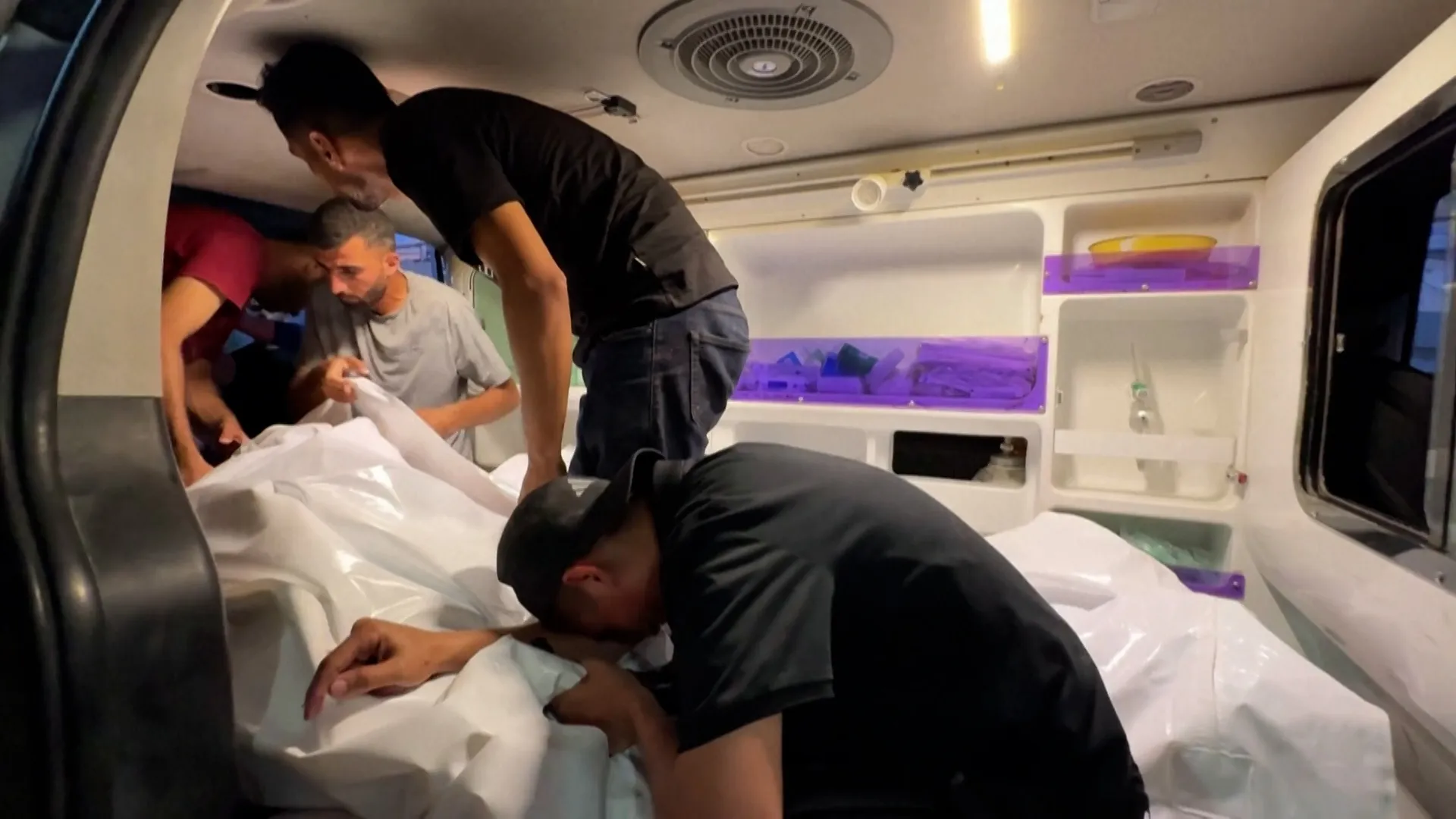
The timing of the strike is particularly sensitive, coming just days after international mediators announced a tentative framework for renewed ceasefire negotiations. Analysts warn that such unilateral military actions could derail fragile diplomatic efforts, further entrenching divisions between warring factions and deepening the humanitarian crisis in the territory.
A region on the edge
Southern Gaza has been a flashpoint for violence since the collapse of the last ceasefire in early 2025. The area, home to over 200,000 displaced Palestinians, has seen frequent clashes between Israeli forces and armed groups, resulting in hundreds of civilian casualties. The latest strike underscores the persistent volatility of the region, where even localized incidents can spiral into broader conflicts.
International observers have expressed alarm over the escalation. The United Nations Office for the Coordination of Humanitarian Affairs (OCHA) noted in its latest report that over 1,200 Palestinians have been killed in Gaza since the beginning of 2026, with nearly 70% of the victims being women and children. The Israeli government, meanwhile, has defended its operations as necessary to prevent attacks on its southern communities, citing recent rocket fire from Gaza-based militants.
Humanitarian fallout intensifies
The strike has also exacerbated an already dire humanitarian situation in Gaza. Hospitals in the region are operating at over 200% capacity, with critical shortages of medical supplies, fuel, and electricity. The World Health Organization (WHO) has warned that the healthcare system is on the verge of collapse, with many facilities forced to turn away patients due to lack of resources. The latest casualties further strain an already overburdened system.
Local aid workers describe the scene as one of despair. “Every day, we see more families torn apart by violence,” said a Gaza-based humanitarian worker who requested anonymity. “The international community talks about ceasefires, but the reality on the ground is that people are still dying. Where is the accountability?” The question lingers unanswered, as both sides continue to trade blame for the ongoing crisis.
Diplomatic deadlock deepens
Efforts to revive peace talks have stalled repeatedly over the past year. Egypt, Qatar, and the United States have been mediating between Israeli officials and Hamas representatives, but progress has been painfully slow. The latest strike has further complicated negotiations, with Hamas demanding an immediate halt to all military operations before resuming talks. Israel, however, has insisted that any ceasefire must include guarantees for the release of hostages held by militant groups.
The international community remains divided on how to address the crisis. While some countries have called for an immediate ceasefire, others have urged restraint, emphasizing the need for a negotiated solution. The European Union, in a rare unified statement, condemned the latest violence and called for an independent investigation into the strike. “The cycle of retaliation must end,” said EU High Representative Josep Borrell. “The people of Gaza deserve peace, not perpetual war.”
What’s next for Gaza?
The coming days will be critical in determining whether the latest violence leads to further escalation or serves as a catalyst for renewed diplomatic efforts. Analysts note that the strike could either harden positions on both sides or, paradoxically, create an opportunity for compromise. “The situation is at a breaking point,” said a Middle East policy expert at the International Crisis Group. “If neither side shows restraint, we could see a full-scale resumption of hostilities, with catastrophic consequences for civilians.”
For the families of the victims, however, the immediate future holds only grief and uncertainty. In a small apartment in Khan Younis, a mother cradles a photograph of her son, killed in the strike. “He was just 22,” she whispered. “He had dreams. Now, all we have is this empty space.” Her words echo the sentiments of countless others in Gaza, where hope has become a rare commodity in a land scarred by decades of conflict.
Regional ripple effects
The repercussions of the strike are not confined to Gaza. In neighboring Egypt, officials have warned of potential spillover effects, including a surge in displaced persons seeking refuge across the border. The Egyptian government has already deployed additional troops to its border with Gaza, citing concerns over security and stability. In Jordan, protests have erupted in several cities, with demonstrators condemning the Israeli operation and calling for stronger action in support of the Palestinian people.
The crisis has also reignited debates within the Arab world about the effectiveness of regional alliances. Countries like Saudi Arabia and the UAE, which have pursued normalization with Israel in recent years, now face pressure to take a firmer stance against military actions in Gaza. Meanwhile, Iran and its proxies have reiterated their support for Hamas, further complicating efforts to isolate the militant group diplomatically.
As the world watches, the question remains: Will the latest tragedy in Gaza be another chapter in a seemingly endless cycle of violence, or will it finally force the international community to act? For now, the only certainty is that more lives will be lost unless decisive steps are taken to break the deadlock.
Voices from the ground
To understand the human toll of the strike, we spoke with several residents of southern Gaza who witnessed the attack firsthand. Their accounts paint a picture of terror and resilience in the face of adversity.
- Ahmed, 34, teacher: “I was preparing for bed when I heard the explosion. The windows shattered, and the ceiling collapsed. My children were screaming. We ran outside, and the street was filled with dust and screams. Two men—neighbors—were lying on the ground. One was already dead. The other was moaning, begging for help. By the time the ambulance arrived, it was too late for him.”
- Leila, 42, nurse: “The hospital was already full when the wounded started arriving. We had to triage patients in the hallway. A young boy, no older than 10, was brought in with shrapnel wounds to his legs. His mother was hysterical, clutching his hand. We did what we could, but the supplies were running out. This is not healthcare. This is survival.”
- Yousef, 58, shopkeeper: “Every time there is a strike, we lose more. My brother was killed in 2023. Now, my nephew is gone too. What have we done to deserve this? We just want to live in peace, to raise our children without fear. But the world seems to have forgotten us.”
The stories of Ahmed, Leila, and Yousef are not unique. They are the voices of a people trapped in a conflict that has consumed generations. Their resilience is a testament to the human spirit, but their suffering is a stain on the conscience of the international community.
Can the cycle be broken?
The path forward remains unclear. While ceasefire talks have resumed in Doha, the prospects for a lasting agreement appear slim. Hamas has reiterated its demand for an end to the blockade of Gaza, a condition Israel has consistently rejected. Meanwhile, Israeli officials have signaled a willingness to consider limited easing of restrictions, but only in exchange for tangible security guarantees.
Some analysts suggest that a third-party intervention, such as a UN peacekeeping force, could help stabilize the situation. Others argue that only a comprehensive political solution—one that addresses the root causes of the conflict—can bring lasting peace. “This is not just about stopping the violence,” said a senior UN official. “It’s about addressing the underlying grievances that have fueled this conflict for decades.”
For now, the people of Gaza must endure another day of uncertainty. The strike has left them with more questions than answers. Will the world act before the next tragedy strikes? Or will they once again be left to pick up the pieces of a shattered existence?
The answer may well determine the future of the region. And the clock is ticking.
World news today: A region at a crossroads
The events in Gaza are a stark reminder of the fragility of peace in a world still grappling with the legacies of colonialism, occupation, and unfulfilled promises. As diplomats scramble to contain the fallout, the people of Gaza continue to pay the highest price. Their struggle is a microcosm of broader geopolitical tensions, where the lines between justice and vengeance, security and oppression, are increasingly blurred.
In the coming weeks, the international community will face a critical test. Will it rise to the occasion, or will it once again fail those who need it most? The answer will shape not only the future of Gaza but the very soul of global diplomacy in an era of deepening divisions.
Copyright notice: Images and source material are credited to their respective owners/source (original source where available). If you are the copyright owner and want an image or content removed, please contact us at topix.news/contact-us; we will review and remove it promptly.

Topix News Desk is a digital editorial team focused on delivering clear, timely, and useful news coverage for readers worldwide. Our reporting highlights African news with global context, including politics, business, economy, technology, health, sports, entertainment, travel, and culture. We aim to publish accessible, well-structured, and informative articles that help readers understand the stories shaping Africa and the world.