
The fragile calm along Israel’s northern frontier shattered on Friday as Jerusalem accused Hezbollah of systematically violating a months-old ceasefire, triggering a wave of forced displacement orders that could displace tens of thousands in southern Lebanon.
The abrupt deterioration follows days of sporadic rocket fire and artillery exchanges, but what began as tit-for-tat skirmishes has now metastasized into a full-blown crisis with regional implications. Israeli military officials allege that Hezbollah militants launched at least three separate attacks across the Blue Line—designated by the United Nations in 2000—since Tuesday, prompting retaliatory strikes that have left several villages in ruins.
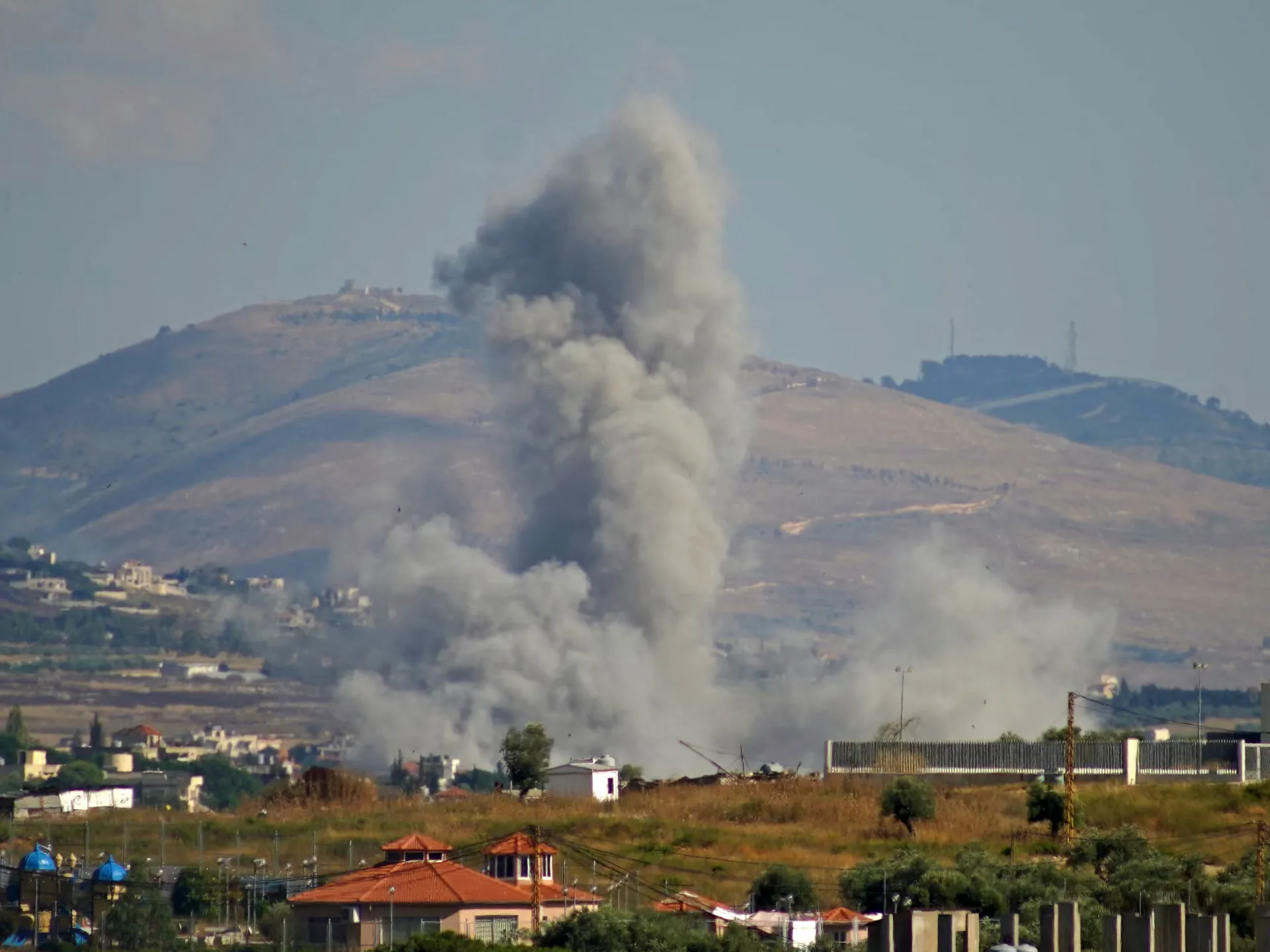
Residents in towns like Bint Jbeil and Marjayoun awoke to evacuation notices slipped under their doors or blasted through loudspeakers, ordering them to abandon their homes within 72 hours. The orders, stamped with the insignia of Israel’s Coordinator of Government Activities in the Territories, cite “imminent security threats” and warn that areas deemed Hezbollah strongholds will face “targeted operations.”
“This isn’t just about military posturing,” said a Beirut-based political analyst who requested anonymity. “It’s a calculated move to reshape the demographic and strategic landscape before any negotiations begin. Israel wants to ensure that any future peace deal leaves southern Lebanon a buffer zone, not a launchpad.”
The timing could not be worse. Regional mediators had been cautiously optimistic about reviving talks on a comprehensive ceasefire framework, but those hopes now hang by a thread. Iran, Hezbollah’s primary backer, has gone on the offensive, declaring that any agreement excluding Lebanon would be “null and void.”
“The United States cannot broker peace in the Middle East while ignoring Lebanon’s sovereignty,” said Iranian Foreign Ministry spokesman Hossein Amir-Abdollahian in a televised address. “A deal that sidelines Beirut is a deal that will collapse under its own weight.”
Displacement orders spark humanitarian alarm
The sudden evacuation notices have sent shockwaves through communities already reeling from years of economic collapse and political instability. Aid agencies warn that the mass displacement could overwhelm already stretched resources in Lebanon, where the World Food Programme estimates that 78% of the population now lives below the poverty line.
“We’re looking at a potential humanitarian catastrophe,” said Dalia al-Masri, a spokeswoman for the Lebanese Red Cross. “The roads out of southern Lebanon are clogged with families carrying whatever they can salvage. Hospitals in Tyre and Sidon are preparing for an influx of patients with respiratory issues from smoke inhalation and stress-related conditions.”
Local officials in Nabatieh Governorate report that at least 12,000 people have already fled their homes, with many seeking refuge in schools and mosques repurposed as emergency shelters. The Lebanese government, struggling to maintain basic services amid a crippling financial crisis, has called for an urgent international response.
“This is not just Israel’s problem,” said Nabatieh Mayor Hassan Fares. “If Lebanon’s infrastructure collapses under the weight of this crisis, the repercussions will ripple across the Mediterranean.”
Hezbollah’s calculus: Defiance or miscalculation?
Analysts remain divided over whether Hezbollah’s recent provocations are a deliberate strategy to pressure Israel—or a dangerous misstep that could spiral out of control. Some argue that the group, facing internal criticism over its role in Lebanon’s economic meltdown, is using the crisis to rally domestic support.
“Hezbollah’s leadership may believe that controlled escalation will force Israel to the negotiating table on more favorable terms,” said Rania al-Khatib, a non-resident fellow at the Atlantic Council. “But the risk is that this gamble spirals into a full-scale conflict that neither side can afford.”
Others suggest that the group’s actions reflect a broader regional shift, with Iran increasingly willing to test Washington’s resolve in the aftermath of stalled nuclear talks. The Biden administration’s muted response so far has done little to reassure allies in the Gulf or deter adversaries in Tehran.
“This is less about Hezbollah and more about Iran’s regional ambitions,” said retired Egyptian diplomat Amr Moussa. “If the U.S. fails to respond decisively, it will embolden others to challenge American influence across the Middle East.”
Israel’s dual strategy: Deterrence and demographic engineering
Jerusalem’s decision to issue displacement orders signals a shift in its approach to the northern front. While the government has long warned of the risks posed by Hezbollah’s arsenal of 150,000 rockets, the latest moves suggest a more aggressive posture aimed at reshaping the territory’s demographics.
Military analysts point to Israel’s 2006 war in Lebanon as a cautionary tale. Then, as now, the goal was to degrade Hezbollah’s capabilities—but the result was a prolonged stalemate that left both sides exhausted. This time, however, Israel appears determined to avoid repeating past mistakes.
“The displacement orders are not just about security. They’re about creating facts on the ground,” said IDF Brigadier General (res.) Yossi Kuperwasser. “If we can push the civilian population out of harm’s way, it reduces the political cost of targeted strikes—and it sends a message to Hezbollah that their human shields won’t save them.”
Yet the strategy carries significant risks. International law experts argue that forced displacement could constitute a war crime under the Geneva Conventions, particularly if carried out without sufficient justification. The United Nations High Commissioner for Human Rights has already called for an investigation into the orders.
Regional ripple effects: Who stands to gain?
The escalation has drawn reactions from unlikely quarters, with some Arab states cautiously siding with Israel’s right to self-defense while others condemn what they see as disproportionate aggression. Jordan’s King Abdullah II warned of “a powder keg that could ignite the entire region,” while Saudi Arabia’s foreign minister called for “restraint from all parties.”
Turkey, meanwhile, has positioned itself as a mediator, with President Recep Tayyip Erdoğan offering to host talks in Ankara. The move reflects Ankara’s growing influence in regional conflicts and its desire to counter Iranian expansionism.
“Turkey sees an opportunity to insert itself as a key player in the Levant,” said Middle East scholar Gonca Oğuz Gök.” If it can broker even a temporary ceasefire, it will strengthen Erdoğan’s hand ahead of next year’s elections.”
For Egypt, the crisis presents both a challenge and an opportunity. Cairo has historically mediated between Israel and Palestinian factions but now faces pressure to expand its role. President Abdel Fattah el-Sisi has dispatched his intelligence chief to Beirut and Jerusalem in a bid to de-escalate tensions.
The African Union, often sidelined in Middle Eastern conflicts, has issued a rare statement calling for “immediate dialogue to prevent further suffering.” The AU’s intervention reflects growing concerns about the humanitarian fallout in Lebanon, which has already seen a surge in refugees fleeing to Jordan and Turkey.
What’s next for world news today?
As the sun sets on Friday, the question on everyone’s lips is whether this crisis will spiral into a wider conflict—or whether cooler heads will prevail. The coming 72 hours will be critical. Will Hezbollah pull back from the brink? Will Israel’s strikes escalate into a full-scale invasion? Or will regional mediators manage to cobble together a fragile truce?
What is clear is that the stakes could not be higher. Southern Lebanon is not just a battleground; it’s a powder keg with the potential to drag multiple nations into a conflict that no one can afford. For the displaced families now huddled in makeshift shelters, the future is uncertain. For the diplomats racing to prevent disaster, the clock is ticking.
The world watches—and waits.
Key takeaways for world news today
- Ceasefire collapse: Israel accuses Hezbollah of violating a months-old truce, triggering a wave of displacement orders in southern Lebanon.
- Humanitarian crisis: Tens of thousands face forced evacuation, straining Lebanon’s already fragile infrastructure.
- Regional tensions: Iran warns that any U.S.-brokered peace must include Lebanon, raising the stakes for Washington.
- Strategic shifts: Israel’s displacement orders suggest a new approach aimed at reshaping demographics and deterring Hezbollah.
- Diplomatic scrambles: Turkey and Egypt position themselves as mediators, while the African Union calls for dialogue.
Copyright notice: Images and source material are credited to their respective owners/source (original source where available). If you are the copyright owner and want an image or content removed, please contact us at topix.news/contact-us; we will review and remove it promptly.

Topix News Desk is a digital editorial team focused on delivering clear, timely, and useful news coverage for readers worldwide. Our reporting highlights African news with global context, including politics, business, economy, technology, health, sports, entertainment, travel, and culture. We aim to publish accessible, well-structured, and informative articles that help readers understand the stories shaping Africa and the world.