
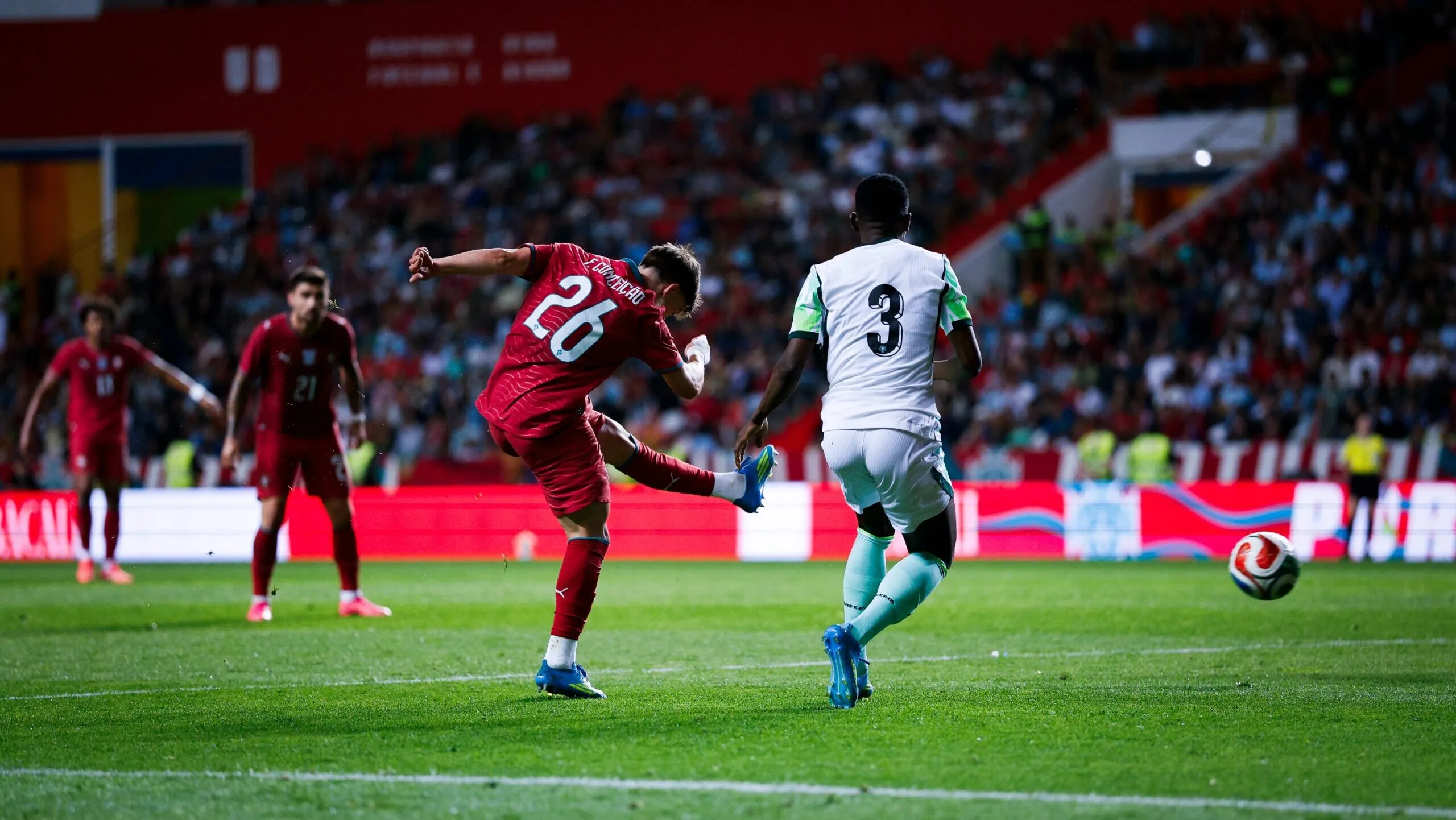
The final whistle in Leiria echoed through the humid Portuguese evening, but the roar of celebration belonged to one side alone. Portugal, in their last tune-up before the 2026 FIFA World Cup, edged out Nigeria 2-1 in a match that crackled with intensity, technical brilliance, and moments of sheer unpredictability. The game was never just a friendly—it was a statement, a test, and for the Super Eagles, a cautionary tale.
What unfolded on the pitch was a microcosm of modern football: tactical chess matches between two teams brimming with talent, each probing for weaknesses in the other’s armor. Portugal, under Roberto Martínez, entered the clash with confidence after a string of impressive performances, while Nigeria, under José Peseiro, arrived with the weight of a nation’s expectations. The stage was set for fireworks—and fireworks there were.
The Early Pressure: Nigeria’s Dominance in the Opening Act
For the first 20 minutes, Nigeria dictated the tempo with a relentless high press, suffocating Portugal’s midfield and forcing errors. The Super Eagles’ wingers, particularly Kelechi Iheanacho, stretched the Portuguese defense with blistering runs, while midfield general Wilfred Ndidi marshaled the transitions with surgical precision. The pressure told early when Nigeria broke through in the 12th minute. A swift counterattack, initiated by Victor Osimhen’s lightning pace, ended with a pinpoint cross from Alex Iwobi that found Taiwo Awoniyi. The striker, unmarked in the box, nodded the ball past Diogo Costa with a header that left the Portuguese goalkeeper stranded.
The goal sent shockwaves through the Estádio Municipal de Leiria. Portugal, a team accustomed to possession and control, found themselves on the back foot. The crowd, a mix of Portuguese supporters and a smattering of Nigerian fans, erupted in unison—a testament to the global appeal of the clash.
Portugal’s Response: A Tactical Masterclass
Roberto Martínez, never one to panic, adjusted his approach. The introduction of Bernardo Silva in the 25th minute shifted the dynamics entirely. Silva, with his dribbling and vision, began to carve open Nigeria’s defense, and by the 38th minute, the deadlock was broken. A free-kick from Bruno Fernandes, curled with venomous precision, found the head of Gonçalo Inácio, who powered a header past Stanley Nwabali. The equalizer was a masterclass in set-piece execution, and it restored order to the contest.
As the first half drew to a close, the momentum had swung firmly in Portugal’s favor. The midfield trio of Bruno Fernandes, João Neves, and Silva began to dominate possession, while Nigeria’s once-formidable press grew labored. The Super Eagles, though dangerous on the break, found themselves chasing shadows in the final third.
The Turning Point: Conceição’s Moment of Genius
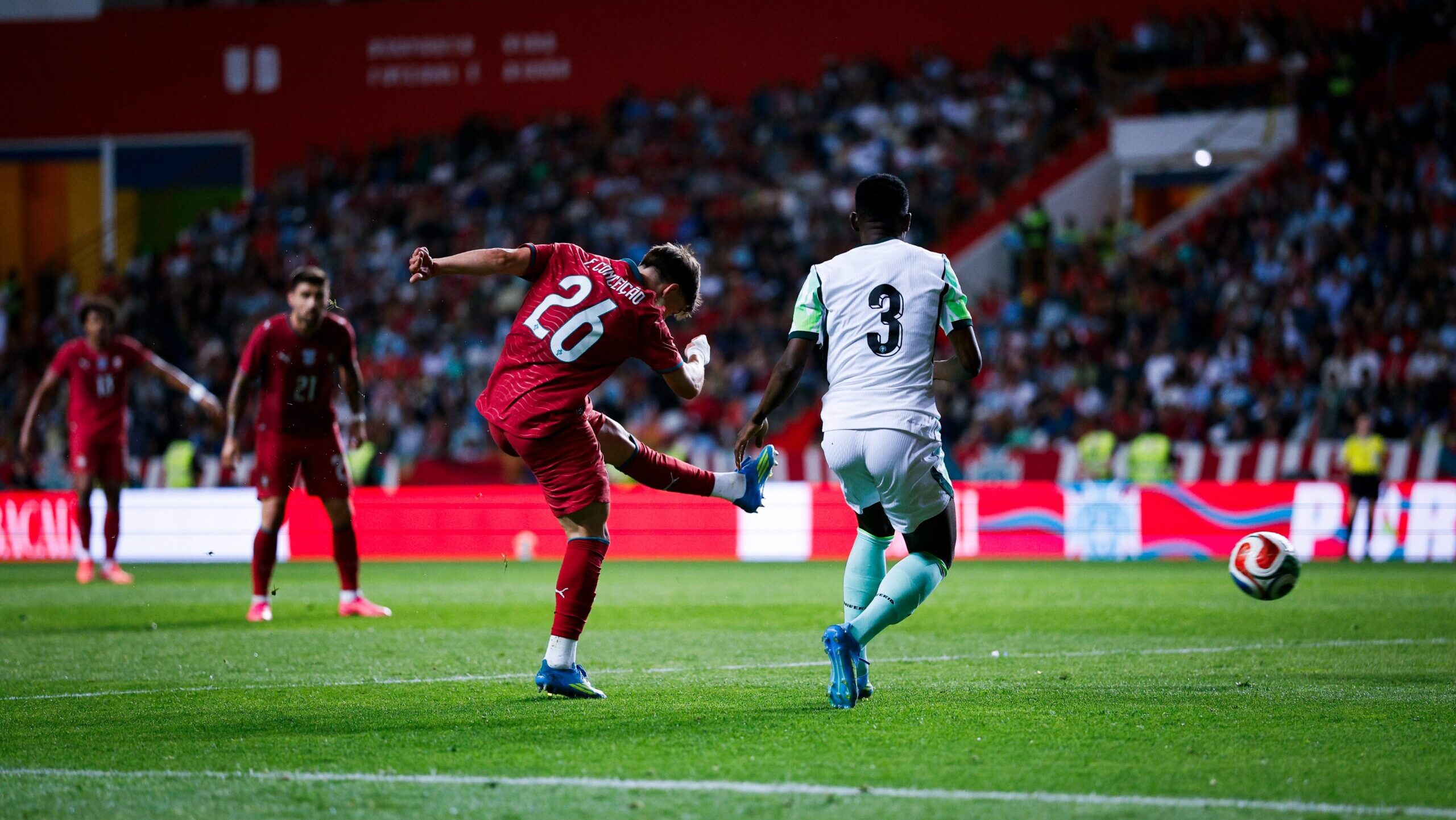
The second half began with Nigeria pushing for a winner, but Portugal’s defense, marshaled by Rúben Dias, stood firm. The deadlock held until the 78th minute—a moment that would define the match. A swift transition from defense to attack saw Portugal break at pace. Rafael Leão, the lightning-fast winger, skipped past two Nigerian defenders before squaring the ball to Gonçalo Conceição, who had made a late run into the box. The 21-year-old midfielder, playing with the composure of a seasoned veteran, controlled the ball with his chest and unleashed a thunderous volley into the top corner. The net bulged. The stadium erupted. And Nigeria’s hopes of a famous victory vanished in an instant.
Conceição’s strike was not just a goal—it was a statement. A statement that Portugal, despite their recent struggles in major tournaments, were ready to make a statement on the world’s biggest stage. It was also a reminder that Nigeria’s World Cup ambitions would require more than just talent; they would need ruthless efficiency in the final third.
Nigeria’s Frustration: A Night of Near Misses
For Nigeria, the defeat was a bitter pill to swallow. The Super Eagles dominated possession for large stretches, particularly in the first half, and created several clear chances. Osimhen, Nigeria’s talisman, had two golden opportunities to extend his side’s lead but was denied by Diogo Costa, who pulled off a string of world-class saves. The frustration was palpable as Nigeria’s players, usually so composed under pressure, began to make uncharacteristic errors. A misplaced pass here, a missed tackle there—each mistake punished by Portugal’s clinical attackers.
The final whistle brought a mix of emotions for the Nigerian players. There was pride in their performance, but also a sense of missed opportunity. The Super Eagles had shown glimpses of their potential, but the ruthlessness required to convert those glimpses into goals was glaringly absent. For a team with such a rich attacking talent pool, the inability to finish games remains a persistent concern.
The Aftermath: Questions for Both Teams
The result in Leiria leaves more questions than answers for both teams as they look ahead to the World Cup. For Portugal, the victory will do little to silence the critics who question their tournament pedigree. While they showed flashes of brilliance, their inability to control the game for sustained periods is a concern. Roberto Martínez will be tasked with refining his tactics and ensuring his squad arrives in the United States, Canada, and Mexico with the right blend of confidence and composure.
For Nigeria, the defeat is a stark reminder of the fine margins that separate success from failure in football. The Super Eagles have a squad brimming with talent, but their inconsistent finishing and defensive frailties in transition could prove costly in the World Cup. José Peseiro will need to address these issues urgently if Nigeria are to progress beyond the group stage.
One thing is certain: both teams will take vastly different lessons from this encounter. Portugal will take confidence from their ability to grind out a result in a high-pressure scenario, while Nigeria will rue their missed chances and defensive lapses. As the World Cup approaches, the stakes could not be higher.
Key Takeaways from the Clash
The Leiria showdown offered several talking points for football pundits and fans alike. Here’s what stood out:
- Portugal’s resilience: Despite Nigeria’s early dominance, Portugal showed character to fight back and secure all three points. Their ability to absorb pressure and strike on the counter will be crucial in the World Cup.
- Nigeria’s finishing woes: The Super Eagles created enough chances to win the game but lacked the clinical edge in front of goal. Osimhen and Awoniyi will need to be more ruthless in the tournament proper.
- Conceição’s breakthrough: The young midfielder announced himself on the global stage with a goal of pure quality. His performance could earn him a starting berth in Portugal’s World Cup squad.
- Defensive frailties: Both teams showed vulnerabilities at the back. Portugal’s high line was exposed at times, while Nigeria’s transitions left them vulnerable to quick counters.
- The importance of set pieces: Both goals in the match came from set pieces, highlighting their significance in modern football. Teams that master these situations will have a distinct advantage in the World Cup.
Looking Ahead: The Road to the World Cup
The Leiria clash was more than just a friendly—it was a glimpse into the challenges that lie ahead for both Portugal and Nigeria. For the Portuguese, the focus will now shift to fine-tuning their squad and ensuring they peak at the right time. With a golden generation of players at their disposal, the pressure is on to deliver in the World Cup.
For Nigeria, the defeat serves as a wake-up call. The Super Eagles have the talent to go far, but their inconsistency could prove their undoing. Peseiro will need to instill a winning mentality and address the team’s defensive frailties if they are to make a deep run in the tournament.
The World Cup is a stage where reputations are made and broken. Portugal and Nigeria, two teams with contrasting fortunes in recent years, will now turn their attention to the biggest prize in football. The lessons from Leiria will be invaluable as they prepare to write their stories in the United States, Canada, and Mexico.
Copyright notice: Images and source material are credited to their respective owners/source (original source where available). If you are the copyright owner and want an image or content removed, please contact us at topix.news/contact-us; we will review and remove it promptly.

Topix News Desk is a digital editorial team focused on delivering clear, timely, and useful news coverage for readers worldwide. Our reporting highlights African news with global context, including politics, business, economy, technology, health, sports, entertainment, travel, and culture. We aim to publish accessible, well-structured, and informative articles that help readers understand the stories shaping Africa and the world.