
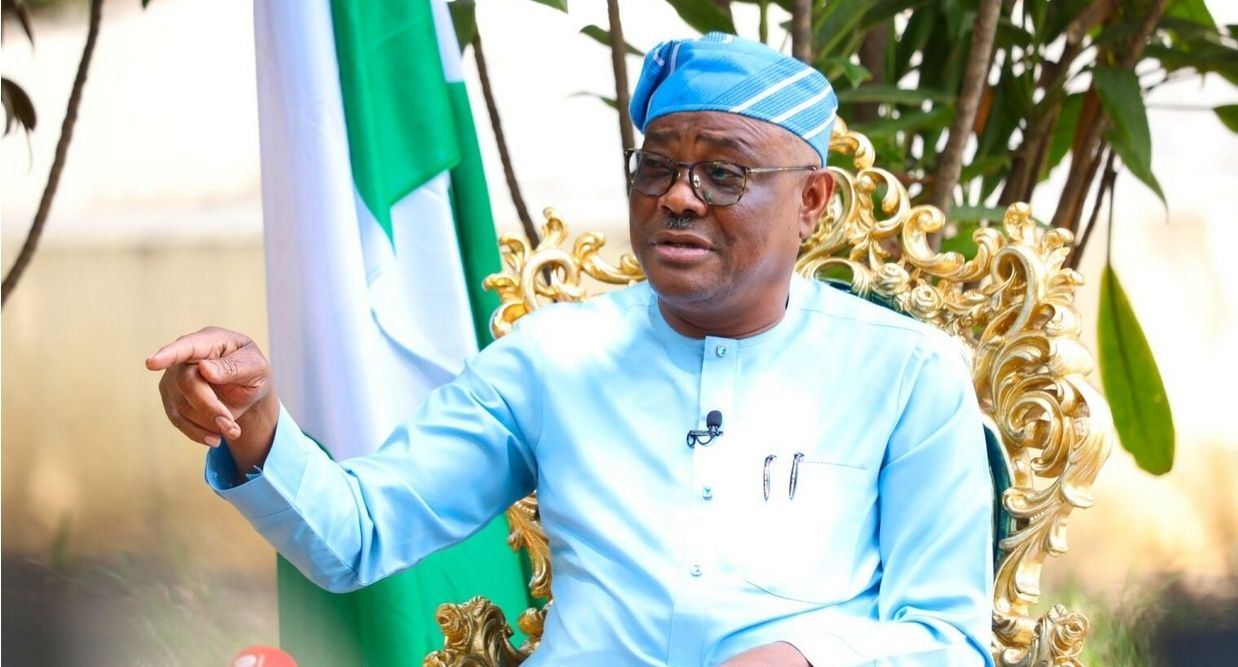
Nigeria stands at a crossroads, its once-vibrant pulse now faltering under the weight of systemic decay. The country’s economic engine, once the pride of West Africa, now sputters with inflationary pressures and a widening gulf between promise and reality. In this climate of uncertainty, a new voice rises from the political arena—one that demands not just change, but a full-scale resuscitation of the nation’s foundational pillars. Emmanuel Olorunmagba, the National Rescue Movement’s (NRM) candidate for the House of Representatives, has positioned himself as a catalyst for this revival, framing his campaign around a single, resounding message: Nigeria must be rescued.

The urgency of his call is not lost on a populace weary of empty promises and half-measures. Olorunmagba’s pledge to align with the NRM’s Rescue Nigeria agenda arrives at a moment when the nation’s social fabric is stretched thin. Youth unemployment hovers near 40%, infrastructure crumbles under decades of neglect, and insecurity casts a long shadow over daily life. Yet, amid the gloom, his candidacy offers a rare glimmer of specificity—a roadmap that transcends rhetoric and targets tangible solutions.
From Political Rhetoric to Actionable Plans
Olorunmagba’s vision extends beyond the usual political platitudes. His focus on effective representation is not merely a slogan but a commitment to bridge the chasm between governance and grassroots needs. The NRM’s agenda, which he vows to champion, is built on three core pillars: economic stabilization, institutional reform, and social welfare expansion. These are not abstract ideals but a blueprint for measurable progress.
Economic stabilization tops the list, with proposals to tackle inflation through targeted fiscal policies and local manufacturing incentives. The goal? To reduce Nigeria’s reliance on imports—a dependency that has drained foreign reserves and stifled domestic industries. Olorunmagba’s approach is pragmatic: “We cannot eat policies; we must eat results,” he has stated, emphasizing the need for policies that deliver immediate, visible benefits to citizens.

The Youth Question: A Ticking Time Bomb
No discussion about Nigeria’s future can ignore its youth—over 60% of the population under 25, many of whom see no future within the country’s borders. Olorunmagba’s plan targets this demographic directly, proposing vocational training programs, entrepreneurship grants, and partnerships with private sector players to create jobs. His argument is simple: “A nation that fails its youth fails itself.”
Critics argue that past administrations have made similar promises, only to see them dissolve into bureaucratic inertia. Olorunmagba counters this skepticism by pointing to his track record in advocacy, including work with youth-led initiatives that have already yielded tangible outcomes. Whether these efforts can scale remains to be seen, but the intent is clear: to treat youth unemployment not as a statistic, but as a crisis demanding urgent intervention.
Institutional Reforms: Breaking the Cycle of Corruption
Corruption in Nigeria is not a bug in the system—it is the system’s operating system. Olorunmagba’s rhetoric on institutional reform cuts to the heart of this malignancy, calling for transparency audits in key sectors, digitalization of government services, and stiffer penalties for financial misconduct. His proposal to establish an Independent Anti-Corruption Task Force mirrors similar models in Rwanda and Botswana, where such measures have yielded measurable success.
The challenge, however, is not just in designing these reforms but in enforcing them. Nigeria’s history is littered with anti-corruption agencies that were either neutered by political interference or rendered ineffective by resource constraints. Olorunmagba’s plan includes a provision for third-party oversight, ensuring that these agencies operate with autonomy and accountability. Whether this will be enough to overcome entrenched interests remains an open question, but the framework is a step in the right direction.
Security and Governance: The Twin Pillars of Stability
Security crises—from banditry in the North West to separatist agitations in the South East—have become Nigeria’s most visible wound. Olorunmagba’s approach to this multifaceted challenge is twofold: community policing and regional cooperation. He advocates for empowering local vigilante groups with training and resources, while simultaneously pushing for cross-border collaboration with neighboring countries to dismantle transnational criminal networks.
Governance, too, is a security issue. The perception of a government disconnected from its people fuels instability. Olorunmagba’s promise to decentralize decision-making—bringing governance closer to the people—aligns with the NRM’s federalist leanings. His argument is rooted in pragmatism: “A government that listens is a government that lasts.”
The Opposition’s Shadow: APC’s Counter-Narrative
Not everyone shares Olorunmagba’s urgency. The ruling All Progressives Congress (APC) has framed the Rescue Nigeria agenda as a political maneuver, pointing to its own initiatives like the Nigeria Agri-Business Roundtable and Infrastructure Fund as evidence of progress. Yet, detractors argue that these programs, while well-intentioned, have failed to translate into visible improvements for ordinary citizens.
The APC’s counterargument hinges on stability—arguing that radical overhauls risk destabilizing an already fragile economy. Olorunmagba dismisses this as a fear tactic, insisting that incrementalism has been tried and failed. “We cannot afford to wait another decade for change,” he asserts. The debate, then, is not just about policies but about the pace of transformation—a question of whether Nigeria can afford to move slowly or must sprint to catch up.
What’s at Stake: A Nation’s Future
The stakes could not be higher. Nigeria is not just Africa’s most populous nation; it is the continent’s economic powerhouse, a country whose stability—or instability—ripples across the region. A collapse in Nigeria would trigger a domino effect, destabilizing neighboring states and undermining the African Union’s broader development goals.
Olorunmagba’s candidacy arrives at a critical juncture. The 2027 elections loom large, and the NRM’s message resonates with a populace desperate for alternatives. Yet, the path forward is fraught with obstacles: entrenched political elites, economic constraints, and the sheer scale of the challenges ahead. His campaign, however, offers more than just a critique of the status quo—it presents a vision of what Nigeria could become if the right levers are pulled at the right time.
The question now is whether Olorunmagba’s vision will translate into action. Will his proposals survive the gauntlet of legislative gridlock and bureaucratic resistance? Or will they, like so many before, fade into the annals of unfulfilled promises? One thing is certain: Nigeria cannot afford another cycle of half-measures. The time for rescue is not tomorrow—it is today.
Copyright notice: Images and source material are credited to their respective owners/source (original source where available). If you are the copyright owner and want an image or content removed, please contact us at topix.news/contact-us; we will review and remove it promptly.

Topix News Desk is a digital editorial team focused on delivering clear, timely, and useful news coverage for readers worldwide. Our reporting highlights African news with global context, including politics, business, economy, technology, health, sports, entertainment, travel, and culture. We aim to publish accessible, well-structured, and informative articles that help readers understand the stories shaping Africa and the world.