
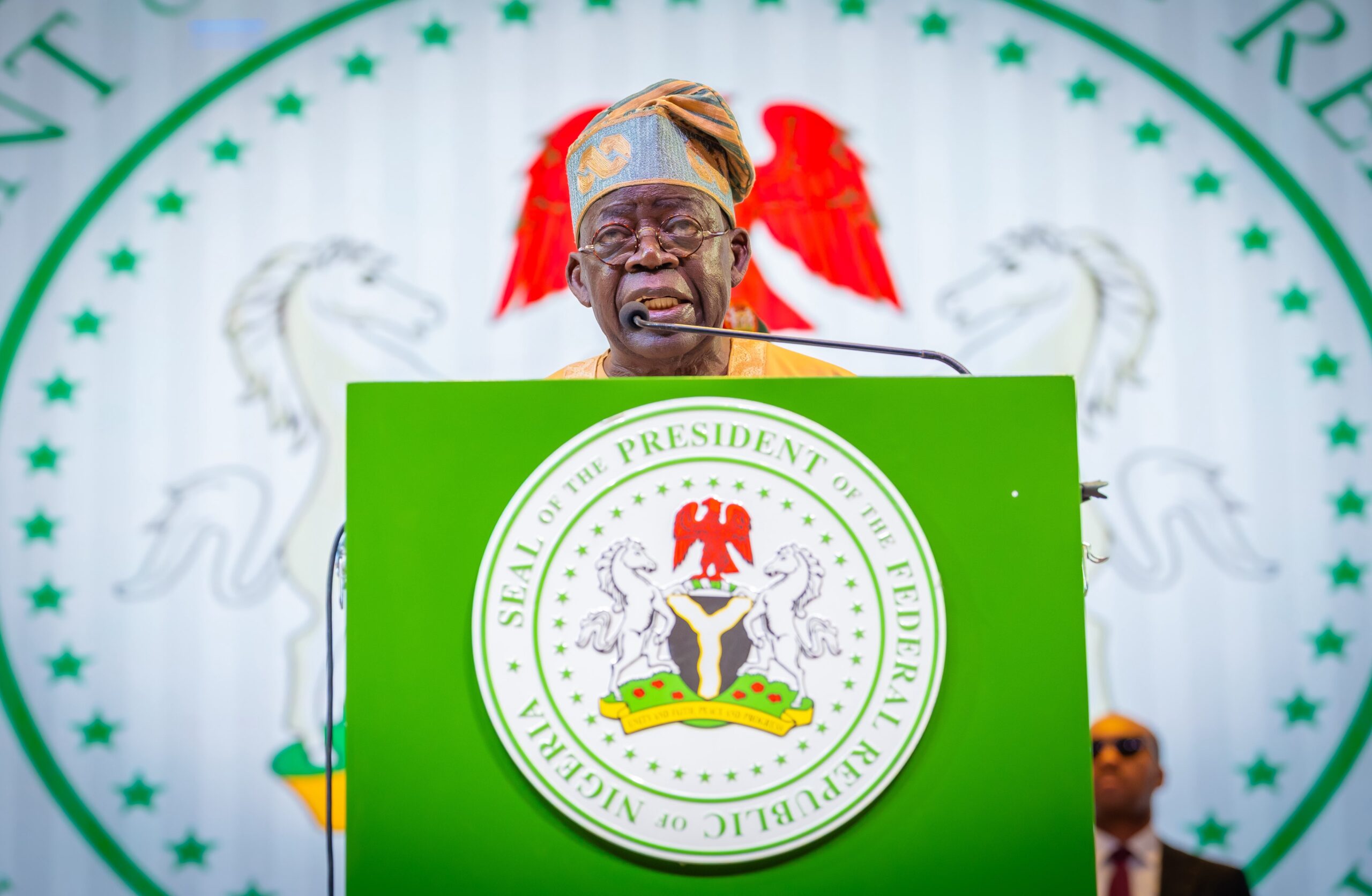
As Nigeria inches closer to the 2027 general elections, the political landscape is heating up with President Bola Tinubu issuing a stern warning against what he describes as ‘politicians with no clear alternative vision.’ In a statement that blends caution with optimism, Tinubu framed the upcoming vote not just as a contest between parties but as a critical test of the nation’s democratic resilience.
The Weight of Democratic Maturity
The president’s remarks come at a time when Nigeria’s democratic institutions face both internal and external pressures. From economic fluctuations to security challenges, the country’s stability hinges on leadership that can navigate complexity without sacrificing long-term progress. Tinubu’s emphasis on ‘democratic maturity’ suggests a recognition that elections are not merely about changing guard but about reinforcing the structures that sustain governance.
Analysts note that this framing is deliberate. Nigeria’s political history is dotted with transitions that either accelerated development or deepened instability. The 2027 election, therefore, is not just another cycle; it is an opportunity to either consolidate gains or risk regression. Tinubu’s administration has overseen policy shifts—some controversial, others celebrated—but the core question remains: Can Nigeria afford another leadership experiment when the stakes are this high?
Continuity vs. Disruption: The Core Dilemma
The debate between continuity and disruption is not new in Nigerian politics. Tinubu’s push for continuity implies a belief that sustained policy implementation, even amid criticism, yields better outcomes than abrupt changes driven by untested agendas. Critics argue that continuity can entrench inefficiencies, while supporters counter that rapid policy reversals often destabilize economies and social programs.
In West Africa, where political transitions frequently spark economic volatility, Nigeria’s approach under Tinubu has been closely watched. Neighbors like Ghana and Senegal have grappled with similar dilemmas, where leadership changes have either stabilized or destabilized regional trade and investment flows. Tinubu’s warning, then, is not just domestic; it carries implications for the broader West African bloc.
The president’s call to reject politicians ‘with no clear alternative vision’ is a subtle jab at opposition figures whose platforms, according to him, lack concrete plans for addressing Nigeria’s most pressing issues. Whether this is a strategic move to preempt criticism or a genuine concern about policy vacuums remains a subject of debate. What is clear, however, is that the electorate is being nudged toward a binary choice: stability or uncertainty.
The Economic and Security Backdrop
Behind Tinubu’s rhetoric lies a complex backdrop of economic pressures and security concerns. Inflation, unemployment, and currency devaluation have tested public patience, while insurgencies and banditry in the north and northwest continue to displace communities and strain resources. In such an environment, the argument for continuity gains traction—especially if the alternative is a slate of candidates whose economic blueprints are either vague or untested.
The president’s administration has championed reforms like the removal of fuel subsidies and the unification of exchange rates, policies that have drawn both praise and condemnation. Supporters credit these moves with stabilizing Nigeria’s financial systems, while detractors blame them for exacerbating poverty. The 2027 election, therefore, will serve as a referendum not just on leadership but on the efficacy of these reforms.
West Africa’s economic trajectory is also at a crossroads. With global commodity prices fluctuating and regional blocs like ECOWAS navigating internal divisions, Nigeria’s role as the continent’s largest economy cannot be overstated. A leadership void or a misstep in policy could ripple across borders, affecting trade, migration, and security partnerships.
What’s at Stake for Voters
For the average Nigerian, the 2027 election is about more than political slogans. It is about access to healthcare, the viability of small businesses, the security of rural communities, and the promise of upward mobility. Tinubu’s warning is a reminder that elections are not abstract exercises; they are the mechanism through which citizens shape their collective future.
The challenge for voters, however, is discerning which candidates offer more than rhetoric. In a political landscape where aspirants often pivot between alliances and ideologies, the demand for clarity is understandable. Tinubu’s emphasis on ‘clear alternative vision’ is a challenge to the opposition to articulate not just what they oppose but what they propose to build.
As the campaign season ramps up, the onus is on political parties to present platforms that resonate with the realities of 2027—not the nostalgia of past eras or the allure of populist promises. The electorate, weary of cycles of unmet expectations, may no longer tolerate ambiguity. Tinubu’s warning, whether intended or not, has set a high bar: Nigeria deserves leadership that can navigate its complexities without resorting to the same old playbook of division and delay.
The 2027 election is not just another chapter in Nigeria’s political saga. It is a moment to either reaffirm the country’s democratic journey or risk a detour that could have lasting consequences. The choice, as Tinubu frames it, is between progress and regression, between vision and vacillation. The question now is whether the electorate will heed the call—or whether the siren song of quick fixes will drown out the need for steady, strategic governance.

Topix News Desk is a digital editorial team focused on delivering clear, timely, and useful news coverage for readers worldwide. Our reporting highlights African news with global context, including politics, business, economy, technology, health, sports, entertainment, travel, and culture. We aim to publish accessible, well-structured, and informative articles that help readers understand the stories shaping Africa and the world.