
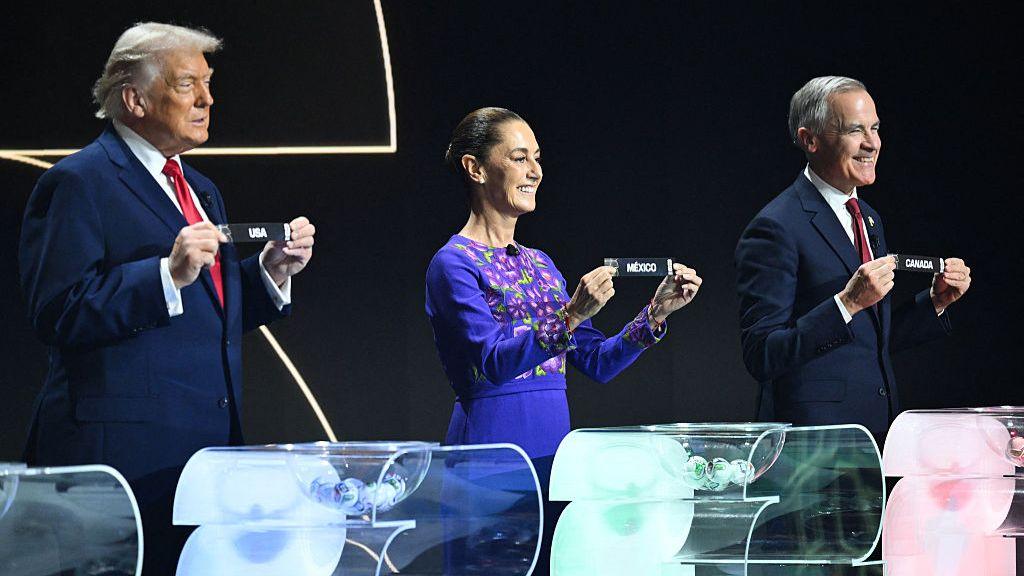
The stage is set for a high-stakes experiment in geopolitical theatre. When the United States, Canada, and Mexico step onto the world stage as co-hosts of the 2026 FIFA World Cup, they are not just inviting the planet’s best footballers—they are daring the planet to believe in a fragile truce. For a month, the spotlight will shift from boardrooms and border disputes to the lush green pitches where rivalries are settled by skill, not sovereignty. Yet beneath the spectacle, a question lingers: Can three nations with a history of diplomatic sparring truly put their differences aside when the world is watching?
The answer may well determine whether the 2026 tournament becomes a celebration of unity or a cautionary tale of how even the grandest of sporting events can be undermined by the weight of unresolved tensions.

From Pitch to Politics: The Uneasy Alliance of Co-Hosts
Few sporting collaborations have been as ambitious—or as unlikely—as the tri-nation bid that secured the 2026 World Cup. The United States, Canada, and Mexico did not just promise stadiums and infrastructure; they pledged to bridge divides that have long simmered beneath the surface of North American relations. Trade wars, border security disputes, and political posturing have all left their mark on the trio’s recent history. Yet when FIFA came calling, the three governments found common ground in the promise of global prestige and economic windfalls.
But prestige is a fragile currency. The cracks in this alliance were visible even before the first whistle blows. Trade tensions between the US and Mexico have flared intermittently, while Canada’s relationship with its southern neighbour has been tested by disputes over energy policy and migration. Even on the football pitch, the rivalries run deep. The US and Mexico, in particular, share a footballing feud that transcends sport, with matches between their national teams often sparking national pride and, at times, nationalistic fervour.
Now, as the tournament approaches, the question is no longer about whether these nations can host a World Cup—they have already proven they can. The real test is whether they can host it together, without the spectre of political friction overshadowing the spectacle.
The Weight of Expectations: What’s at Stake for Each Host
For the United States, the World Cup represents more than just a sporting event; it is a chance to redefine its global image. Long criticised for its isolationist tendencies and polarising domestic politics, America sees the tournament as an opportunity to showcase its diversity, infrastructure, and ability to manage a mega-event. With a sprawling network of stadiums stretching from coast to coast, the US is banking on the World Cup to burnish its credentials as a unifying force—both at home and abroad.
Canada, meanwhile, is playing a different game. With a fraction of the population of its neighbours, Canada’s bid was always about proving that even smaller nations can punch above their weight on the global stage. The World Cup offers Ottawa a platform to highlight its multiculturalism and economic stability, while also testing its ability to manage security and logistics on a continental scale. For a country that often struggles to assert itself in North American affairs, the tournament is a chance to remind the world that Canada is more than just a polite neighbour to the north.
Mexico, too, has its own agenda. For a nation that has long grappled with economic inequality and political instability, the World Cup is a lifeline—a chance to inject billions into local economies and project an image of progress and unity. Yet Mexico’s hosting role comes with unique challenges. The country’s recent political shifts, including the rise of a new administration, have raised questions about whether the tournament will be used as a tool for political grandstanding or genuine national renewal. Can Mexico, with its deep footballing culture but persistent social divides, truly present itself as a stable and welcoming host?
The Diplomatic Minefield: Can Football Bridge the Divide?
The 2026 World Cup is not the first time football has been asked to play peacemaker. From the 1970 World Cup in Mexico, which helped heal the wounds of the 1968 Tlatelolco massacre, to the 2010 tournament in South Africa, which became a symbol of post-apartheid reconciliation, the beautiful game has often been a catalyst for unity. Yet the dynamics of North America’s political landscape are far more complex than those of past tournaments.
Trade wars, immigration policies, and even climate change agreements have created fault lines that football alone may struggle to paper over. The US-Mexico border, a symbol of both economic interdependence and political tension, will be a constant reminder of the challenges ahead. How will the hosts address the humanitarian crises unfolding just miles from the stadiums? Will the tournament’s organisers use the platform to advocate for policy changes, or will they shy away from controversy in the name of neutrality?
There are also the symbolic gestures to consider. Will the three host nations share a unified opening ceremony? Will their national anthems be played in harmony, or will each country’s pride take precedence? And perhaps most importantly, will the fans—many of whom have grown up with the rivalries that define North American football—embrace the spirit of togetherness, or will old tensions resurface in the stands?
The answers to these questions will shape not just the 2026 World Cup, but the legacy of North American football itself.
The Fan Experience: A Test of Hospitality and Security
For the millions of fans expected to descend on North America, the World Cup is about more than just the matches. It is about the experience—the chance to travel across borders, explore new cities, and immerse themselves in the culture of their host nations. Yet the logistics of such an undertaking are daunting. With matches spread across 16 cities in three countries, organisers face the challenge of ensuring seamless travel, security, and fan engagement on an unprecedented scale.
Security, in particular, will be a top priority. The 2022 World Cup in Qatar faced criticism over human rights abuses and poor working conditions, while the 2018 tournament in Russia was marred by political controversies. The 2026 hosts have pledged to avoid such pitfalls, but the reality of hosting a global event in a region with its own security challenges will test their resolve. From visa policies to crowd control, every decision will be scrutinised for its impact on the fan experience.
Yet the potential rewards are immense. The World Cup has the power to transform local economies, boost tourism, and create lasting memories for fans. For cities like Atlanta, Toronto, and Mexico City, the tournament could be a springboard for future growth. But success will depend on more than just infrastructure—it will require a commitment to inclusivity, accessibility, and sustainability. Can the hosts deliver an experience that feels truly global, or will the event be bogged down by bureaucratic hurdles and political infighting?
The Footballing Stakes: Who Will Rise to the Occasion?
While the diplomatic and logistical challenges are significant, the heart of the World Cup will always be the football. With 48 teams competing across a month-long tournament, the 2026 edition promises to be the most expansive in history. For the host nations, the pressure to perform will be immense. The US, Canada, and Mexico will each be hoping to make a deep run in the tournament, not just to please their home fans but to prove that their footballing ambitions are on par with their economic and political clout.
For the US, the burden of expectation is particularly heavy. With a squad featuring stars like Christian Pulisic and Weston McKennie, the Americans are aiming to go further than they ever have in a World Cup. A strong showing could cement their status as a footballing powerhouse, while a disappointing performance might fuel criticism of the country’s investment in the sport.
Canada, meanwhile, is riding a wave of optimism after qualifying for its first World Cup since 1986. With a young and talented squad led by Alphonso Davies, the Canadians are determined to make their mark. A deep run in the tournament could inspire a new generation of footballers and help grow the sport in a country where hockey still dominates the sporting landscape.
Mexico, too, has a golden opportunity. With a squad packed with experience and flair, *El Tri* will be aiming to go beyond their usual quarter-final appearances. For a nation where football is a way of life, a strong performance in 2026 could be a source of national pride and unity in a time of political and social upheaval.The footballing stakes are high, but the real drama may lie in how the three host nations interact on and off the pitch. Will their rivalries fuel their performances, or will the pressure of co-hosting prove too much to bear?
The Legacy Question: What Will the 2026 World Cup Leave Behind?
Beyond the matches and the medals, the 2026 World Cup will leave a lasting legacy—one that extends far beyond the football pitch. For the host nations, the tournament is an opportunity to address long-standing social and economic issues, from infrastructure gaps to income inequality. Will the World Cup be a catalyst for change, or will it simply be a fleeting moment of unity that fades once the final whistle blows?
There are also the environmental considerations. With climate change threatening to disrupt global sporting events, the 2026 hosts have pledged to make the tournament one of the most sustainable in history. From carbon-neutral stadiums to eco-friendly fan zones, the organisers are promising a green revolution. Yet the reality of hosting such a massive event in three countries with varying environmental policies will be a challenge.
And then there is the question of unity. Can the 2026 World Cup become a symbol of North American cooperation, or will it merely highlight the divisions that still exist? The answer may well depend on how the hosts choose to address the issues that have long defined their relationship—trade, migration, and climate policy. Will the tournament be a platform for dialogue, or will it be a missed opportunity to bridge the gaps that divide them?
A Final Bet on Unity
The 2026 World Cup is more than just a football tournament; it is a high-stakes gamble on the power of sport to transcend politics. For three nations with a history of rivalry, the challenge is not just to host a successful event but to prove that even the most entrenched divisions can be overcome—if only for a month.
The world will be watching, not just to see who lifts the trophy, but to see whether the hosts can rise above their differences and deliver a tournament that celebrates the best of humanity. The stakes could not be higher, and the pressure is on. Will the 2026 World Cup be remembered as a triumph of unity, or as a cautionary tale of what happens when politics and sport collide?
The answer, like the tournament itself, will unfold in real time. One thing is certain: the world will not forgive a failure of imagination.
Copyright notice: Images and source material are credited to their respective owners/source (original source where available). If you are the copyright owner and want an image or content removed, please contact us at topix.news/contact-us; we will review and remove it promptly.

Topix News Desk is a digital editorial team focused on delivering clear, timely, and useful news coverage for readers worldwide. Our reporting highlights African news with global context, including politics, business, economy, technology, health, sports, entertainment, travel, and culture. We aim to publish accessible, well-structured, and informative articles that help readers understand the stories shaping Africa and the world.