

When President Bola Ahmed Tinubu unveiled his administration’s ambitious legacy road projects, the promise was clear: transform Nigeria’s decaying infrastructure into a modern network that binds every region together. Yet, as the dust settles on the latest ministerial briefings, a striking imbalance has emerged. Over 60% of these high-profile projects now stretch across the vast savannas and arid plains of northern Nigeria, leaving southern states to question whether the federal government’s vision truly reflects the spirit of unity it claims to uphold.

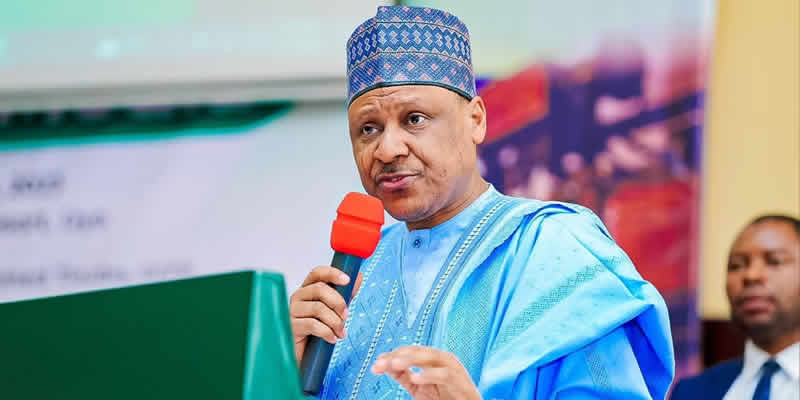
This revelation, delivered by Minister of Works and Housing, David Umahi, during a press briefing in Abuja, has ignited a fresh round of debates about Nigeria’s fractious relationship with its own geography. While the north’s vast landmass and sparse population density might justify a higher concentration of long-distance highways, critics argue that the disparity risks deepening the economic divide between Nigeria’s regions. For a country where infrastructure often dictates opportunity, the allocation of these projects could reshape the economic fortunes of millions.
Where the Roads Lead: A Map of Nigeria’s New Infrastructure
The numbers are stark. According to Umahi, the northern states—from Zamfara to Borno, Kano to Kebbi—are home to more than 60% of the 12,000 kilometers of roads earmarked under the legacy project. The Trans-Saharan Highway, a flagship initiative aimed at linking Nigeria to Algeria and Morocco, snakes through the Sahel, promising to unlock trade corridors that have long been stifled by neglect. Meanwhile, the Lagos-Ibadan expressway, a critical artery for the southwest’s economic engine, finds itself dwarfed by the sheer scale of projects in the north.
But why the tilt? Umahi, a former governor of Ebonyi State, frames the distribution as a strategic move to address the north’s historical underdevelopment. “The north has been left behind for decades,” he told reporters. “These projects are not just about roads; they’re about giving every Nigerian a fair shot at prosperity.” Yet, the argument does little to assuage concerns in the south, where governors and business leaders warn that such lopsided development could exacerbate existing grievances over resource allocation.
Take, for example, the case of Rivers State, where the federal government’s Niger Delta Development Commission (NDDC) has long been criticized for failing to deliver on its promises. With the legacy road projects bypassing the region’s crumbling highways, some residents fear that the north’s gain will come at the south’s expense. “Infrastructure is the lifeblood of any economy,” said a Port Harcourt-based economist who requested anonymity. “If the federal government continues to prioritize one region over others, we risk creating a two-tier Nigeria—one that thrives and one that stagnates.”


The Economic Ripple Effect: Who Benefits from the New Roads?
The implications of this infrastructure shift extend far beyond mere connectivity. Roads are economic multipliers, and their absence or presence can dictate the fate of entire industries. In the north, the construction of the Kano-Maradi-Katsina corridor is expected to slash travel times between Nigeria and Niger, potentially reviving cross-border trade that has languished for years. For farmers in Jigawa, the new roads could mean faster access to markets in Kano, where demand for agricultural produce is high. In Borno, where insurgency has crippled local economies, the rehabilitation of the Maiduguri-Damaturu road could be a lifeline for communities desperate to reconnect with the rest of the country.
Yet, the south’s concerns are not without merit. Lagos, Nigeria’s commercial capital, has long struggled with gridlock, and the expansion of the Lagos-Ibadan expressway, though underway, has been plagued by delays and cost overruns. Meanwhile, the east’s industrial hubs in Aba and Onitsha rely on roads that are frequently washed out during the rainy season. Without similar federal investment, these regions risk losing ground to their northern counterparts in the race for economic dominance.
“The north is getting a new lease on life,” admitted a Lagos-based logistics company owner. “But what about the rest of us? If the federal government’s vision is truly national, it needs to balance these projects with investments in the south’s decaying infrastructure.”
Political Calculus: A Calculated Move or a Misstep?
Political analysts see this infrastructure tilt as more than just an economic strategy—it’s a calculated play in Nigeria’s delicate political chessboard. President Tinubu, a southwestern leader, has faced criticism from northern politicians who accuse him of neglecting their region during his first term. By directing a disproportionate share of legacy projects to the north, the administration may be attempting to shore up support ahead of the 2027 elections. “Politics in Nigeria is often about perception,” said a political science professor at the University of Ilorin. “If Tinubu can show tangible development in the north, he strengthens his base there. That’s smart politics, even if it’s not equitable.”
Yet, this strategy carries risks. The south’s growing frustration with perceived marginalization could fuel separatist sentiments, particularly in the southeast, where calls for Biafra have gained traction in recent years. “When people feel left behind, they look for alternatives,” warned a human rights activist based in Enugu. “The federal government would do well to remember that infrastructure isn’t just about roads—it’s about trust.”
What’s Next for Nigeria’s Infrastructure Divide?
As the debate rages, the federal government has signaled that it will not backtrack on its road projects. Umahi confirmed that construction on several northern highways is already underway, with completion dates targeted for 2027. Meanwhile, southern governors have begun lobbying for a review of the allocation, arguing that their regions deserve a larger share of the pie. “We are not asking for charity,” said a spokesperson for the South-West Governors’ Forum. “We are asking for fairness.”
The road ahead is fraught with challenges. Funding remains a perennial issue, with Nigeria’s dwindling oil revenues forcing the government to seek alternative financing models, including public-private partnerships. Environmental concerns, particularly in the Niger Delta, could also derail projects if not addressed proactively. And then there’s the question of maintenance—Nigeria’s history is littered with half-finished projects that crumble within years of completion.
For now, the legacy road projects stand as a testament to Nigeria’s potential—and its persistent inequalities. Whether they will bridge the gap between the north and south or widen it further remains to be seen. One thing is certain: in a country where every kilometer of tarmac tells a story, the choices made today will shape Nigeria’s tomorrow.
Nigeria’s Infrastructure Future: A Balanced Vision?
As Nigeria’s population surges past 230 million, the demand for functional infrastructure has never been greater. The legacy road projects, while ambitious, are just one piece of a much larger puzzle. To achieve true equitable development, the federal government must address systemic issues that have long plagued the country’s infrastructure ecosystem:
- Regional equity: Ensure that every geopolitical zone receives a fair share of federal infrastructure investments, with clear timelines and accountability measures.
- Local engagement: Involve state governments and community leaders in project planning to ensure that roads and highways meet the actual needs of the people they serve.
- Sustainable funding: Explore innovative financing models, such as toll roads and infrastructure bonds, to reduce reliance on dwindling federal allocations.
- Maintenance culture: Implement a robust maintenance framework to prevent the rapid deterioration of newly constructed roads, a chronic issue in Nigeria.
- Transparency: Publish detailed project reports and progress updates to foster public trust and deter corruption.
Nigeria stands at a crossroads. The legacy road projects offer a rare opportunity to rewrite the country’s infrastructure narrative—but only if they are implemented with a vision that transcends regional divides. For a nation often described as the giant of Africa, the true measure of its greatness may well lie in the roads it builds—and the futures they connect.
Copyright notice: Images and source material are credited to their respective owners/source (original source where available). If you are the copyright owner and want an image or content removed, please contact us at topix.news/contact-us; we will review and remove it promptly.

Topix News Desk is a digital editorial team focused on delivering clear, timely, and useful news coverage for readers worldwide. Our reporting highlights African news with global context, including politics, business, economy, technology, health, sports, entertainment, travel, and culture. We aim to publish accessible, well-structured, and informative articles that help readers understand the stories shaping Africa and the world.