

Auburn University’s College of Education doctoral student Caleb Norton has returned from a life-altering academic and cultural immersion in Ghana, where his work in music education transcended traditional scholarly boundaries. Through teaching, research, and cross-cultural collaboration at the University of Cape Coast, Norton gained invaluable insights into how music serves as a unifying force across communities, cultures, and continents—a perspective that is now reshaping his academic and professional trajectory.
A Journey Beyond Academia: Music as a Bridge Across Borders
Norton’s experience in Ghana was far more than an academic exchange; it was a transformative odyssey that deepened his understanding of music’s role in education, community, and cultural identity. As a graduate teaching assistant in instrumental music education and a doctoral candidate, Norton’s visit to the University of Cape Coast was structured around seminars, workshops, and collaborative research, but its true value lay in the unscripted moments of connection—whether in classrooms, community gatherings, or informal discussions with faculty and students.
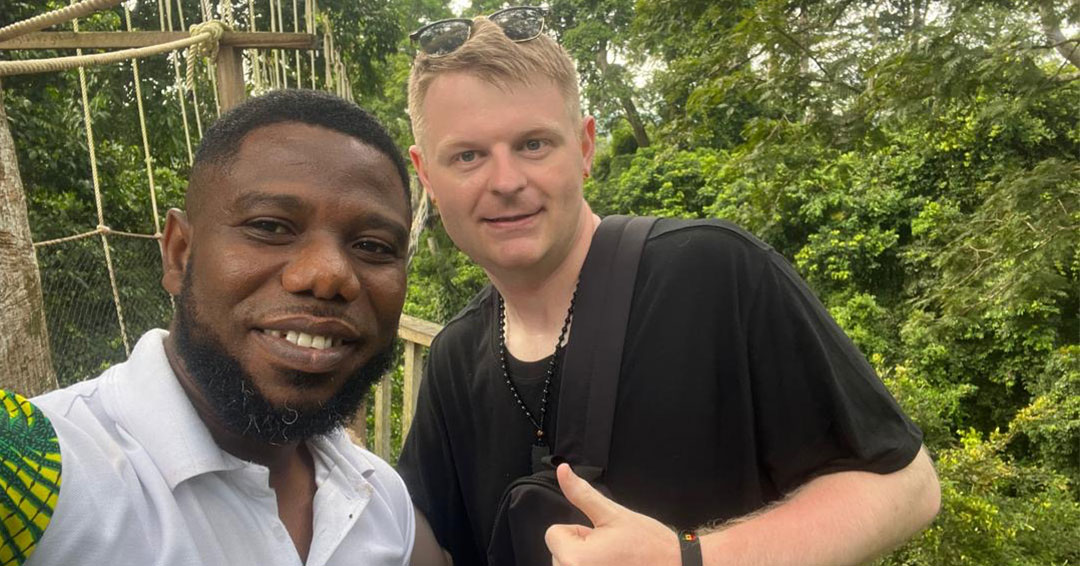
Caleb Norton (right) stands with Dr. John-Doe Dordzro, chair and senior lecturer for music and dance at the University of Cape Coast, during a visit to the Kaum National Rain Forest Preserve—a moment that highlighted the intersection of nature, culture, and education in Ghana.
“This was not just about presenting my research,” Norton reflected. “It was about listening, observing, and learning—understanding how music functions in Ghanaian society and how those lessons can enrich music education globally.” His time in Cape Coast revealed the power of music as a cultural artifact, a tool for social cohesion, and a medium for preserving heritage, insights that are now central to his evolving pedagogical philosophy.
Culturally Responsive Teaching and World Music Pedagogy
One of Norton’s most profound takeaways was the importance of culturally responsive teaching—an approach that centers the experiences, languages, and traditions of students in the classroom. During his visit, he engaged with Ghanaian educators and students in discussions that explored how local musical traditions could be integrated into curricula, fostering a more inclusive and relevant learning environment.
“What I’m bringing back is a stronger commitment to world music pedagogy and global collaboration,” Norton explained. “The ways music educators in Ghana approach their work—whether through traditional instruments, community-based learning, or intergenerational knowledge-sharing—offers valuable lessons for educators in the U.S.”
His observations also underscored the role of music in community building, from school ensembles to public celebrations. 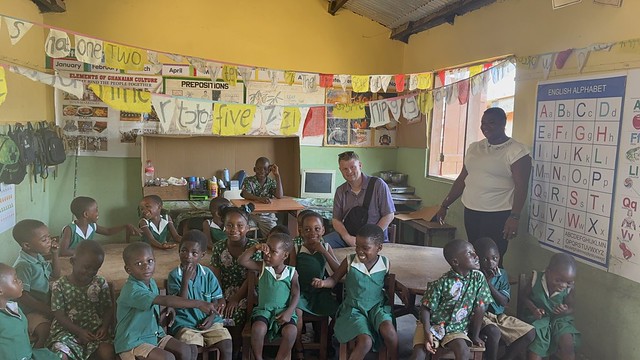 Norton participates in a kindergarten class at a public Catholic school in Cape Coast, demonstrating how early childhood music education can be adapted to reflect local cultural values.
Building Lasting Academic Partnerships
Norton’s experience in Ghana was not a one-time exchange but the foundation for an ongoing collaboration between Auburn University and the University of Cape Coast. His initial visit, facilitated through his intentional networking in music education and African diasporic studies, led to an invitation for a five-week residency in the near future. During this extended stay, Norton will engage in guest lectures, workshops, and joint research, further exploring how music education can be mutually beneficial for institutions in the U.S. and Africa.
“This residency will allow me to deeply immerse myself in the teaching and research practices here,” Norton said. “I’m particularly excited about continuing conversations on world music integration, culturally relevant teaching strategies, and how music can serve as a tool for social change.”
A Scholar’s Path: From Alabama to Global Influence
Norton’s academic journey reflects a dedication to bridging theory and practice in music education. After earning his undergraduate degree from Alabama A&M University, a historically Black college and university (HBCU), he found at Auburn a supportive environment that nurtured his growth as both a scholar and educator.
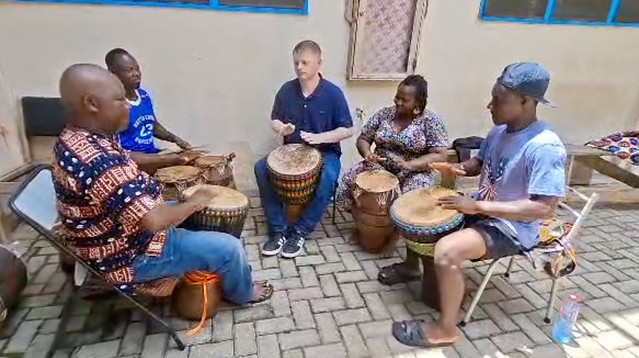
Norton plays traditional drums with community members in Cape Coast, illustrating the role of music in Ghanaian social and cultural life—a moment that reinforced his belief in music’s ability to foster connection.
“Auburn’s College of Education has given me the freedom to explore, collaborate, and take risks in my research,” he noted. “The college’s emphasis on innovation, cultural awareness, and community engagement aligns perfectly with my vision for music education.”
His long-term goal is to train the next generation of educators—equipping them with the creativity, cultural fluency, and global perspective needed to make music education meaningful and inclusive. Norton’s own path serves as a model for students, demonstrating how proactive networking, cultural humility, and a willingness to learn can transform academic opportunities into professional and personal growth.
Advice for Aspiring Educators: Embrace the Journey
For current and prospective students in Auburn’s College of Education, Norton’s experience offers practical wisdom for navigating an ever-evolving field.
“My advice is simple: Stay open, stay curious, and seize every opportunity to step outside your comfort zone,” he advised. “Whether it’s through international collaborations, community partnerships, or interdisciplinary research, growth happens when you challenge yourself.”
As Norton prepares for his return to Ghana, his work exemplifies how music education can transcend borders, fostering cross-cultural understanding, academic exchange, and lifelong learning—one rhythm at a time.
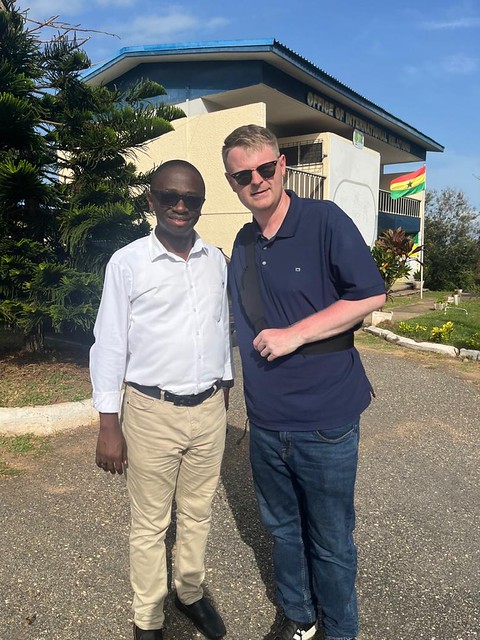
Norton meets with the dean of the Office of International Affairs at the University of Cape Coast, solidifying the institutional ties that will sustain future collaborations between Auburn and Ghana.
