

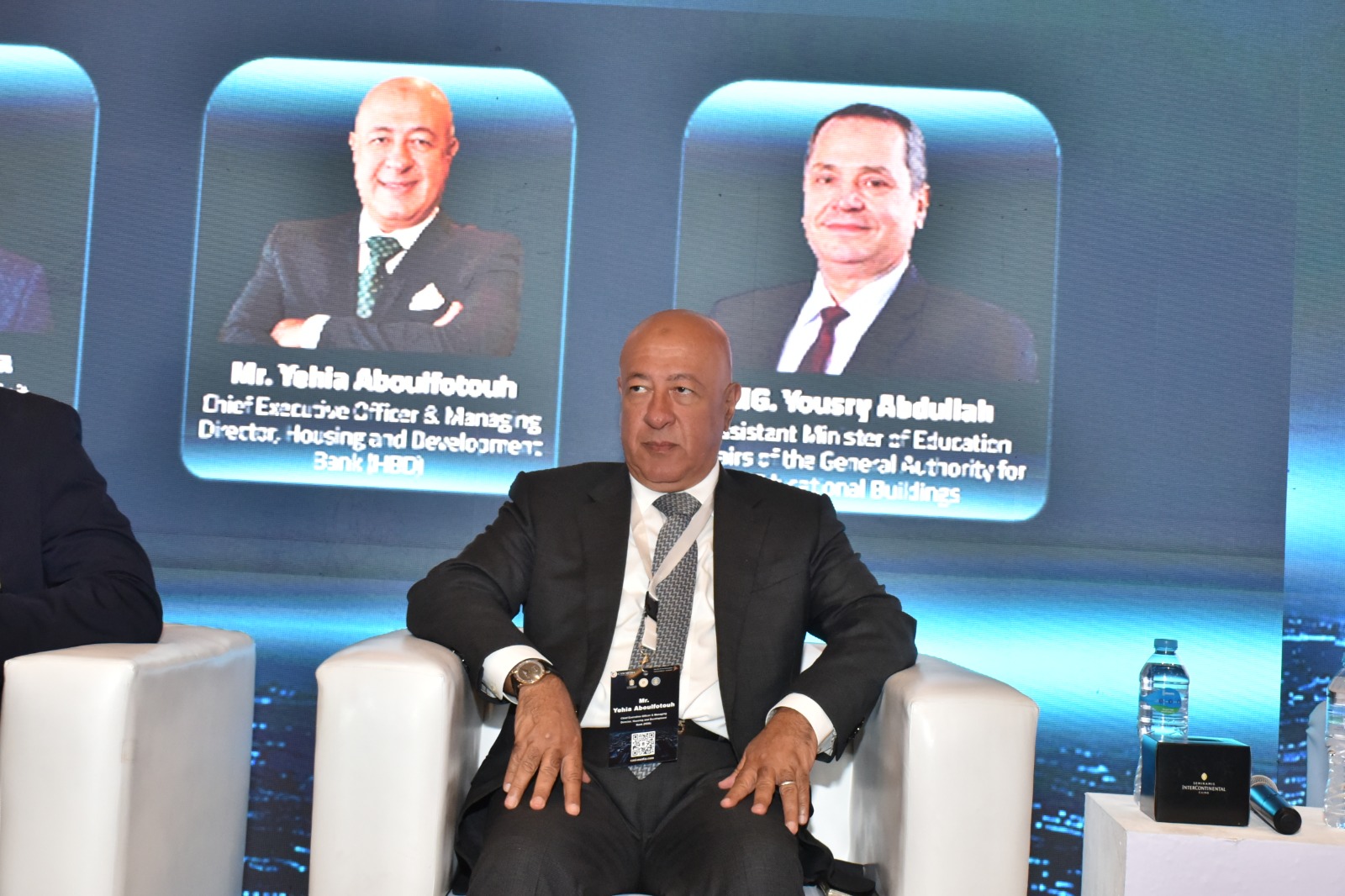
Egypt’s commitment to education as a catalyst for sustainable economic growth has been underscored by Yahia Aboul Fotouh, Chief Executive Officer of the Housing and Development Bank (HDB), during the opening session of the fifth Annual Education Investment Summit. Held under the theme “Creating an Enabling Investment Environment for the Education Sector: The State’s Role in Developing Infrastructure and Attracting Strategic Partnerships,” the summit emphasized the critical intersection of public-private collaboration, infrastructure development, and strategic partnerships in shaping Egypt’s future workforce.
Education as a Strategic Pillar of Economic Development
Aboul Fotouh highlighted that the banking sector views education investment as a long-term strategic asset, essential for building human capital and driving national economic resilience. He noted that Egypt’s government spending on education now exceeds 2.5% of GDP, a significant milestone, though still below the UNESCO-recommended benchmark of 4% to 6%. This underscores the urgency of scaling investment to improve educational outcomes, enhance skill development, and position Egypt as a regional leader in knowledge-based industries.
“Investing in education is not just an expenditure—it is an investment in Egypt’s future,” Aboul Fotouh stated. “The economic returns are substantial, as seen in the country’s remittance inflows, which now approach $40 billion annually—a testament to the value of a skilled workforce.”
Remittances: A Direct Economic Benefit of Skilled Workforce Development
The CEO pointed to remittances from Egyptians working abroad as a key foreign currency driver, with figures nearing $40 billion, a figure that reflects the high demand for skilled professionals in global markets. Engineers, doctors, technicians, and other specialized workers—many of whom were educated in Egypt—contribute significantly to the national economy while operating at lower cost margins compared to other sectors.
“These remittances are a direct consequence of our investment in education,” Aboul Fotouh explained. “By equipping our youth with the right skills, we are not only reducing unemployment but also creating a pipeline of talent that fuels economic growth both domestically and internationally.”
Three Key Pillars of Banking Sector Support for Education
The banking sector, according to Aboul Fotouh, is actively contributing to Egypt’s education ecosystem through three primary pillars:
- Financing Educational Infrastructure
- Banks provide critical funding for the establishment, expansion, and modernization of schools, universities, and technical and vocational education and training (TVET) institutions.
-
This includes construction loans, operational financing, and infrastructure development grants, ensuring that educational facilities meet modern standards.
-
Strategic Partnerships and Private Sector Collaboration
- The banking sector facilitates public-private partnerships (PPPs) to establish new educational institutions, including private universities and specialized training centers.
-
Aboul Fotouh praised the government’s strategy of linking Egyptian universities with leading international institutions, fostering knowledge exchange, academic collaboration, and quality assurance in higher education.
-
Corporate Social Responsibility (CSR) and Applied Research Initiatives
- Banks support underprivileged students through scholarships, bursaries, and financial aid programs.
- They also fund applied research and innovation hubs, such as Zewail City of Science, Technology and Innovation and Nile University, which play a pivotal role in bridging the gap between academia and industry.
The Role of AI and Digital Transformation in Shaping Future Skills
Aboul Fotouh emphasized that rapid advancements in artificial intelligence (AI) and digital transformation are reshaping global labor markets, necessitating a proactive approach to skills development. He highlighted that banks require professionals equipped with future-ready competencies, including data analytics, cybersecurity, and AI-driven problem-solving.
“The banking sector is not just financing education—we are actively shaping it to meet the demands of the fourth industrial revolution,” he stated. “By investing in education today, we are ensuring that Egypt’s workforce remains competitive in a rapidly evolving global economy.”
The Fifth Annual Education Investment Summit: A Platform for Collaboration
The fifth Annual Education Investment Summit, organized by Cassy Media in collaboration with the Ministries of Finance, Investment and Foreign Trade, and Planning, Economic Development and International Cooperation, alongside key stakeholders such as the Egyptian Exchange (EGX), the General Authority for Educational Buildings, and the General Authority for Investment and Free Zones (GAFI), brought together policymakers, investors, and educators to discuss strategic pathways for education financing.
Strategic sponsors of the summit included:
– e-finance, e&Egypt, and True Finance Lease (financial sector leaders)
– Abu Dhabi Islamic Bank Egypt, Badr University in Cairo, and GIZ (institutional partners)
– The Industrial Development Bank, Classera, Tahoun Law Firm, and Khemet AI (specialized advisory and technological support)
The event served as a critical forum for dialogue on how government policies, private sector innovation, and international partnerships can collectively accelerate Egypt’s education sector, ensuring equitable access, quality assurance, and economic integration.
A Call for Continued Investment and Strategic Alignment
As Egypt navigates economic challenges and opportunities, Aboul Fotouh’s insights reinforce the indispensable role of education in driving sustainable development. With remittances near $40 billion and education spending climbing, the nation is positioned to harness its human capital as a key driver of prosperity.
However, further investment in infrastructure, digital literacy, and vocational training remains essential to maximize economic returns and future-proof Egypt’s workforce. The Education Investment Summit stands as a testament to the nation’s commitment—not just to educate, but to empower the next generation of innovators, entrepreneurs, and leaders.

Yahia Aboul Fotouh, CEO of HDB, addresses the fifth Annual Education Investment Summit, underscoring the banking sector’s role in financing Egypt’s education ecosystem.

Delegates and sponsors at the summit discuss strategic partnerships between the government, private sector, and international institutions to enhance Egypt’s education infrastructure.

A modern educational facility funded by banking sector investments, reflecting the growing emphasis on infrastructure development in Egypt’s education sector.
