


The Golden Era: How Ghana Once Dominated African Education
In the decades following independence, Ghana’s educational system was the undisputed benchmark for excellence across Sub-Saharan Africa. Institutions like Achimota School, Mfantsipim, Prempeh College, Wesley Girls’ High School, and the University of Ghana attracted students from neighboring nations, earning international acclaim for their academic rigor, disciplined administration, and intellectual vitality. Ghanaian teachers were not just respected—they were actively recruited by governments in Nigeria, Liberia, Sierra Leone, and beyond to strengthen their own education systems.
This legacy was built on a deliberate vision: education as the cornerstone of national development. Under Dr. Kwame Nkrumah, the 1961 Education Act established free and compulsory primary education, recognizing that literacy was the foundation of a modern nation. The state invested heavily in teacher training colleges, elevating teaching to a prestigious profession. Higher education institutions like KNUST (Kwame Nkrumah University of Science and Technology) and the University of Cape Coast were designed to foster technical expertise, critical thinking, and civic responsibility, ensuring that Ghanaian graduates could lead in industry, governance, and diplomacy.
Yet today, Ghana’s educational system has plummeted in global rankings, with nations like Rwanda, Mauritius, Botswana, and even Rwanda surpassing it in quality, infrastructure, and economic alignment. The question is no longer whether Ghana needs reform—it is how it lost its leadership position and how to reclaim it.
The Anatomy of Decline: Why Ghana Fell Behind
Ghana’s educational decline was not an overnight collapse but the result of decades of systemic neglect, political instability, and misplaced priorities. Below are the key factors that eroded the system’s once-unmatched reputation:
1. Political Instability and Policy Whiplash
The 1966 coup d’état that overthrew Nkrumah marked the beginning of a cycle of military rule and short-lived civilian governments, each introducing competing educational policies without long-term vision. The shifting of the senior high school (SHS) duration—from three to four years and back—is a prime example of how partisan politics undermined educational stability.
2. Chronic Underfunding and Resource Misallocation
While Ghana allocates a significant portion of its budget to education, most funds go toward recurrent expenditures (salaries, administrative costs) rather than capital investments in infrastructure, digital learning, and teacher training. As a result:
– Schools lack basic facilities (electricity, water, functional laboratories).
– Textbooks and digital resources are scarce, forcing students to rely on outdated materials.
– Teacher training programs are underfunded, leading to low morale and high attrition.
3. Weak Supervision and Accountability
The Ghana Education Service (GES) has struggled with poor oversight, leading to:
– High teacher absenteeism (studies show up to 30% of teachers miss classes).
– Unmonitored instructional delivery, particularly in rural public schools.
– Corruption in school inspections, where headteachers and district directors fail to enforce discipline or quality standards.
4. Examination-Centric Pedagogy
The West African Examinations Council (WAEC) has become the be-all and end-all of Ghanaian education, pushing teachers toward “chew, pour, pass”—a system of rote memorization that stifles critical thinking, creativity, and practical skills.
5. Urban-Rural Disparities
A chasm has opened between urban and rural schools:
– Urban schools retain better infrastructure, qualified teachers, and modern resources.
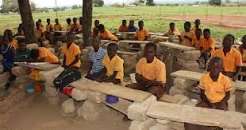
– Rural schools suffer from dilapidated buildings, teacher shortages, and lack of electricity, forcing middle-class families to opt for private education.
6. Declining Prestige of Teaching
Once a respected profession, teaching has become a second-choice career due to:
– Low salaries (real wages have eroded over decades).
– Poor working conditions (lack of resources, excessive administrative burdens).
– Lack of professional development, leaving teachers stagnant in outdated teaching methods.
The Rise of Private Education: A Double-Edged Sword
As public schools declined, private education emerged as a lifeline for parents seeking better quality. Today, private schools—ranging from low-cost community institutions to elite international academies—account for a significant portion of Ghana’s educational landscape.
Advantages of Private Schools:
✔ Stronger teacher supervision (lower absenteeism).
✔ Smaller class sizes (better student-teacher interaction).
✔ Discipline and character formation (many faith-based schools maintain high standards).
Challenges:
❌ Regulatory gaps—many private schools operate without proper oversight.
❌ Affordability issues—while some are low-cost, others remain elite and exclusive.
❌ Brain drain—top teachers leave public schools for higher-paying private institutions.
How the Government Can Partner with Private Schools:
– Quality Assurance: The National Inspectorate Authority (NIA) must conduct regular, unbiased inspections to ensure safety, infrastructure, and pedagogical standards.
– Capacity Building: Private school teachers should have access to state-funded professional development.
– Incentive Systems: The government should subsidize digital resources, textbooks, and infrastructure for private schools in rural and underserved areas.
Lessons from Global Success Stories
Ghana’s decline is stark when compared to nations that once lagged but now lead in education:
1. Singapore: The Model of Teacher Prestige
- Strict recruitment: Only the top 30% of graduates are eligible to become teachers.
- High salaries & career growth: Teachers receive competitive pay, structured promotions, and 100 hours of annual training.
- Alignment with economic goals: Education is directly tied to national development, ensuring graduates are industry-ready.
2. Rwanda: Technology and Accountability
- Imihigo (Performance Contracts): Teachers, headmasters, and regional leaders are held accountable for measurable outcomes.
- ICT Integration: Digital learning is mandatory, with high-speed internet in every school.
- Post-conflict recovery: Rwanda rebuilt its education system from scratch, proving that political will can drive transformation.
3. Mauritius: Labor Market Alignment
- TVET (Technical and Vocational Education) integration: Students gain practical skills aligned with local industries.
- Economic transition: As Mauritius shifted from agriculture to finance, its curriculum evolved to meet new demands.
4. Vietnam: Rigor and Equity
- High PISA scores despite lower GDP per capita than many developed nations.
- Strong foundational reading skills and peer-led teacher training.
- Cultural respect for teaching—parents and society value educators highly.
5. Botswana: Policy Continuity and Resource Reinvestment
- Stable policies—no sudden reversals in educational strategy.
- Diamond wealth funding—used to expand infrastructure and teacher training.
- TVET focus: Ensures technical expertise for industrial growth.
Theoretical Frameworks for Educational Reform
Ghana’s policymakers must anchor reforms in proven economic and pedagogical theories:
1. Human Capital Theory (Schultz & Becker)
- Education as an investment: Just as businesses invest in capital assets, nations must treat education as a high-return investment in human potential.
- Outcome: Higher education levels boost productivity, innovation, and economic growth.
2. Capability Approach (Amartya Sen)
- Education expands freedom: Beyond job training, it should empower individuals to live meaningful lives, escape poverty, and participate in democracy.
- Example: A farmer’s child should not only learn agricultural techniques but also financial literacy, leadership, and civic rights.
3. Pragmatism & Democratic Education (John Dewey)
- Learning is active, not passive: Schools should encourage critical thinking, problem-solving, and collaboration—not just memorization.
- Democratic citizenship: A functional democracy requires informed, engaged citizens, not rote-learned subjects.
4. Critical Pedagogy (Paulo Freire)
- Against the “banking model”: Traditional education deposits knowledge into students, who repeat it passively.
- Problem-posing education: Students should analyze societal issues, propose solutions, and act on them.
- Example: Instead of teaching history as a list of dates, students should debate Ghana’s colonial past and its modern implications.
Reforming WAEC: Beyond the Exam Factory
The West African Examinations Council (WAEC) remains central to Ghana’s education system, but its current model distorts teaching and learning. Key reforms needed:
1. Operational Integrity
- Digital item banking: Eliminate paper leaks and malpractice.
- Automated marking: Reduce human error and bias.
- Faster result release: Prevent examination malpractice networks from thriving.
2. Zero-Tolerance Transparency
- Public investigations into exam fraud (students, teachers, invigilators, and officials must face criminal penalties).
- Independent oversight to prevent corruption.
3. Assessment Redesign
- Beyond rote recall: Exams should test critical thinking, problem-solving, and creativity.
- Holistic evaluation: Include project work, oral presentations, and digital competencies.
4. Continuous Assessment Integration
- Reduce reliance on terminal exams by introducing school-based assessments (practical projects, portfolios, oral exams).
Two Uniquely Ghanaian Solutions for Renewal
1. Establishing an Independent National Institute for Educational Research and Policy (NIERP)
Ghana’s greatest weakness is politicized education policy. The NIERP would:
– Conduct long-term studies on learning outcomes, curriculum efficacy, and teacher performance.
– Vet policies before implementation to prevent short-term political decisions.
– Operate independently (like a central bank), insulated from electoral cycles.
2. The 21st-Century Core Curriculum
Every Ghanaian child—regardless of location—should graduate with eight essential skills:
1. Digital Literacy & Basic Coding (software tools, cybersecurity, computational thinking).
2. AI Literacy (understanding AI, ethical use, problem-solving with AI tools).
3. Financial Literacy (budgeting, investing, digital banking, inflation awareness).
4. Entrepreneurship & Market Readiness (business planning, project management, customer discovery).
5. Civic Education & Constitutional Rights (democratic processes, anti-corruption, rule of law).
6. Environmental & Climate Awareness (sustainable agriculture, waste management, renewable energy).
7. Ethics & Character Formation (anti-corruption values, empathy, leadership integrity).
8. Practical Problem-Solving & Design Thinking (community problem analysis, prototyping, iteration).
Ten Non-Negotiable Reforms for Ghana’s Educational Revival
To restore Ghana’s leadership in African education, the following bold reforms must be implemented:
- Declare Education a National Emergency
- The President must formally declare that basic and secondary education quality is a national security issue.
-
Mobilize resources, administrative focus, and public attention toward recovery.
-
Adopt a 25-Year National Education Compact
- A binding, cross-party strategic blueprint (drafted with teachers, civil society, and industry experts).
-
Prevents policy reversals by successive governments.
-
Overhaul Teacher Recruitment, Training, and Remuneration
- Raise entry standards for Colleges of Education (match top university tracks).
- Incentivize STEM teaching with specialized training and bonuses.
- Hardship allowances for rural teachers.
-
Career progression tied to performance (not just seniority).
-
Transform School Inspection and Quality Assurance
- Grant NIA full autonomy with digital monitoring dashboards.
- Unannounced inspections to enforce accountability.
-
Public school performance reports to hold district directors accountable.
-
Strategic Partnerships with Private Schools
- Low-cost financing for private school infrastructure.
- Inclusion in state teacher training programs.
-
Digital resource subsidies for underserved areas.
-
Modernize Curriculum for Critical Inquiry
-
Reduce rote memorization in favor of:
- Project-based learning
- Scientific experimentation
- Analytical reading
- Collaborative problem-solving
-
Massive Expansion and Rebranding of TVET
- Make TVET a premier career path, not a “second-choice.”
-
State-of-the-art technical institutes with robotics, industrial machinery, and apprenticeship pipelines.
-
Digital Infrastructure for Every School
- National electrification project (grid/solar power in all schools).
-
High-speed internet and computer labs in urban and rural institutions.
-
University-Industry Co-Creation Hubs
- Restructure tertiary funding to incentivize industry partnerships.
-
Joint research labs, incubators, and commercialization units to translate research into businesses.
-
Depoliticize Educational Administration
- End political appointments in GES leadership, regional directors, and school heads.
- Merit-based promotions (verified qualifications, leadership track records).
Action Plan: The 25-Year National Education Compact
To systematically rebuild Ghana’s education system, the reforms must be implemented in three phases:
Phase 1: Immediate Stabilization (Years 1–3)
- Pass the 25-Year National Education Compact into law.
- Establish and fund NIERP (independent research institute).
- Conduct a national audit of school infrastructure, teacher distribution, and learning materials.
- Overhaul WAEC security (digital exams, anti-fraud measures).
Phase 2: Structural Expansion & Modernization (Years 4–10)
- Complete national electrification and broadband for all public schools.
- Roll out the 21st-century core curriculum nationwide.
- Integrate private schools into state teacher training and resource programs.
- Re-equip TVET hubs with modern industrial technologies and mandatory apprenticeships.
Phase 3: Sustained Innovation & Global Competitiveness (Years 11–25)
- Position Ghanaian universities as sub-regional AI and climate-resilient agriculture hubs.
- Achieve top-tier PISA/TIMSS rankings in Africa.
- Export Ghana’s educational model (EdTech platforms, teacher training programs) to other African nations.
The Future Cannot Wait
As Nelson Mandela once said:
“Education is the most powerful weapon which you can use to change the world.”
Ghana’s economic strength, social stability, and global influence will depend less on natural resources and more on the knowledge, creativity, and discipline of its people. The nation once led Africa in education—there is no structural or intellectual reason why it cannot lead again.
However, educational leadership will not return through political slogans or short-term fixes. It requires:
✅ Long-term vision (25-year strategic planning).
✅ Sustained capital investment (infrastructure, teacher training, digital resources).
✅ Competent institutional leadership (depoliticized, merit-based appointments).
✅ Unwavering national commitment (education above partisan politics).
The classroom remains the birthplace of every engineer, doctor, entrepreneur, and leader. If Ghana rebuilds its classrooms today, it will rebuild the Republic of Ghana tomorrow.
