

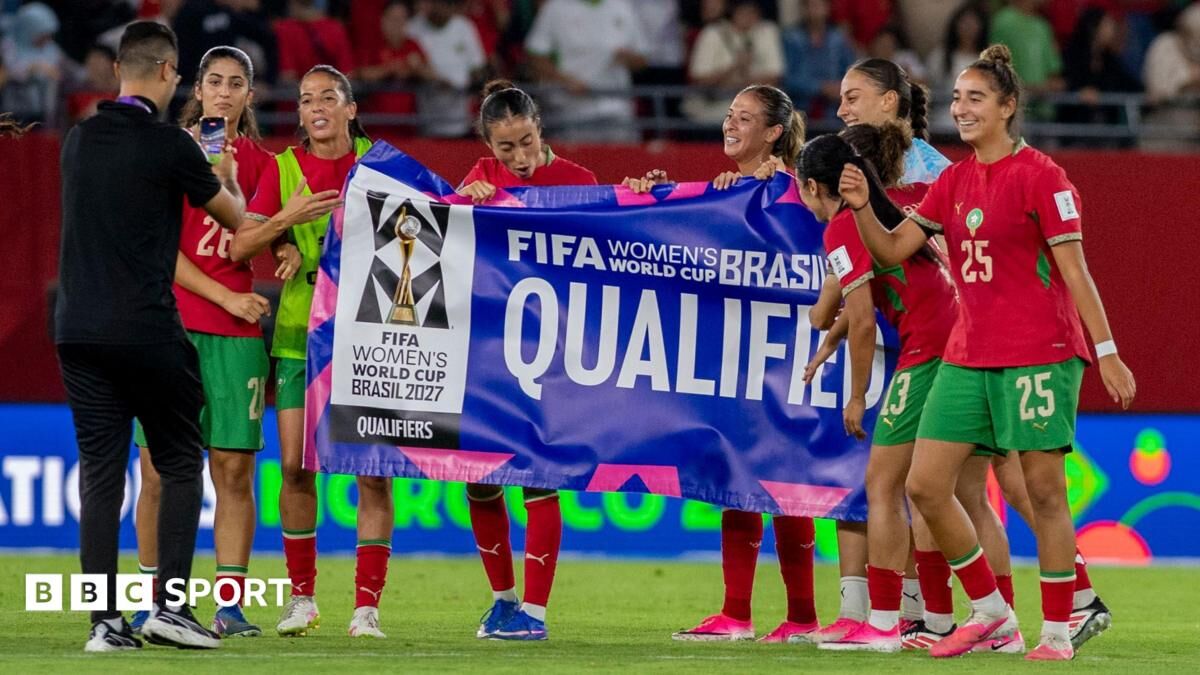
The 2027 FIFA Women’s World Cup, set to unfold in Brazil from June 24 to July 25, is shaping up to be one of the most diverse and competitive editions yet. Four African nations—Algeria, Cameroon, Malawi, and Morocco—have officially secured their places in the tournament after dominating the Women’s Africa Cup of Nations (Wafcon) 2024, which also served as a qualifying pathway. The tournament, held in Morocco, delivered dramatic victories, stunning upsets, and historic firsts, cementing Africa’s growing influence in women’s football.
Algeria’s Triumph: A First-Time World Cup Debut
In a high-stakes quarter-final clash, Algeria delivered a dramatic 2-1 comeback victory against Ivory Coast, securing their first-ever qualification for the Women’s World Cup. The match was far from straightforward, as Ivory Coast led 1-0 before a red card for N’Sira Oudraogo—sent off in the 52nd minute—altered the course of the game.
Algeria’s resilience shone through as Ines Khiri and Amira Ould Braham scored decisive goals to turn the tide. Khiri’s strike in the 65th minute leveled the score, while Ould Braham sealed the win with a 72nd-minute header, sending the Algerian squad into a semi-final showdown against Malawi.
This victory marks a landmark moment for Algerian women’s football, which has long been overshadowed by its male counterpart. The nation’s progress reflects broader strides in African women’s sports, where teams are increasingly competing at the highest levels.
Morocco’s Second World Cup Bid: Dominance and Resilience
Morocco, already a two-time Women’s World Cup participant (having previously qualified in 2023), extended their legacy with a 2-1 victory over South Africa in the quarter-finals. The match was a testament to Morocco’s tactical prowess and mental fortitude, as they overcame a late South African equalizer to secure their spot.
Sakina Ouzraoui Diki and Hanane Ait El Haj were the stars of the game, with Diki’s first-half strike and Ait El Haj’s second-half header proving decisive. Morocco’s journey to the semi-finals—where they will face Cameroon—underscores their consistent improvement and growing reputation as a regional powerhouse.
Cameroon’s Spectacular Strike: A Teenage Sensation Takes the Spotlight
Cameroon’s path to the 2027 World Cup was defined by youthful brilliance, as 19-year-old Myriam Nyadjou delivered a 30-yard free-kick in the quarter-final against Nigeria to secure a 1-0 victory. The goal, a masterclass in precision and power, not only earned Cameroon a place in the tournament but also elevated Nyadjou to international stardom.
This qualification is particularly significant for Cameroon, a nation with a rich footballing heritage but historically limited success in women’s football. Nyadjou’s performance has ignited excitement about the future of the team, with many expecting her to become a key player in Brazil.
Malawi’s Miracle: The Underdog Story of 2024
Perhaps the most unexpected triumph of Wafcon 2024 came from Malawi, a nation ranked 153rd in the world, who defeated Ghana 2-1 in a dramatic quarter-final. The victory was not just a qualification for the World Cup but a statement of intent for African football’s underdogs.
Malawi’s goals came from Temwa Chawinga and Rose Kadzere, both of whom turned the tide after Ghana had taken the lead. The win sent shockwaves through the footballing world, proving that rankings alone do not dictate destiny. Malawi’s journey—from a 153rd-ranked team to a World Cup qualifier—is a testament to grassroots development and sheer determination.
The Road to the Semi-Finals: High Stakes and Second Chances
While Algeria, Cameroon, Malawi, and Morocco have secured their spots, four nations—Ghana, Ivory Coast, Nigeria, and South Africa—still have a glimmer of hope to join them in Brazil. These teams will compete in two decisive matches on Thursday:
- Ivory Coast vs. Ghana
- Nigeria vs. South Africa
The winners of these ties will advance to the 10-nation intercontinental play-offs in November and December, where they will vie for the remaining three World Cup spots alongside teams from other confederations.
The play-offs are a critical juncture, offering a final opportunity for these nations to make history. Should they triumph, they will join the 18 already qualified, bringing the total African representation to six—a record high for the continent.
Global Qualifiers: Europe and Beyond
While Africa’s story is captivating, the 2027 Women’s World Cup will also feature strong European and Asian representation. The European play-offs, scheduled from October to December, will determine the final spots for nations like England, Republic of Ireland, Wales, Scotland, and Northern Ireland. Each team must win two two-legged ties to secure their place in Brazil.
Europe’s dominance in women’s football is well-established, but the competition remains fierce, with teams like Denmark, France, Germany, and Spain already locked in. Meanwhile, Asia’s contingent—including Australia, Japan, China, and South Korea—continues to grow, with North Korea and the Philippines also making their mark.
South America, as the host nation, will naturally have Brazil and Argentina in the field, while Colombia has also secured a spot, adding to the regional depth of the tournament.
The 2027 World Cup: A Stage for Africa’s Rise
The 2027 FIFA Women’s World Cup promises to be a celebration of diversity, talent, and underdog stories. With six African nations now confirmed (including the four qualifiers from Wafcon), the tournament will feature more African representation than ever before, reflecting the continent’s rapid growth in women’s football.
From Algeria’s historic debut to Malawi’s fairytale run, the qualifiers have already delivered unforgettable moments. As the semi-finals and play-offs unfold, football fans around the world can expect more drama, skill, and moments that will define the next chapter of women’s football.
With 32 nations competing and Brazil as the vibrant host, the 2027 Women’s World Cup is poised to be one of the most exciting and inclusive editions in the tournament’s history.

Algeria’s Ines Khiri and Amira Ould Braham celebrate their historic 2-1 victory over Ivory Coast, securing their first-ever Women’s World Cup qualification.

The 2027 FIFA Women’s World Cup logo, symbolizing Brazil’s hosting of the tournament from June 24 to July 25.
