


JOHANNESBURG — On August 9, 1956, approximately 20,000 women from diverse racial backgrounds converged on Pretoria, South Africa’s administrative capital, to challenge the oppressive apartheid regime. Their protest—a historic Women’s March—targeted the pass laws, which forced Black women to carry identification documents restricting their movement, work, and freedom. This defiant act of solidarity, now commemorated 70 years later, marked a turning point in the global fight against racial segregation. Yet, while apartheid officially ended in 1994, many South African women argue their struggle for true equality persists today, compounded by systemic gender-based violence, economic inequality, and entrenched poverty.
A Legacy of Resistance: The Women Who Changed History
The Women’s March of 1956 was not merely a protest—it was a declaration of collective defiance. Black women, women of Indian descent, and even a handful of white women united under the leadership of activists like Ama Naidoo, whose daughter, Ramnie Dinat (84), was just a teenager at the time. Dinat recalls the meticulous planning that went into the march, where women from all walks of life—teachers, homemakers, and laborers—organized in secret to challenge a system designed to dehumanize them.
“Black women were organizing, and Indian women couldn’t remain silent,” Dinat told the Associated Press. “We were ordinary women who believed we could make a difference. We simply believed it was the right thing to do.”
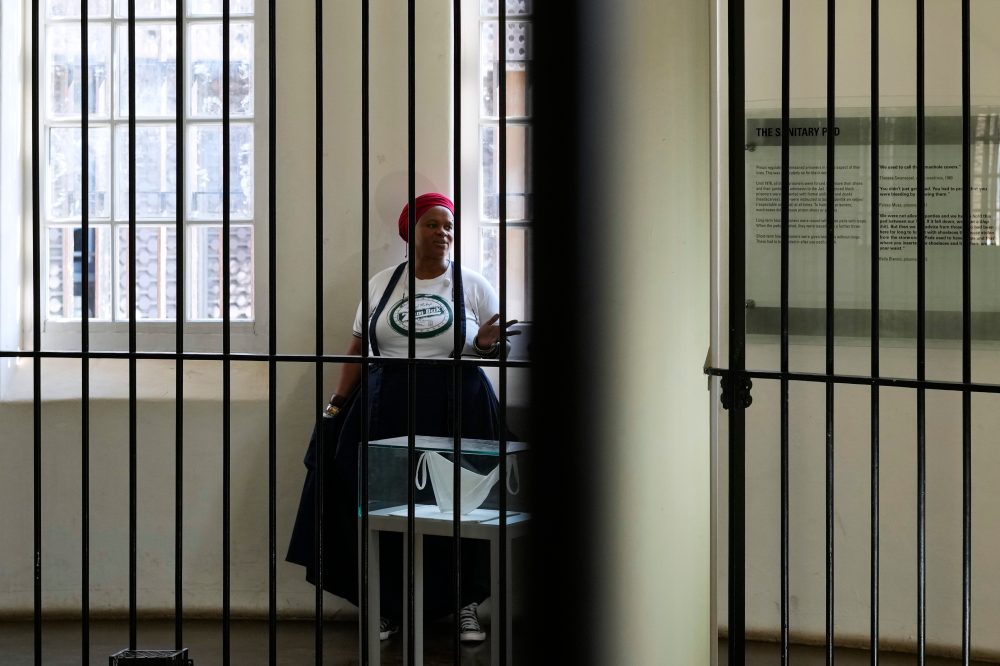
The march’s impact was immediate but brutal. Police responded with arrests, torture, and imprisonment. Many of the women were detained in the infamous Women’s Jail, a segregated prison within the apartheid-era Constitution Hill complex, where racial hierarchies were enforced even behind bars. Black women were denied basic dignity—stripped of underwear, denied proper sanitary products, and subjected to psychological torment.
Today, Constitution Hill stands as a museum and a poignant reminder of South Africa’s struggle for justice. Nolubabalo Memese, the Visitors Services Manager, emphasizes that the site honors not just iconic figures like Winnie Madikizela-Mandela and Albertina Sisulu, but also the thousands of unnamed women whose sacrifices were erased from history.
“Our freedom is built on the shoulders of these women,” Memese said. “They were the ones who endured the worst of apartheid’s brutality, yet their stories are often overlooked.”
From Pass Laws to Gender-Based Violence: The Evolving Battle for Freedom
While apartheid’s legal segregation ended in 1994, South African women now face a different kind of oppression: gender-based violence (GBV), which the United Nations has described as a “national wound.” A 2024 study supported by UN Women revealed that over one-third of South African women have experienced physical or sexual violence in their lifetime. The statistics are staggering—one in four women report having been raped, and femicides remain alarmingly high.
Memese argues that GBV is the modern-day equivalent of apartheid’s pass laws, restricting women’s freedom in ways just as profound.
“There’s a different monster now—one that prevents us from enjoying freedom of movement and economic participation,” she said. “If you want to jog at 6 a.m. in a dimly lit area, you hesitate. Fear dictates your life.”
This fear is not unfounded. South Africa has one of the highest rates of GBV in the world, with 9 out of 10 women experiencing some form of violence in their lifetime. The government’s own data confirms that women are disproportionately unemployed, shoulder the majority of unpaid care work, and remain underrepresented in leadership roles.
Sport as a Battleground: Kgothatso Montjane’s Fight for Equality
For Kgothatso Montjane, a 40-year-old Paralympic wheelchair tennis champion, the legacy of the 1956 march is evident in her own journey. As the first Black South African woman to compete in all four Grand Slam tournaments, she credits the women of 1956 with paving the way for her success.
“Today, I’m the first Black South African woman to win Wimbledon in wheelchair doubles,” Montjane said. “But the barriers I faced weren’t just about ability—they were financial. Tennis is still largely a white sport, and access to elite training is determined by who can afford it.”
Despite these challenges, Montjane believes the women’s march set a precedent for future generations.
“The platform has been set,” she said. “But we still have work to do—especially in breaking down the financial and systemic barriers that limit opportunities for women and people of color.”
Building the Future on the Bricks of the Past
The Women’s Jail was dismantled after apartheid, and its bricks were repurposed to construct Constitution Hill, symbolizing a transition from oppression to democracy. Memese sees this as more than architectural irony—it’s a metaphor for progress.
“We are using the bricks of the past to build our future,” she said. “But if we forget the past, we risk repeating the same mistakes.”
For Ramnie Dinat, the lesson remains unchanged after seven decades. “Every generation has its own struggles,” she said. “And every generation must decide whether it will stand up for what is right.”
As South Africa commemorates the 70th anniversary of the Women’s March, the question lingers: How far have we truly come? The answer lies not just in the end of apartheid, but in the ongoing fight against the new monsters—violence, inequality, and systemic exclusion—that still threaten women’s freedom.

The struggle may have evolved, but the spirit of defiance remains. The women of 1956 proved that change is possible. Now, it is up to the next generation to ensure that freedom is not just declared—but fully realized.
