

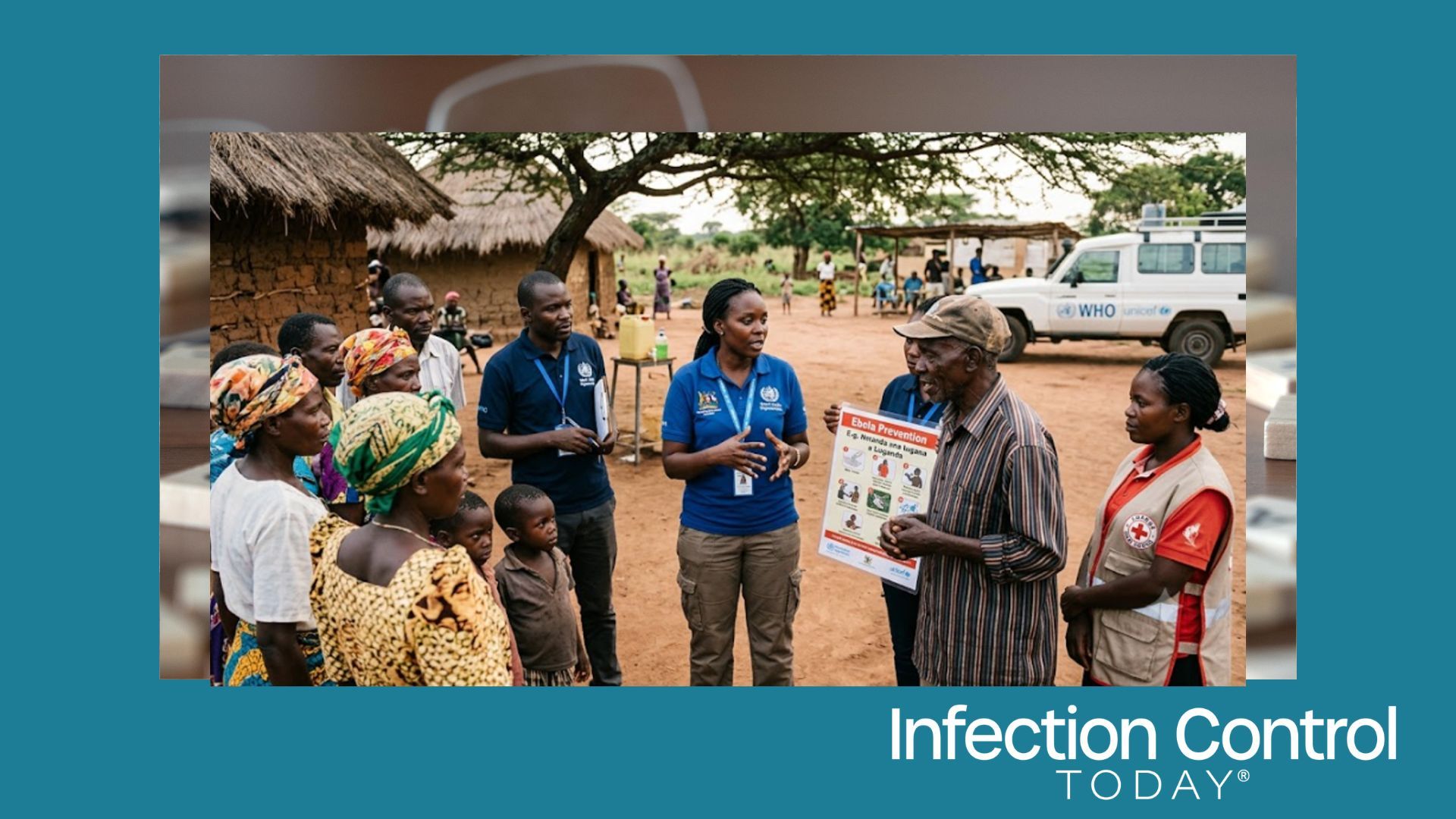
Uganda has once again found itself at the epicenter of a global health crisis, as the country battles a resurgence of Ebola virus disease (EVD), a highly lethal pathogen that demands meticulous infection control, relentless vigilance, and an unyielding 42-day countdown—the incubation period within which survivors or exposed individuals must be monitored for symptoms. This latest outbreak, declared by the World Health Organization (WHO) in June 2022, has reignited fears of a potential regional or even continental spread, forcing Uganda to implement stringent measures while the world watches with bated breath.
The Resurgence of Ebola in Uganda: A Crisis of Uncertainty
Ebola, a viral hemorrhagic fever, has historically plagued Uganda with periodic outbreaks, most notably in 2000, 2007, 2011, and 2019. The 2022 outbreak, initially reported in the Mubende district, marked the country’s fifth Ebola epidemic since 2000, underscoring the persistent threat posed by the virus. Unlike previous outbreaks, which were often localized, this one has raised concerns about transmission dynamics, particularly in densely populated urban areas where containment becomes exponentially more challenging.
The 42-day countdown—a critical window in Ebola response—refers to the maximum incubation period of the virus before symptoms such as fever, fatigue, muscle pain, vomiting, diarrhea, and in severe cases, internal and external bleeding manifest. This period is not merely a statistical measure; it is a lifeline for public health officials, allowing them to track exposed individuals, administer preventive treatments like monoclonal antibodies (e.g., REGN-EB3 and mAb114), and prevent silent transmission before symptoms appear.

Health workers in Uganda conduct temperature screenings and distribute protective gear as part of Ebola containment efforts. (Source: Uganda Ministry of Health)
The Discipline of Waiting: Why 42 Days Matter
The 42-day rule is rooted in scientific consensus, as studies have shown that Ebola’s incubation period rarely exceeds this duration. However, the psychological and logistical burden of enforcing such a prolonged observation period cannot be overstated. For families of confirmed or suspected cases, the waiting period is a trial of patience, anxiety, and emotional strain. Meanwhile, healthcare workers, community leaders, and government agencies must maintain unrelenting discipline in monitoring, testing, and isolating individuals—all while mitigating the risk of stigma, misinformation, and public panic.
One of the most challenging aspects of this countdown is the silent transmission risk. Unlike viruses like COVID-19, which can spread asymptomatically, Ebola is primarily transmitted through direct contact with bodily fluids of infected individuals or contaminated surfaces. However, the window between exposure and symptom onset—often just 2 to 21 days—means that by the time symptoms appear, the virus may have already spread to others. This is why aggressive contact tracing, quarantine protocols, and real-time surveillance are non-negotiable during the 42-day period.
Uganda’s Response: Balancing Speed and Precision
In the face of this outbreak, Uganda’s Ministry of Health (MoH), in collaboration with the WHO, Centers for Disease Control and Prevention (CDC), and Médecins Sans Frontières (MSF), has deployed a multi-pronged strategy to contain the virus:
- Rapid Case Detection and Isolation
- Mobile testing units have been deployed to high-risk areas, enabling real-time PCR testing for Ebola virus RNA.
- Isolation centers have been established to separate confirmed cases from the general population, reducing the risk of community transmission.
-
[IMAGE_2] A mobile Ebola testing lab in Mubende, Uganda, processes samples within hours to identify new cases. (Source: WHO Uganda)
-
Contact Tracing and Quarantine
- Every confirmed case triggers a chain reaction of contact tracing, where healthcare workers identify and monitor all individuals who may have had direct or indirect contact with the infected person.
-
Quarantine facilities have been set up for asymptomatic contacts, ensuring they are isolated for the full 42 days, even if they remain symptom-free.
-
Community Engagement and Stigma Reduction
- Public awareness campaigns have been launched to dispel myths about Ebola transmission, emphasizing that the virus is not airborne and cannot be contracted through casual contact.
-
Community health workers have been trained to educate households on proper hand hygiene, safe burial practices, and symptom reporting.
-
Vaccine Rollout and Experimental Treatments
- Uganda has secured doses of the Ervebo vaccine (rVSV-ZEBOV), the first WHO-approved Ebola vaccine, for ring vaccination—administering the vaccine to close contacts and high-risk individuals within a 10-kilometer radius of confirmed cases.
- Experimental monoclonal antibody therapies, such as REGN-EB3, have been made available for pre-exposure prophylaxis (PrEP) in healthcare workers and other frontline responders.
The Global Watch: Why Uganda’s Outbreak Demands International Attention
While Uganda has taken swift and decisive action, the global implications of this outbreak cannot be ignored. Ebola’s high fatality rate (up to 90% in some strains) and potential for rapid spread in densely populated regions make it a public health emergency of international concern (PHEIC). The WHO’s declaration of a PHEIC in 2019 during the Democratic Republic of Congo (DRC) outbreak underscores the need for coordinated global response, including:
– Enhanced border controls to prevent cross-regional transmission.
– Financial and logistical support for Uganda’s healthcare system, which is already stretched thin by COVID-19, malaria, and HIV/AIDS.
– Research into long-term solutions, such as universal Ebola vaccines and antiviral drugs, to prevent future outbreaks.
The Human Cost: Stories Behind the Statistics
Beyond the clinical and epidemiological data, the Ebola outbreak in Uganda has profound human consequences. Families of infected individuals face economic devastation, as quarantines and travel restrictions disrupt livelihoods. Healthcare workers, often the first line of defense, operate under extreme stress, risking their own lives to save others. Children, in particular, are vulnerable to stigma and psychological trauma, as entire communities may shun those affected out of fear.
One such story comes from Mubende district, where 35-year-old Jane Nakato lost her husband to Ebola. She recounts how her entire family was quarantined for 42 days, unable to attend funerals or even visit neighbors. “They called us ‘Ebola people,’” she says. “No one wanted to touch us, even after the countdown ended.” Such narratives highlight the need for compassionate, community-driven responses that go beyond medical interventions to address social and emotional needs.
Lessons from Past Outbreaks: What Uganda Can Learn
Uganda’s experience with Ebola is not isolated; it is part of a larger global narrative of viral resurgence. From SARS in 2003 to Zika in 2016 to COVID-19 in 2020, each outbreak has taught us valuable lessons:
– Early detection is critical—delayed responses allow viruses to silently spread before containment measures can be implemented.
– Community trust is non-negotiable—without buy-in from local populations, even the best medical protocols fail.
– Global solidarity matters—outbreaks do not respect borders, and international cooperation is essential for sustained control.
In 2019, Uganda’s Sudan Ebola virus outbreak was declared over after 54 days, with 142 confirmed cases and 37 deaths. This time, the 42-day countdown is being observed with even greater scrutiny, as the world awaits the final tally—will Uganda break the chain of transmission, or will the virus resurface with a new wave of cases?
The Road Ahead: Can Uganda Contain the Outbreak?
As of mid-2024, Uganda remains on high alert, with new cases still emerging despite intensified efforts. The 42-day countdown is not just a scientific benchmark; it is a test of resilience for Uganda’s healthcare system, its people, and the global community’s willingness to stand in solidarity.
Several key factors will determine the outcome:
– Adherence to quarantine protocols—if even one individual slips through the cracks, the virus could re-emerge with a vengeance.
– Sustained funding and resource allocation—without long-term support, Uganda’s response may collapse under the weight of the outbreak.
– Innovation in diagnostics and treatments—faster, more accurate tests and broader access to vaccines could accelerate containment.
[IMAGE_3]
Ugandan health officials distribute Ebola awareness pamphlets in a high-risk community, emphasizing prevention and early reporting. (Source: Uganda National Institute of Health)
Conclusion: The Discipline of Waiting in a World of Uncertainty
The 42-day countdown in Uganda’s Ebola outbreak is more than a statistical measure—it is a symbol of hope, a test of discipline, and a reminder of humanity’s fragility in the face of infectious diseases. While the world watches, Uganda’s healthcare workers, policymakers, and communities are fighting an invisible enemy, one day at a time.
As the countdown progresses, one question looms large: Will Uganda’s discipline prevail, or will Ebola claim another victory? The answer will not only shape Uganda’s future but also redefine global preparedness for the next inevitable outbreak. In a world where viruses do not respect borders, the lessons from Uganda’s 42-day battle may be the difference between containment and catastrophe.
