

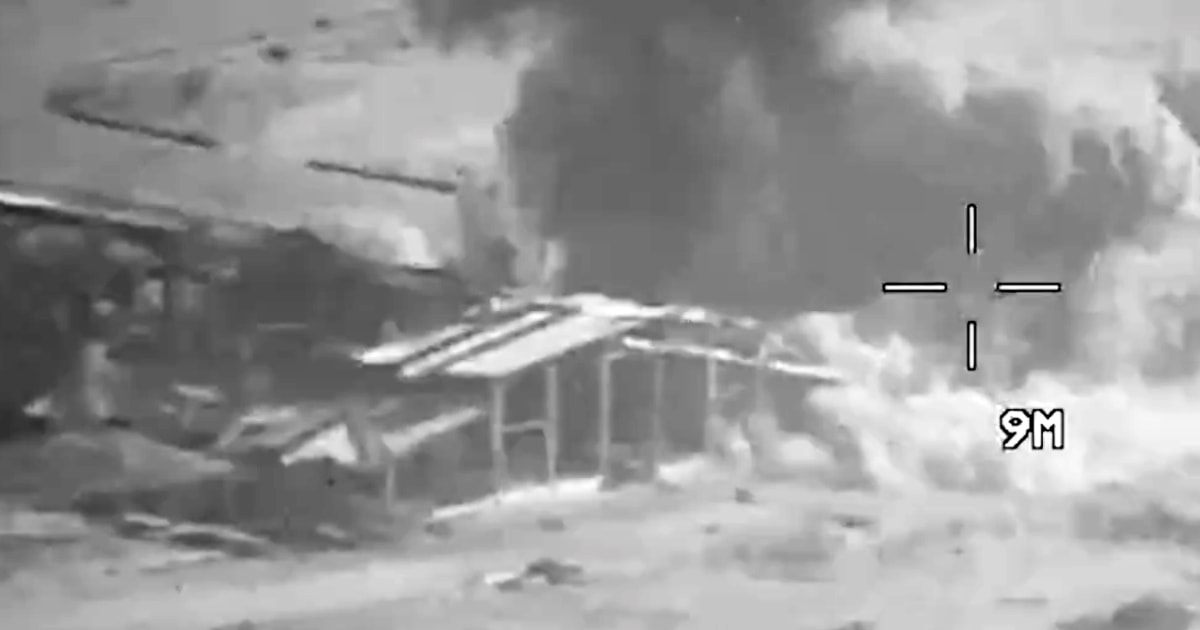
JERUSALEM — The United States has intensified its military campaign against Iran with a 13th consecutive night of airstrikes, targeting critical Iranian military infrastructure, including command centers, drone storage facilities, communication networks, and coastal surveillance sites. The strikes, conducted by U.S. Central Command (CENTCOM), aim to disrupt Iran’s ability to threaten commercial shipping and civilian mariners in the Strait of Hormuz, a vital global chokepoint for nearly 20% of the world’s oil supply.
The escalation comes as Iran has expanded its regional campaign, opening a second front in the Bab el Mandeb Strait—a critical maritime corridor linking the Red Sea to the Gulf of Aden—after Houthi rebels, backed by Tehran, launched attacks on shipping and Saudi oil infrastructure. These coordinated actions have disrupted global trade routes, raised energy prices, and heightened fears of a broader regional conflict.
Trump’s Threat of ‘Massive Attack’ and Diplomatic Dilemma
President Donald Trump has signaled a potential major military escalation, warning on Thursday that the U.S. may launch a “massive attack” on Iran—one “bigger than ever before.” Speaking to Axios, Trump framed the conflict in stark terms: “There’s two ways. You can just keep doing exactly what we’re doing and take them apart piece by piece. We could do it in a more rapid fashion, which we might do, or we can negotiate with them, which we’re also doing right now.”
While Trump left the door open to diplomacy, his administration has simultaneously threatened economic retaliation against Iran. On Truth Social, he declared that the U.S. would hold Iran financially responsible for any damages to ships, cargo, or related losses, drawing immediate condemnation from Tehran. Iranian Foreign Minister Abbas Araghchi dismissed the threat as an “incendiary precedent,” warning that if governments begin seizing foreign assets, “no one’s assets are safe.”
The geopolitical fallout has been immediate. Brent crude oil prices surged above $100 per barrel for the first time since May 2022, though they later settled around $97 per barrel by Friday morning. The volatility reflects growing concerns over supply disruptions, particularly as traffic through the Strait of Hormuz has nearly halted—with only a single vessel, the New Giant oil tanker, transiting the strait on Thursday en route to China.
In contrast, the Bab el Mandeb Strait saw 22 tankers passing through on Thursday—eight northbound into the Red Sea and 14 southbound into the Gulf of Aden—though some ships may have disabled their tracking systems, potentially underestimating actual maritime activity.
Iran’s Expanding War: From Hormuz to the Red Sea
Iran’s strategy appears to be prolonging pressure on global trade by targeting multiple chokepoints. Beyond the Strait of Hormuz, Houthi rebels—backed by Iran—have attacked Saudi oil tankers in the Red Sea, following Trump’s earlier claim that they were imposing a “naval blockade” on Saudi Arabia.
In response, the U.S. has explicitly linked the Houthis to Iran, stating that any further attacks would result in “major military punishment” against both groups. The Islamic Revolutionary Guard Corps (IRGC) has retaliated by striking U.S. military assets in the region, including:
– A U.S. base in Kuwait, where explosions were reported near storage warehouses.
– The control tower of the U.S. 5th Fleet in Bahrain, according to IRGC claims.
– A military base in northern Iraq hosting American forces, where additional explosions were detected.
These strikes follow Iran’s previous attacks on U.S. bases in Iraq, including the Ayn al-Asad airbase, which killed a U.S. contractor in January 2020. The human cost of the escalation has grown, with four Iranians killed and five injured in the latest U.S. strikes near Ahvaz, according to state-run media IRNA.
Regional Partners Grow Frustrated with U.S. Strategy
The prolonged conflict has alienated some U.S. allies in the Middle East, who are growing increasingly impatient with the lack of a clear diplomatic resolution. Senior Arab officials, speaking to NBC News under condition of anonymity, expressed deep concern over the escalating threats, daily military actions, and stalled negotiations.
One official stated bluntly: “We have no clue where this is going.”
Another, directly involved in diplomatic efforts, added: “It’s only getting crazier.”
The lack of progress in de-escalation efforts is further evident in Iraq, where Prime Minister Ali al-Zaidi made his first official visit to Iran since taking office in May. Iraq’s strategic position—maintaining ties with both Washington and Tehran—has made it a critical but volatile mediator in the region.
Trump’s Assessment: Iran ‘Not Ready to Negotiate’
Despite diplomatic overtures, Trump has dismissed Iran’s willingness to engage, stating in an interview with Axios: “They haven’t received enough pain yet.” His administration’s dual approach—military strikes paired with economic pressure—has left Iran’s leadership unconvinced of the need for concessions.
As the conflict enters its most volatile phase, global markets, shipping industries, and regional governments remain on edge, awaiting clarity on whether this will be a limited military exchange or the beginning of a broader war. With no immediate signs of de-escalation, the human, economic, and strategic costs continue to rise, raising urgent questions about the path forward for the Middle East and beyond.
