
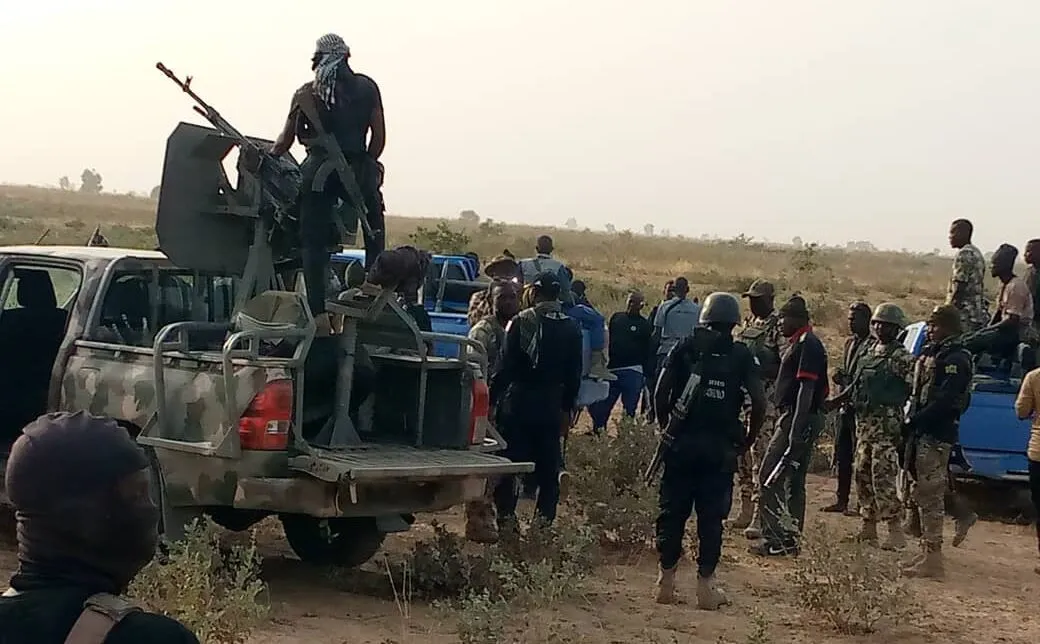
In a dramatic turn of events in Nigeria’s restive Zamfara State, six civilians held captive by armed assailants have escaped after weeks of relentless military pressure and precision airstrikes. The rescue operation, which unfolded over the weekend, underscores the Nigerian Armed Forces’ evolving counter-insurgency tactics in the region’s volatile northwest corridor. While the identities of the freed victims remain undisclosed for security reasons, local sources confirm their swift return to family members, marking a rare but significant victory for communities long plagued by kidnapping-for-ransom syndicates.
The breakthrough comes amid escalating violence in Zamfara, where armed gangs—often operating under the guise of cattle rustlers or bandits—have intensified abductions, extortion, and territorial control. Military officials, speaking on condition of anonymity, revealed that the operation involved coordinated helicopter gunships and infantry units, which systematically dismantled the captors’ hideouts. The successful extraction of the hostages signals a shift in the government’s approach, blending kinetic force with intelligence-driven strikes to dismantle criminal networks.

From Kidnapping to Counter-Offensives: The New Face of Zamfara’s Conflict
Zamfara’s kidnapping crisis is not an isolated phenomenon but part of a broader pattern gripping Nigeria’s northwest. Since 2020, armed groups have abducted thousands—teachers, farmers, schoolchildren, and even traditional rulers—holding them for ransom or political leverage. The latest rescue, however, differs from past operations in its scale and precision. Unlike sporadic negotiations that often yield temporary reprieves, this intervention relied on sustained aerial surveillance and rapid response teams, cutting off escape routes and forcing the captors into a defensive posture.
Security analysts argue that the military’s intensified campaign reflects lessons learned from previous failures. The use of drones, real-time intelligence sharing, and cross-border coordination with neighboring Niger has proven critical in tracking and neutralizing threats. Yet, challenges persist. The porous nature of the Nigeria-Niger border allows militants to regroup, while local grievances—such as youth unemployment and weak governance—fuel recruitment into these criminal enterprises. The rescue, while commendable, is a fleeting moment in a protracted struggle for stability.
The Human Toll: Families Rebuild After Months of Uncertainty
For the families of the rescued victims, the news brought both relief and lingering trauma. One father, who requested anonymity, described the ordeal as “a nightmare that refused to end.” His son, a 22-year-old university student, was abducted while traveling home for the holidays. For 47 days, the family navigated a maze of demands, intermediaries, and deadlines, each passing day deepening their despair. The rescue, he said, felt like a “second birth.”
Such stories are common in Zamfara, where kidnapping has become a lucrative industry. Victims often face brutal conditions—restricted movement, meager food rations, and psychological torment. The psychological scars, experts warn, may take years to heal. Community leaders in the affected areas have called for expanded rehabilitation programs, including trauma counseling and vocational training, to help survivors reintegrate. Without these measures, the cycle of violence risks perpetuating itself, as despair drives more young men toward armed groups in search of income or protection.
Military Strategy vs. Criminal Adaptation: Who Holds the Upper Hand?
The Nigerian military’s recent successes in Zamfara have drawn cautious optimism from observers. Helicopter gunships, once a rare asset in counter-insurgency operations, are now deployed with greater frequency, while special forces units conduct targeted raids on suspected hideouts. Yet, the adaptability of armed groups remains a formidable obstacle. In response to military pressure, some factions have splintered into smaller, harder-to-track cells, while others have shifted tactics—abandoning large-scale abductions in favor of hit-and-run ambushes on travelers and traders.
Critics argue that the military’s approach, while effective in the short term, lacks a holistic strategy. “You can bomb their camps all day,” said a security consultant based in Abuja, “but unless you address the root causes—poverty, corruption, and weak local governance—these groups will keep regenerating.” The consultant pointed to neighboring Katsina State, where similar operations initially reduced kidnappings but saw a resurgence after military units redeployed to other hotspots. The lesson is clear: military force alone cannot solve a problem rooted in socioeconomic despair.
Regional Implications: Nigeria’s Northwest Crisis Spills Over Borders
The Zamfara crisis is not confined to Nigeria’s borders. Armed groups operating in the region—such as the Ansaru splinter faction of Boko Haram and the so-called “bandit kingpins” of Zamfara—have exploited the porous Sahelian frontier to launch attacks into Niger and Benin. The spillover effect has forced regional governments to reassess their security postures, with Niger deploying additional troops along its southern border and Benin increasing patrols in the Pendjari National Park area, a known transit route for criminals.
International partners, including the United States and the European Union, have pledged support for regional counter-terrorism efforts. However, coordination remains uneven. While Nigeria and Niger have conducted joint patrols, bureaucratic delays and mistrust have hampered deeper collaboration. Analysts warn that without sustained regional cooperation, the crisis will continue to metastasize, drawing in more vulnerable communities and destabilizing fragile economies.
For Zamfara, the rescue of six hostages is a glimmer of hope—but it is far from a turning point. The road to lasting peace demands more than military victories; it requires addressing the grievances that fuel recruitment, strengthening local institutions, and fostering trust between communities and security forces. Until then, the northwest’s cycle of violence will persist, with civilians bearing the heaviest burden.
What’s Next for Zamfara’s Security Landscape?
As the dust settles on this latest operation, questions linger about the future of Zamfara’s security landscape. Will the military’s momentum continue, or will armed groups regroup and strike back? Local leaders are calling for a multi-pronged approach: increased community policing, economic empowerment programs, and a robust disarmament initiative to lure fighters away from criminal enterprises.
- Community Policing: Empowering local vigilantes with training and resources to monitor and report suspicious activities.
- Economic Incentives: Providing alternative livelihoods, such as agriculture or small-scale trade, to reduce reliance on illicit income.
- Disarmament Programs: Offering amnesty and reintegration packages to low-level fighters willing to lay down arms.
Yet, skepticism lingers. Past disarmament efforts have faltered due to corruption, poor implementation, and a lack of follow-through. For any strategy to succeed, it must be rooted in transparency and accountability, with clear benchmarks for progress. The rescue of six hostages is a step forward—but the journey to stability in Zamfara is far from over.
The Humanitarian Cost: Beyond the Headlines
While military operations dominate headlines, the humanitarian toll of Zamfara’s crisis often goes unnoticed. Thousands have been displaced, with makeshift camps struggling to provide basic necessities. Schools have shuttered in high-risk areas, denying children an education and leaving them vulnerable to recruitment by armed groups. Healthcare facilities, meanwhile, are overwhelmed, with reports of malnutrition and preventable diseases surging in affected communities.
International aid organizations have called for urgent funding to support relief efforts, but access remains a challenge. Armed groups frequently block humanitarian convoys, and security forces often restrict movement in the name of counter-insurgency. The result is a perfect storm of neglect, where the most vulnerable pay the price for a conflict they did not start.
For the six rescued victims, the road to recovery will be long. But their story is a reminder of the resilience of ordinary people in the face of extraordinary adversity. As Zamfara navigates this fragile moment, the world must not look away—because the next headline could just as easily be about another abduction, another tragedy, another fight for survival.
Copyright notice: Images and source material are credited to their respective owners/source (original source where available). If you are the copyright owner and want an image or content removed, please contact us at topix.news/contact-us; we will review and remove it promptly.

Topix News Desk is a digital editorial team focused on delivering clear, timely, and useful news coverage for readers worldwide. Our reporting highlights African news with global context, including politics, business, economy, technology, health, sports, entertainment, travel, and culture. We aim to publish accessible, well-structured, and informative articles that help readers understand the stories shaping Africa and the world.