
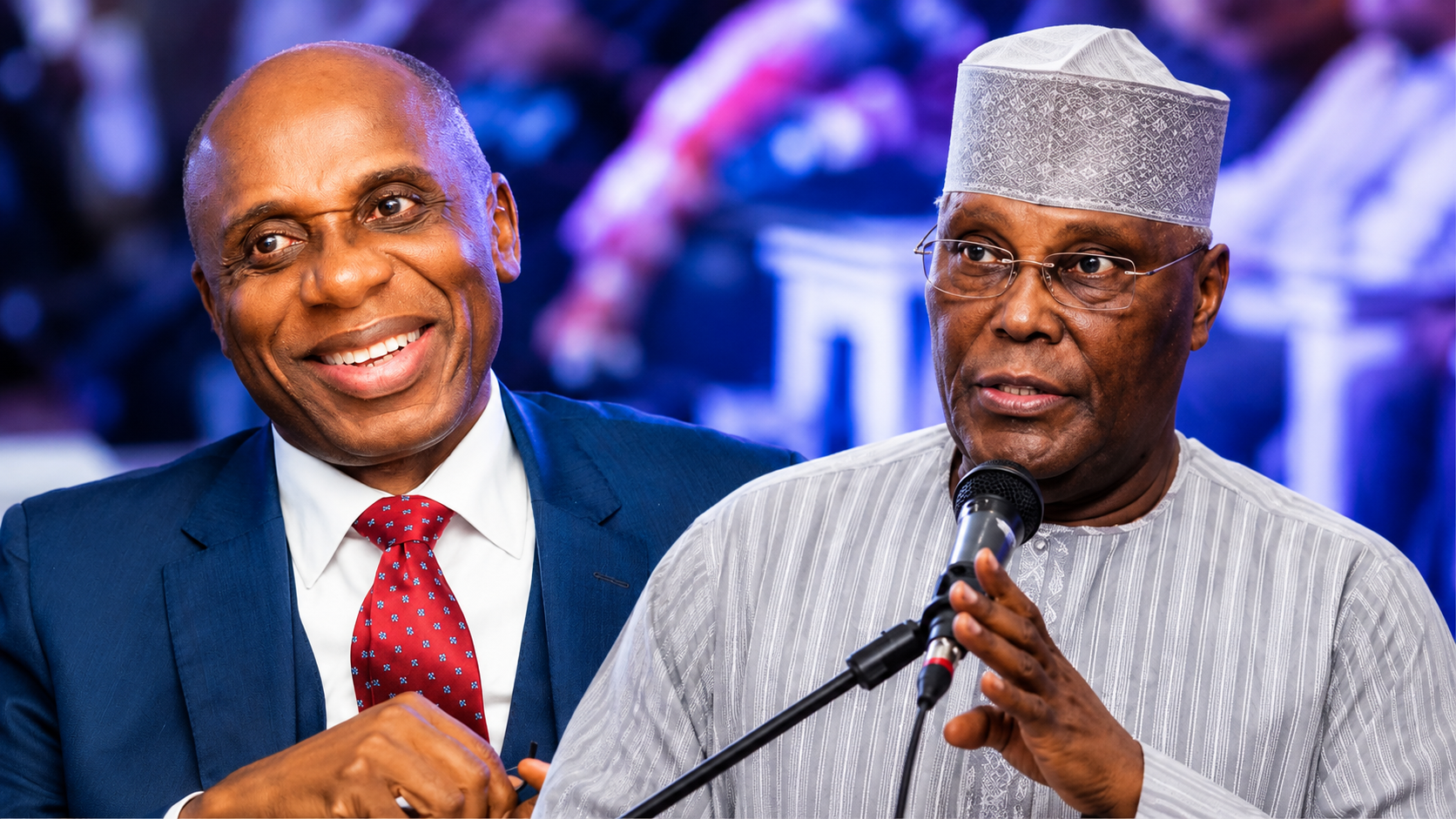
Nigerian politics just hit a seismic shift. In a move that has sent shockwaves through the country’s political corridors, former Vice President Atiku Abubakar has named former Rivers State Governor Rotimi Amaechi as his running mate for the 2027 presidential election. The announcement, made under the banner of the Action Democratic Congress (ADC), arrives at a pivotal moment when Nigeria’s political elite are scrambling to consolidate alliances ahead of what promises to be one of the most fiercely contested elections in recent history.
The decision was not merely a strategic calculation—it was a calculated gamble. Amaechi, a former governor whose tenure in Rivers State was marked by both fierce loyalty and bitter controversies, brings to the ticket a blend of political acumen and regional influence that could tilt the scales in Atiku’s favor. But the move also carries risks. The former governor’s past alliances, particularly with key figures in the ruling All Progressives Congress (APC), have left many questioning whether this partnership is built on mutual respect or tactical necessity.

From Rivers to the National Stage: Amaechi’s Political Journey
Rotimi Amaechi’s political career has been anything but conventional. Born in Ubima, a small town in Rivers State, he rose from the ranks of student activism to become one of Nigeria’s most polarizing yet influential governors. His eight-year tenure as governor was defined by a relentless push for infrastructure development, particularly in the state’s capital, Port Harcourt, where he oversaw the transformation of the city’s skyline. Yet, his administration was also marred by allegations of corruption, including the infamous $37 million loan scandal that left a bitter taste in the mouths of many Nigerians.
After leaving office in 2015, Amaechi’s political star did not dim. Instead, he reinvented himself as a kingmaker, wielding influence within the APC and later crossing over to the Peoples Democratic Party (PDP) in a move that stunned political observers. His alliance with Atiku Abubakar, a veteran politician who has run for president five times, signals a bold attempt to unite Nigeria’s fractured opposition. But can two political heavyweights with such a fraught history of shifting loyalties truly forge a winning partnership?
The ADC’s Calculated Gamble: Why This Ticket Could Reshape 2027
The Action Democratic Congress, though not a major player in Nigerian politics, has positioned itself as a critical swing force. By aligning with Atiku, the party has effectively thrown its weight behind a candidate who remains one of the most recognizable figures in the opposition. But the real story here is the alliance between Atiku and Amaechi—a union that could redraw the electoral map.
Atiku, a northerner, has long struggled to secure the kind of southern support that could propel him to victory. Amaechi, a southern heavyweight with deep ties to the Niger Delta, brings that crucial regional backing. Yet, the question lingers: Is this a marriage of convenience or a genuine partnership of equals? The answer may well determine whether Atiku’s sixth presidential bid finally succeeds or collapses under the weight of past rivalries.
The timing of the announcement is no coincidence. With less than a year to go before the 2027 elections, every move counts. The ADC’s decision to back Atiku sends a clear message to other opposition parties: the race is tightening, and the stakes could not be higher. But in a political landscape where loyalties shift as quickly as the tides, this alliance may yet prove to be a high-risk gamble.
The Opposition’s Last Stand: Can Atiku Break the APC’s Grip?
Nigeria’s political arena has been dominated by the All Progressives Congress (APC) since 2015, when Muhammadu Buhari’s victory ended the PDP’s 16-year rule. But Buhari’s exit has left a power vacuum, and the APC is now fractured, with internal squabbles threatening its unity. Atiku, who has been a thorn in the APC’s side for decades, sees an opportunity to reclaim the presidency. However, his path to victory is fraught with challenges.
The APC’s candidate for 2027 remains uncertain, but one thing is clear: the party will pull out all the stops to retain power. The introduction of Amaechi into Atiku’s campaign could be the jolt the opposition needs—or it could backfire spectacularly. The former governor’s past association with the APC, including his role as a minister under Buhari, has already drawn criticism from some quarters. Will voters forgive and forget, or will this alliance become a liability?
The answer may lie in the coming months. As campaign trails heat up, Atiku and Amaechi will need to present a united front, one that appeals to both the youth, who are increasingly disillusioned with the status quo, and the older generation, who remember Atiku’s past as a reformist leader in the 1990s. But can they convince Nigerians that this ticket offers something new—or will they be seen as relics of a political era that many are eager to leave behind?
Regional Dynamics: How Amaechi’s Selection Could Shift the Balance
Nigeria’s political landscape is a patchwork of regional interests, and the 2027 election will hinge on which candidate can stitch together a coalition that transcends ethnic and religious divides. Atiku’s decision to pick Amaechi is a clear nod to the Niger Delta, a region that has long felt marginalized in national politics. The Niger Delta, rich in oil but plagued by poverty and environmental degradation, has been a hotbed of militancy and unrest. Amaechi’s selection could signal a commitment to addressing these issues—or it could be seen as a cynical ploy to secure votes.
Yet, the move also risks alienating other key regions. The Southwest, for instance, has its own power brokers, and the Southeast remains a battleground for political ambition. Atiku’s northern base, while solid, is not enough to secure victory. The question now is whether Amaechi’s influence can bridge these divides or if it will deepen existing fractures.
- Niger Delta: Amaechi’s home region, which has been a PDP stronghold, may rally behind the ticket—but only if concrete promises on development and resource control are made.
- Southwest: The region’s political elite, including Bola Tinubu’s legacy, could either support or oppose the ticket based on broader APC-PDP dynamics.
- North Central: A swing region where Atiku’s past performances have been strong, but where new alliances could shift the balance.
The coming months will reveal whether this regional calculus pays off—or if it becomes another chapter in Nigeria’s long history of unfulfilled political promises.
Public Reaction: Skepticism Meets Hope
Nigerians are no strangers to political surprises, and the reaction to Atiku’s choice of running mate has been predictably mixed. On social media, some have hailed the move as a bold step toward unifying the opposition, while others have dismissed it as a desperate ploy to revive Atiku’s fading political fortunes. The skepticism is understandable. Nigeria’s political history is littered with alliances that collapsed under the weight of ego and ambition.
Yet, there are glimmers of hope. For many young Nigerians, tired of the same old faces dominating the political scene, the Amaechi-Atiku ticket represents a potential break from the past. The former governor’s reputation as a doer—despite his controversies—has earned him a following, particularly among those who believe Nigeria needs leaders who can deliver tangible results rather than empty promises.
But hope alone will not win elections. The real test will come when the campaign trail begins in earnest. Will Atiku and Amaechi be able to articulate a vision that resonates with Nigerians beyond the usual rhetoric of change and progress? Or will they fall back on the tired playbook of identity politics and patronage?
The Road Ahead: What to Watch in the Coming Months
The 2027 election is still a year away, but the political clock is ticking. The Atiku-Amaechi ticket has injected fresh energy into the race, but the road ahead is paved with challenges. Here’s what to watch:
- Campaign Strategy: How will Atiku and Amaechi differentiate themselves from the APC? Will they focus on economic reform, security, or social welfare?
- Alliance Building: Can they secure the support of smaller parties and independent candidates, or will they remain a two-horse race?
- Public Perception: Will the controversies surrounding Amaechi’s past overshadow the ticket, or will voters see him as a necessary ally in the fight against APC dominance?
- Youth Mobilization: With Nigeria’s youth population growing rapidly, can the ticket inspire a new generation of voters, or will apathy win the day?
The answers to these questions will shape not just the 2027 election, but the future of Nigerian democracy. One thing is certain: the political landscape has shifted, and the race is far from over.
Copyright notice: Images and source material are credited to their respective owners/source (original source where available). If you are the copyright owner and want an image or content removed, please contact us at topix.news/contact-us; we will review and remove it promptly.

Topix News Desk is a digital editorial team focused on delivering clear, timely, and useful news coverage for readers worldwide. Our reporting highlights African news with global context, including politics, business, economy, technology, health, sports, entertainment, travel, and culture. We aim to publish accessible, well-structured, and informative articles that help readers understand the stories shaping Africa and the world.