

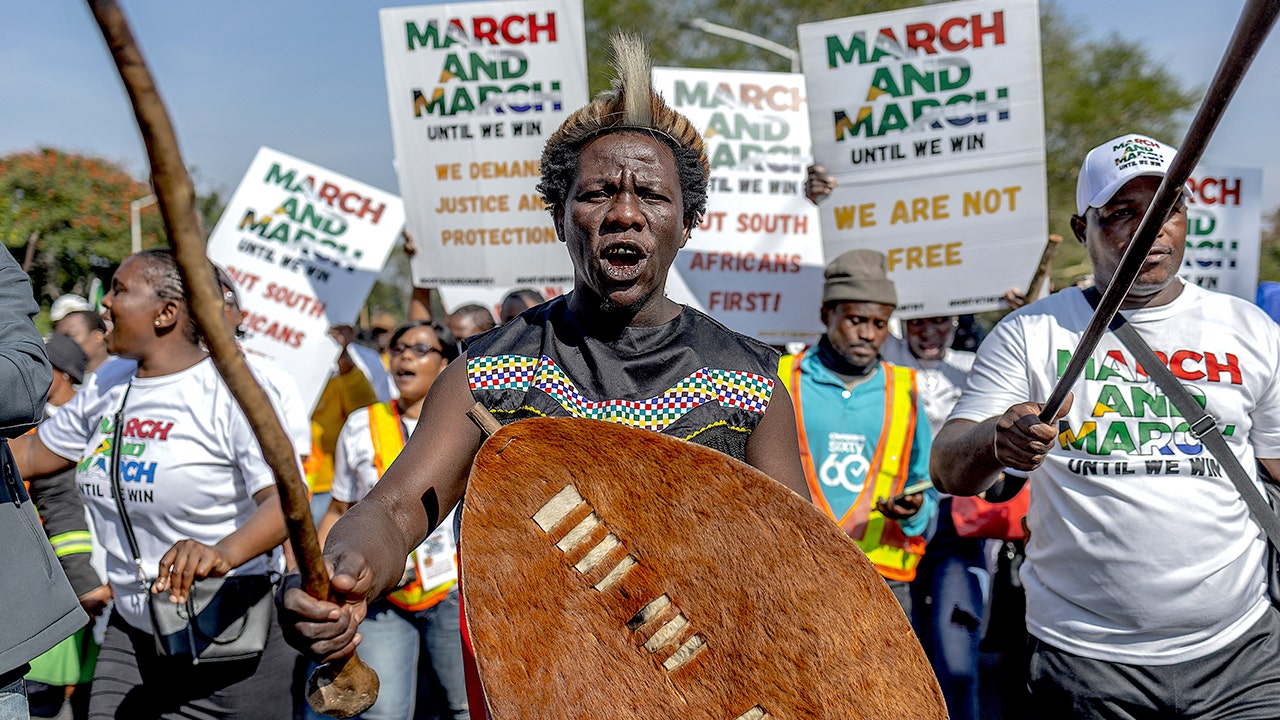
South Africa’s Growing Anti-Immigrant Movement: A Crisis of Border Control and Public Outrage
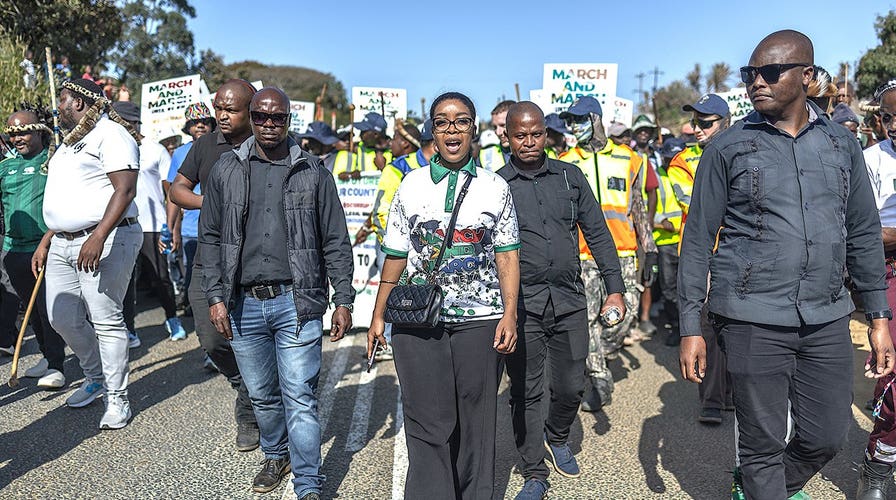
JOHANNESBURG — South Africa is grappling with an escalating wave of anti-immigrant sentiment, as thousands of citizens have taken to the streets in protests demanding the expulsion of undocumented migrants. The unrest mirrors political tensions seen in Western nations, where public frustration over immigration policies has fueled nationalist movements. With reports of over 160,000 illegal immigrants fleeing the country in recent months, the crisis has exposed deep-seated concerns over crime, job displacement, and strained public services.
A Movement Fueled by Fear and Economic Desperation
At the forefront of the protests is the March and March movement, led by Jacinta Ngobese-Zuma, whose demands for stricter immigration enforcement have gained widespread traction. The group alleges that 15 to 30 million undocumented migrants—a figure disputed by government statistics—are operating within South Africa, overwhelming local resources and contributing to rising crime rates.
“We’ve had enough,” Ngobese-Zuma told reporters, emphasizing that the government’s inaction has emboldened illegal immigration. “The country is being invaded, and we decided to take matters into our own hands.” Critics argue that the ruling African National Congress (ANC) has failed to secure borders, allowing unchecked migration that exacerbates unemployment and social instability.
Crime, Job Theft, and Overburdened Public Services
Protesters claim that undocumented migrants are responsible for rampant crime, including theft, assault, and even murders. In some cases, vigilante groups have conducted house-to-house raids in areas like Soweto, near Johannesburg, giving migrants 24-hour deadlines to leave. Police interventions have been necessary in several instances, with one death reported in June 2026 during clashes in Johannesburg.
Beyond crime, South Africans argue that illegal immigrants are stealing jobs from locals. The official unemployment rate stands at 32.7%, yet many undocumented workers are employed at subminimum wages, undercutting local labor markets. President Cyril Ramaphosa acknowledged this issue in a recent address, stating that some employers exploit undocumented migrants by paying below-legal wages and denying fair labor protections.
Public healthcare and education systems have also become flashpoints. Hospitals, designed to serve South African citizens, face overcrowding due to foreign patients. At Helen Joseph Hospital in Johannesburg, patients—including South Africans—have reportedly waited up to 36 hours in emergency rooms, with at least one death attributed to delayed medical attention.
“Our welfare system is being exploited,” Ngobese-Zuma stated. “Foreigners are taking advantage of free healthcare and education, but it’s South African taxpayers who bear the cost.”
Government Response: Calls for Crackdowns Amid Public Pressure
In response to the protests, President Ramaphosa has vowed to tighten border controls, announcing that 53,449 foreign nationals have been processed for deportation as of July 2026. However, critics argue this represents a minimal fraction of the estimated illegal population.
Political opposition figures, including Herman Mashaba, president of the Action SA party, have condemned the government’s weak enforcement measures. “The ANC’s failure to secure our borders has led to this crisis,” Mashaba said. “We need mass deportations and stronger immigration laws—not empty promises.”
Analysts suggest that the government’s delayed action may be tied to upcoming local elections, where immigration could become a key voter concern. Meanwhile, corruption and lax border security remain major obstacles. Reports indicate that migrants have crossed rivers with crocodiles rather than face immigration checks, while bribery at border posts continues unchecked.
A Pattern of Violence: Historical Precedents of Xenophobia
South Africa is not new to anti-immigrant violence. In 2008, 62 people were killed in xenophobic riots, and five more died in 2015 during similar unrest. This year’s protests, while largely peaceful, have seen five migrant deaths at the hands of protesters, raising concerns about vigilante justice.
Ngobese-Zuma dismisses accusations of xenophobia, insisting that South Africans are simply defending their country. “We don’t care what the world says about us being xenophobic,” she declared. “We are done waiting for the government to act.”
Global Parallels: Immigration as a Political Battleground
South Africa’s crisis reflects broader trends in Western nations, where immigration has become a polarizing issue. In Europe, far-right movements have capitalized on public discontent over migration, while in the U.S., debates over border security dominate political discourse.
“South Africans are turning against their government on immigration—just as we’ve seen in Europe,” said Frans Cronje, president of the Yorktown Foundation for Freedom. Polls indicate that 11.7% of South Africans rank immigration as their second-most pressing concern, behind unemployment.
Black South Africans, who make up 82% of the population, are three times more likely than white citizens to view immigration as a major problem. Many blame migrants for job theft, rising crime, and social unrest, fueling demands for stricter policies.
The Road Ahead: Can South Africa Balance Security and Human Rights?
As protests continue, the government faces a delicate balancing act: addressing public anger without resorting to brutal crackdowns that could worsen instability. Critics warn that mass deportations without proper legal safeguards could lead to human rights abuses, while inaction risks further social fragmentation.
For now, the March and March movement shows no signs of slowing down. With local elections looming, the issue of immigration will likely remain a defining political battleground—one that could reshape South Africa’s future.
Note: This article does not include promotional or sponsored content and adheres strictly to factual reporting. All statistics and quotes are based on publicly available sources as of July 2026.
