

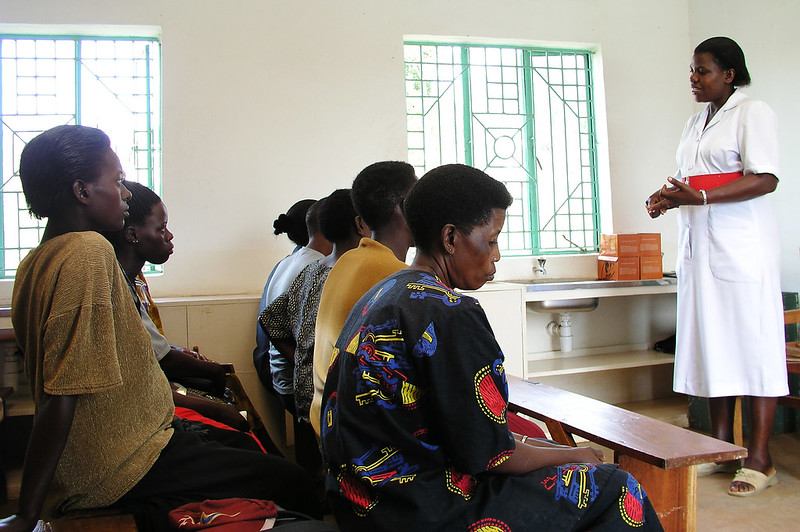
Uganda’s vast rural landscape, encompassing nearly 68% of the country’s population, presents a formidable challenge in ensuring equitable access to healthcare. While the Uganda Ministry of Health has made strides in expanding medical facilities, a stark disparity persists between urban and rural regions. In these remote communities, where traditional healthcare infrastructure remains sparse, telehealth is emerging as a transformative solution, reshaping medical delivery and improving outcomes for some of the most vulnerable populations.
The Health and Economic Landscape of Rural Uganda
With 20% of Uganda’s population living in poverty, the burden of healthcare access falls disproportionately on marginalized groups. A critical demographic factor is the high proportion of children—constituting roughly half of the population—many of whom reside in poverty-stricken households. Agriculture remains the backbone of the economy, with seven out of ten households dependent on it for income, while one in three families relies solely on subsistence farming for sustenance. Rising inflation has exacerbated food insecurity, yet healthcare affordability has remained stagnant. For many rural communities, the distance to medical facilities—often spanning 25 kilometers or more—has led to a reliance on traditional or self-administered remedies, further complicating preventive and curative care.
Telehealth: A Digital Leap Forward
Telehealth, defined as the remote delivery of healthcare services, information, and education via digital platforms, has become a lifeline in Uganda’s underserved regions. The pandemic accelerated its adoption, enabling real-time medical consultations, disease surveillance, and health education for both healthcare workers and communities. During COVID-19, telehealth platforms played a pivotal role in:
– Training Community Health Workers (CHWs) in symptom recognition and patient triage.
– Supplying essential medicines and protective equipment to remote areas.
– Facilitating virtual doctor-patient interactions, reducing the need for physical travel.
Beyond the pandemic, telehealth is now being integrated into Uganda’s long-term healthcare strategy, addressing chronic conditions, maternal health, and mental wellness—areas historically underserved by traditional clinics.
Kaaro Health: Pioneering Sustainable Telehealth Solutions
One of the most impactful initiatives in Uganda’s telehealth expansion is Kaaro Health, a nonprofit organization dedicated to democratizing access to high-quality medical care regardless of geographic location. Unlike conventional healthcare models, Kaaro Health employs low-cost, mobile-based technologies to overcome critical barriers, such as:
– Limited electricity access: By deploying solar-powered lights, generators, and incinerators, Kaaro ensures clinics remain operational even in off-grid areas.
– Geographic isolation: Through portable telehealth clinics, the organization has established services in villages over 25 kilometers from the nearest medical center.
Kaaro Health’s approach is community-driven, collaborating with local health workers and international partners like GIZ (Deutsche Gesellschaft für Internationale Zusammenarbeit) to tailor solutions to Uganda’s unique challenges. Their model emphasizes sustainability, ensuring that infrastructure and training are locally owned and maintained.
Training and Expansion: Building a Resilient Healthcare Workforce
Recognizing the critical role of human capital in telehealth success, Kaaro Health has invested heavily in training rural healthcare professionals. By 2020, the organization had trained 200 nurses and CHWs in mental health services, addressing the psychological toll of the pandemic and beyond. These trained personnel now serve as bridge figures, connecting remote communities with specialist care via teleconsultations.
The organization’s efforts have yielded measurable results:
– Establishment of 71 telehealth clinics, significantly reducing travel distances for patients.
– Improved diagnostic accuracy through remote consultations with specialists.
– Enhanced maternal and child health outcomes via virtual prenatal and postnatal care.
Global Health Perspectives: WHO’s Digital Health Framework
The World Health Organization (WHO) has identified three key objectives for advancing digital health:
1. Developing standardized digital solutions to ensure interoperability across healthcare systems.
2. Enhancing medical knowledge through data-driven insights and AI-assisted diagnostics.
3. Providing context-specific tools to address regional healthcare gaps.
Uganda’s telehealth model aligns with these principles, demonstrating how affordable, scalable technologies can make healthcare more efficient, equitable, and sustainable. WHO’s endorsement of digital health underscores its potential to:
– Reduce healthcare costs by minimizing unnecessary hospital visits.
– Expand coverage to underserved populations.
– Improve disease prevention through early intervention and health education.
The Future of Telehealth in Uganda
As Uganda continues to refine its telehealth infrastructure, several emerging trends are poised to further revolutionize healthcare delivery:
– Integration of AI and machine learning for predictive diagnostics and personalized treatment plans.
– Expansion of mobile health (mHealth) apps for chronic disease management and medication adherence.
– Partnerships with telecom providers to ensure high-speed, low-cost internet access in rural areas.
– Government policy support, including subsidies for telehealth services and regulatory frameworks for digital health providers.
Challenges and Considerations
Despite its promise, Uganda’s telehealth sector faces key challenges:
– Digital literacy gaps: Many rural populations lack familiarity with telehealth platforms, requiring targeted training and awareness campaigns.
– Infrastructure limitations: While solar solutions mitigate energy issues, reliable internet connectivity remains inconsistent in remote areas.
– Data privacy concerns: Secure handling of patient information is critical, necessitating robust cybersecurity measures.
– Sustainable funding: Long-term viability depends on public-private partnerships and international aid.
Conclusion: A Model for Global Health Equity
Uganda’s telehealth revolution is not merely an innovation—it is a necessity in the fight for healthcare equity. By leveraging technology, community engagement, and sustainable infrastructure, initiatives like Kaaro Health are proving that digital health can bridge the urban-rural divide. As the sector evolves, Uganda’s model could serve as a blueprint for other low-resource nations, demonstrating how affordable, adaptable, and inclusive healthcare solutions can transform lives.
With continued investment in training, technology, and policy, telehealth in Uganda has the potential to reduce preventable deaths, improve quality of life, and set a precedent for global health innovation. The journey has just begun, but the impact is already undeniable.
