

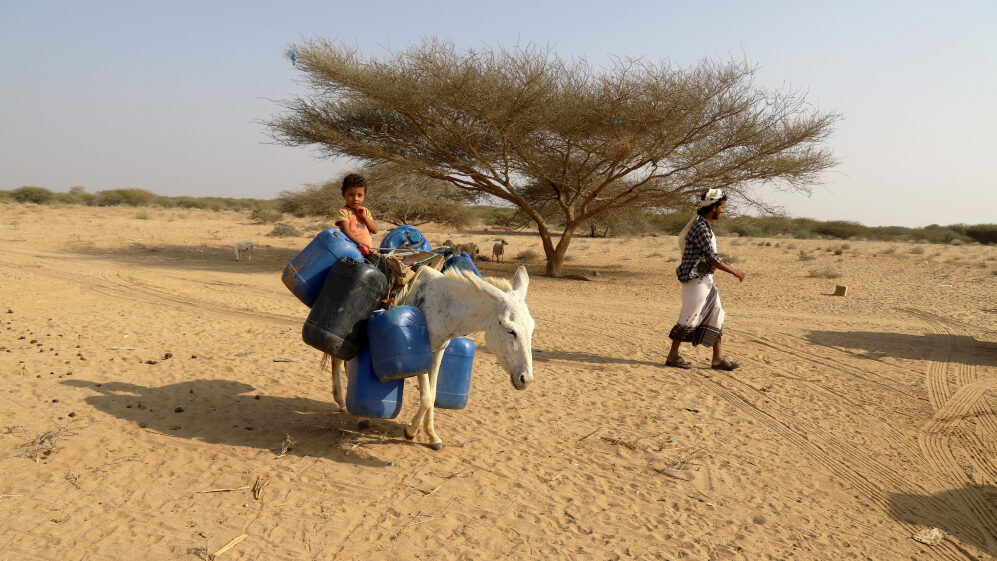
The Middle East and North Africa (MENA) region stands at a critical crossroads. For those living here—particularly women like myself who have spent years advocating for vulnerable communities—the climate crisis is not an abstract threat. It is a daily reality that amplifies existing struggles, deepening economic instability, conflict, and social inequality. Unlike global climate narratives that often focus on distant emissions targets or theoretical temperature projections, the conversation in MENA is grounded in raw, immediate survival. Here, climate change is not just a challenge to be managed—it is a multiplier of every crisis we already face.
The questions that dominate households, farms, and cities across the region are not theoretical. They are existential:
– How do we feed our families when food prices spiral due to droughts and trade disruptions?
– How do we secure water when reservoirs dwindle and demand outstrips supply?
– How do we keep the lights on when energy grids falter and bills become unaffordable?
– How do we shield our children from lethal heatwaves that turn streets into ovens?
These are not separate issues. They are climate questions—questions of dignity, justice, and the very survival of millions. The answers demand a radical shift in how we approach climate action, one that prioritizes people over policies, resilience over extraction, and justice over indifference.
Food: The First Casualty of Climate Instability
MENA’s food security is precariously tied to imports, making the region highly vulnerable to global climate shocks. Droughts in Australia or the U.S., failed harvests in Ukraine, or disruptions in the Suez Canal can send ripple effects through supply chains, driving up prices and reducing access to essential calories. For families already stretched by economic hardship, a sudden spike in bread or rice costs can mean the difference between nourishment and hunger.
The crisis is compounded by water scarcity, which limits agricultural productivity. Countries like Lebanon, Egypt, and Jordan—where agriculture relies heavily on irrigation—face shrinking yields as aquifers deplete and salinization spreads. Yet, the story is not just one of decline. It is also one of adaptive resilience. For centuries, MENA communities have cultivated drought-resistant crops, practiced water-efficient farming, and shared knowledge across generations. These traditions, often overlooked in favor of high-tech solutions, remain vital tools in the fight against food insecurity.
However, resilience alone will not suffice. A just transition in agriculture must integrate traditional wisdom with modern innovation—supporting smallholder farmers with climate-adaptive seeds, improving irrigation technologies, and ensuring fair trade policies that protect local producers from volatile global markets. Without this balance, the region risks repeating the cycle of dependency, where climate shocks become recurring crises rather than isolated events.
Water: The Silent Crisis Accelerating
MENA is the most water-scarce region in the world, a title that climate change is only accelerating. The Arab Spring was, in part, a protest against water mismanagement and scarcity, a warning of what happens when basic needs are denied. Today, the situation is worse. Rising temperatures evaporate precious reserves faster, while population growth and urbanization strain infrastructure. Desalination plants, though critical, consume enormous energy and leave behind brine waste that harms marine ecosystems—a reminder that no solution is without trade-offs.
Yet, the region’s history of water stewardship offers lessons. Ancient civilizations like the Nabataeans in Jordan and the Egyptians along the Nile mastered irrigation, groundwater management, and community-based water governance. Modern adaptations—such as rainwater harvesting, wastewater recycling, and decentralized water systems—can build on these foundations. The key is inclusive governance. Local communities must lead water management decisions, ensuring that solutions like desalination or dam projects do not displace vulnerable populations or exacerbate inequality.
Equally urgent is the need to protect ecosystems that act as natural water buffers. Wetlands, forests, and mangroves regulate hydrological cycles, but they are disappearing at alarming rates due to urbanization and pollution. Restoring these ecosystems is not just an environmental priority—it is a survival strategy.
Energy: The Illusion of Abundance
MENA is often romanticized as a region blessed with vast oil and gas reserves. Yet, for millions, energy security remains an elusive dream. Households in Lebanon, Yemen, and Tunisia frequently rely on generators for basic electricity, while industrial sectors face blackouts that halt production. The paradox is stark: the region produces more energy than it consumes, yet millions lack reliable access. This is not a failure of resources—it is a failure of distribution and equity.
Energy insecurity is a human rights issue. It denies children the ability to study after dark, forces families to choose between cooking and heating, and stifles economic growth. A just transition in energy must prioritize decentralized, renewable solutions that bring power to communities, not just to cities. Solar microgrids, wind farms in rural areas, and community-owned energy cooperatives can democratize access while reducing carbon footprints. Additionally, investing in energy efficiency—through better insulation, smart grids, and public transportation—can lower costs and reduce strain on grids.
The transition must also address the social cost of energy. Many renewable projects in MENA have been criticized for displacing local communities or failing to provide meaningful employment. A true just transition ensures that workers in fossil fuel industries are retrained for green jobs, and that indigenous knowledge—such as traditional solar architecture—is integrated into modern designs. The goal is not just to replace fossil fuels but to reimagine energy systems for people, not profit.
Heat: The Invisible Killer
No climate crisis in MENA is more immediate or deadly than the relentless rise in temperatures. The region warms at nearly twice the global average, with cities like Kuwait, Dubai, and Riyadh regularly exceeding 50°C (122°F). But heat is not just a statistic—it is a silent assassin. Construction workers in Saudi Arabia collapse under the sun. Elderly residents in Cairo struggle to sleep through nights that feel like furnaces. Children in Tunisian schools are forced to abandon classrooms when mercury climbs. Heat-related illnesses, including heatstroke and dehydration, are surging, disproportionately affecting the poor, the elderly, and outdoor laborers.
The response must be multi-layered and community-driven. Urban planning must prioritize green infrastructure: shade trees, reflective pavements, and green roofs to lower temperatures. Buildings should be designed with passive cooling techniques, such as cross-ventilation and thermal mass, rather than relying solely on air conditioning. Public spaces must include cooling centers, and workplaces must enforce stricter labor protections for outdoor workers.
Yet, the most critical intervention is social protection. Heat action plans must include early warning systems, public health campaigns, and financial aid for vulnerable groups. In cities like Dubai, where ultra-luxury cooling is the norm, the contrast with informal settlements—where residents lack access to AC—highlights the urgency of climate justice. No one should die because they cannot afford to escape the heat.
Climate Justice: The Missing Piece
The irony of climate change in MENA is that the region contributes less than 5% of global emissions yet bears disproportionate burdens. While wealthy nations and corporations drive the climate crisis, it is the poorest and most marginalized in MENA who suffer the worst consequences. This is not a coincidence—it is a systemic injustice.
A just transition requires three critical shifts:
1. Meaningful Participation: Communities must lead climate solutions, not be passive recipients. This means funding local organizations, amplifying indigenous knowledge, and ensuring that policies are co-designed with those most affected.
2. Equitable Investment: Resources must flow to the places and people who need them most. This includes subsidizing renewable energy for low-income households, investing in climate-resilient infrastructure in rural areas, and redirecting military spending—often a drain on MENA budgets—toward sustainable development.
3. Accountability: The global North must fulfill its climate finance pledges, and corporations must be held responsible for their carbon footprints. MENA nations, meanwhile, must push for loss and damage funding to address irreversible climate impacts.
The current model of climate action—where international summits produce grand declarations but little tangible change—is failing MENA. What is needed is political will. Leaders must prioritize climate justice over short-term economic gains, and citizens must demand transparency and action. The time for half-measures is over.
The Solutions Already Exist—Now We Must Scale Them
MENA is not a region of passive victims. Across the region, innovative solutions are emerging, but they are often isolated and underfunded. In Morocco, the Noor Ouarzazate Solar Complex is a global leader in concentrated solar power. In Jordan, the Azraq Wetland Reserve demonstrates how restored ecosystems can revive water tables. In Lebanon, community-led solar cooperatives are bringing electricity to off-grid villages. Young activists in Tunisia and Egypt are leading climate strikes, demanding systemic change. Farmers in Saudi Arabia are reviving ancient drought-resistant crops like barley and sorghum.
These examples prove that another future is possible—one that balances tradition with innovation, equity with efficiency. The challenge now is to scale these solutions with the urgency they deserve.
The Signal We Must Send Back
The Earth’s warnings are clear: rising temperatures, failing ecosystems, and collapsing infrastructure. In MENA, these signals are not distant alarms—they are sirens blaring in our streets, our homes, and our hospitals. The response must be equally unambiguous.
Climate action in MENA cannot be about greenwashing or empty promises. It must be about:
– Ensuring every family can afford food through resilient agriculture and fair trade.
– Securing water for all by protecting ecosystems and investing in decentralized solutions.
– Keeping the lights on with community-owned renewable energy and energy-efficient infrastructure.
– Protecting children from lethal heat through urban cooling and labor protections.
This is not just about mitigating climate change—it is about rebuilding dignity, justice, and hope in a region that has endured enough suffering. The question is no longer whether solutions exist. It is whether leaders have the courage to act and the wisdom to listen to those who have lived through the crisis for generations.

The signal the Earth sends is a cry for help. The signal MENA must return is a commitment to a future where no one is left behind. The time to act is now. The choice is ours.
