

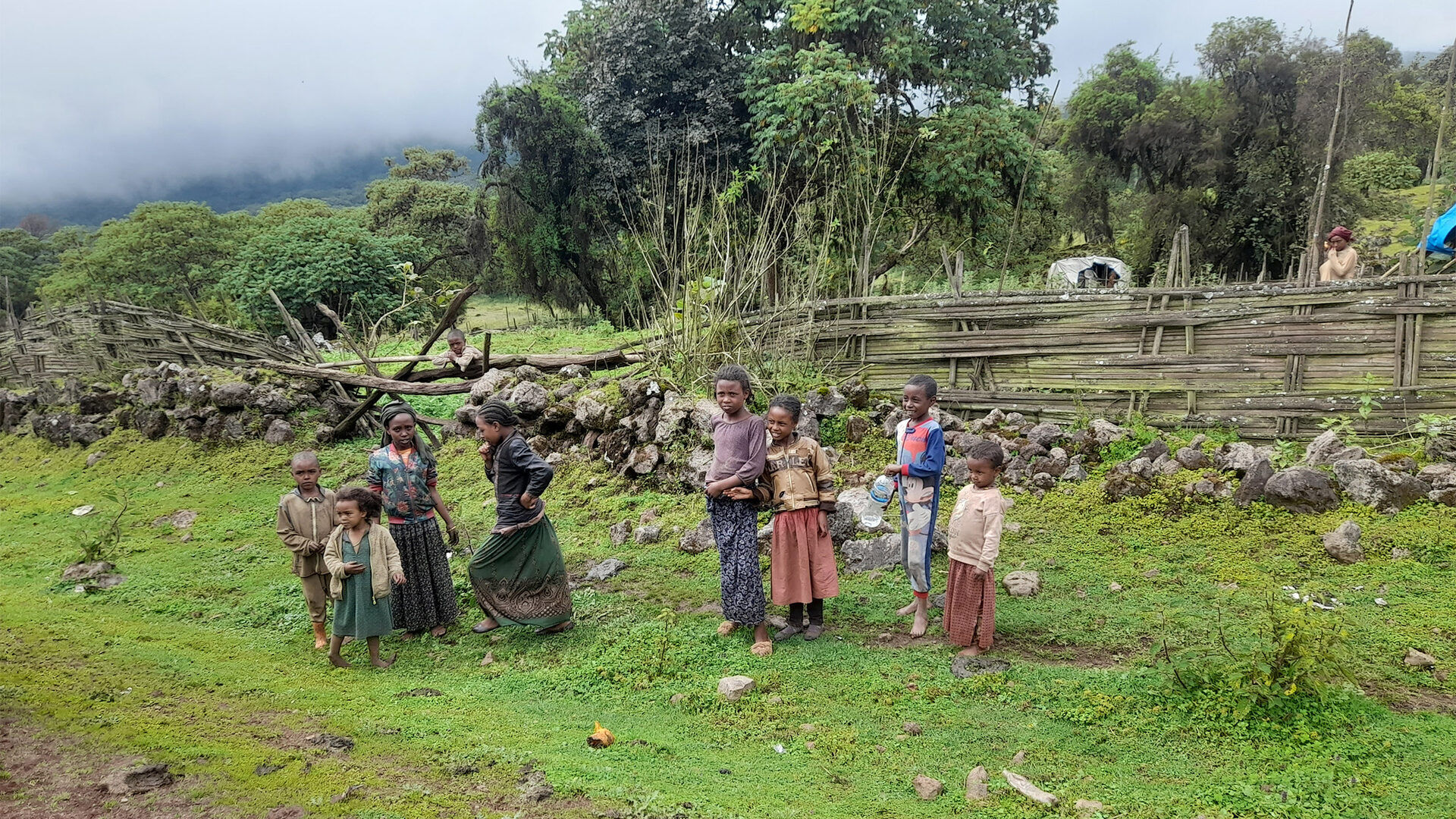
A groundbreaking study published in Nature Ecology & Evolution has revealed a complex interplay between Ethiopia’s protected areas and their broader societal impacts, challenging conventional assumptions about conservation’s universal benefits. While these regions have demonstrated remarkable success in mitigating deforestation, curbing agricultural encroachment, and preserving grasslands—a critical achievement in a country grappling with rapid population growth and land pressure—the same measures have inadvertently exacerbated food insecurity and reduced material well-being for nearby communities. The research, a collaboration between Ethiopian and UK-based researchers alongside the Ethiopian Wildlife Conservation Authority (EWCA), underscores the urgent need to rethink conservation strategies to ensure equitable outcomes.
Methodology and Key Findings: A Nuanced Assessment
The study analyzed 25 protected areas across Ethiopia over two distinct timeframes: 2000–2020/21 for environmental metrics and 2011–2016 for social indicators. Researchers evaluated six critical variables: forest cover, agricultural expansion, grassland preservation, food security, dietary diversity, and material well-being. By employing a quasi-experimental approach, the team compared protected regions with statistically similar unprotected areas, accounting for factors like elevation, remoteness, and agricultural suitability—variables often overlooked in traditional impact assessments.
The results revealed a diverse range of outcomes:
– 12 protected areas achieved environmental wins at the expense of social costs, particularly in food security.
– 5 areas delivered win-win scenarios, where biodiversity conservation aligned with improved local livelihoods.
– 3 areas experienced lose-lose outcomes, where both ecological and social metrics deteriorated.
Environmental Gains vs. Social Trade-Offs
Ethiopia’s protected areas have proven effective in reducing deforestation by ~25% and limiting agricultural expansion by ~44% compared to unprotected landscapes. Strictly managed zones also slowed grassland degradation, while less restrictive areas mitigated habitat conversion. These findings contradict long-standing critiques of Ethiopia’s conservation efforts, which have often been dismissed as ineffective due to perceived institutional weaknesses or funding gaps.
However, the social dimension presents a stark contrast. Households within 10 kilometers of protected areas reported declines in food security, equivalent to 3.9 million fewer household-months of adequate food during the study period. While dietary diversity remained stable, material well-being—measured through access to essential goods and services—declined significantly. Researchers attribute these disparities to restricted land access, resource depletion, and inadequate community engagement in conservation planning.
Caveats and Methodological Rigor
The study acknowledges limitations, particularly the temporal mismatch between environmental and social data collection. Due to data availability, well-being metrics were assessed over a shorter period (2011–2016), potentially missing long-term trends. Additionally, the authors caution against overinterpreting results without accounting for unmeasured confounders, such as climate variability or shifting agricultural practices. Sensitivity analyses, however, suggest the core findings remain robust despite these constraints.
Why Protected Areas Fail to Benefit Local Communities
The disconnect between conservation success and social decline stems from structural gaps in policy and implementation:
1. Land Access Restrictions: Protected status often limits traditional grazing and farming rights, displacing rural communities dependent on these resources.
2. Institutional Focus: Conservation authorities prioritize biodiversity protection over livelihood support, with budgets allocated primarily to ecological monitoring rather than community development.
3. Lack of Adaptive Management: Environmental authorities frequently fail to integrate local knowledge into conservation strategies, leading to unintended disruptions in subsistence economies.
Toward Equitable Conservation: Lessons from Win-Win Zones
The study identifies best-practice examples where protected areas achieved balanced outcomes. These regions typically featured:
– Alignment with local livelihoods: Conservation goals were co-designed with communities, ensuring sustainable resource use.
– Inclusive governance: Stakeholder participation in decision-making reduced conflicts over land and resources.
– Diversified funding: Allocations included both biodiversity protection and community welfare programs.
Lead author Sophie Jago, a research assistant at the Royal Botanic Gardens, Kew, emphasizes that these trade-offs are not inevitable:
“Some protected areas deliver better outcomes for both people and nature, proving that conservation can be designed to benefit all stakeholders. The challenge lies in scaling these models.”
Policy Implications and the 30×30 Biodiversity Target
The findings carry critical implications for Ethiopia’s conservation strategy, particularly in light of the global 30×30 initiative—a pledge to protect 30% of Earth’s land and oceans by 2030. Mekbeb E. Tessema, an independent biodiversity consultant, warns that unchecked expansion of protected areas risks undermining political and social support:
“If conservation ignores local impacts, it may achieve ecological goals but fail to secure long-term sustainability. Ethiopia must prioritize effectiveness, capacity-building, and community engagement to avoid repeating past mistakes.”
With Ethiopia’s population projected to nearly double by 2050, land pressure will intensify. The study advocates for:
– Reformulated funding mechanisms to support both biodiversity and livelihood programs.
– Pilot projects testing integrated conservation-development models.
– Strengthened partnerships between governments, NGOs, and local communities to ensure inclusive policy-making.
A Call for Holistic Conservation
The study’s conclusions resonate beyond Ethiopia, offering a cautionary tale for nations pursuing ambitious conservation targets. As Wendawek Abebe, a co-author from Addis Ababa University, notes:
“Protected areas are not a panacea. Their success depends on how they are designed, managed, and funded. True conservation must address both nature and the people who depend on it.”
Ultimately, the research underscores that sustainable conservation requires a paradigm shift—one that treats protected areas not as isolated ecological reserves, but as dynamic ecosystems where human well-being and biodiversity coexist. Without this shift, the global biodiversity agenda risks becoming a double-edged sword: preserving nature at the cost of neglecting the very communities that sustain it.
