

Africa’s Gold Legacy: From Mansa Musa to Modern Extraction
For centuries, Africa’s gold has been synonymous with unparalleled wealth. The 14th-century Mansa Musa, emperor of the Mali Empire, remains one of history’s most legendary figures due to his vast gold reserves, which financed grand architectural projects like the Great Mosque of Timbuktu and solidified Mali’s dominance in trans-Saharan trade. Today, Africa’s gold story is far more complex—though the continent holds 40% of the world’s gold reserves, much of its economic value still leaks abroad, leaving local economies with limited benefits.
The paradox persists: Africa produces nearly 600 metric tons of gold annually, yet the most lucrative stages of the industry—refining, trading, and price-setting—remain dominated by foreign entities, primarily in London, Switzerland, and Dubai. This structural imbalance has fueled debates about resource nationalism, economic sovereignty, and the urgent need for African nations to reclaim control over their mineral wealth.
The Global Gold Value Chain: Why Africa Loses Out
Unlike oil or gas, gold’s value is not just tied to extraction but to processing, certification, and global trading networks. When African gold is mined, it often follows a one-way export route: raw ore is shipped to refineries in the UK, UAE, or China, where it undergoes purification, assaying, and market listing. This process is critical—unrefined gold fetches significantly lower prices, and the final product’s purity is determined by offshore standards.
Kate Collett, insights analyst at Africa Practice, explains the systemic issue:
“Africa’s role in the gold value chain is largely confined to extraction. Limited refining capacity, capital constraints, and historical trade dependencies mean that the highest-value activities—refining, trading, and price discovery—remain concentrated outside the continent. This creates a persistent leak in the economic pipeline.”
The London Bullion Market Association (LBMA), which sets global gold standards, operates primarily in the UK, reinforcing Western dominance. Meanwhile, African nations struggle with infrastructure gaps, corruption risks, and inconsistent regulatory frameworks, making it difficult to compete in the high-stakes refining and trading sectors.
The Rise of Gold as a Strategic Reserve Asset
In an era of geopolitical fragmentation, inflationary pressures, and currency devaluations, gold has re-emerged as a safe-haven asset for nations seeking to reduce reliance on the U.S. dollar. Central banks worldwide—particularly in the Global South—are diversifying their reserves by accumulating gold, a trend accelerated by sanctions, trade wars, and financial instability.
According to the World Gold Council, emerging economies like China, Russia, India, and Turkey have significantly increased their gold holdings in recent years. For African nations, this shift represents both an opportunity and a necessity:
- Reducing Foreign Exchange Vulnerability – Holding gold reserves allows countries to avoid over-reliance on the dollar, which has been volatile due to U.S. monetary policy and geopolitical tensions.
- Strengthening Financial Sovereignty – Gold is non-sovereign currency, meaning its value is not tied to any single government’s economic policies.
- Countering Inflation – Unlike fiat currencies, gold retains value during hyperinflationary crises, as seen in Zimbabwe and Venezuela.
African nations are now adopting similar strategies:
- Ghana, Africa’s second-largest gold producer, has expanded its domestic gold accumulation program, purchasing a growing share of locally mined gold to bolster its reserves.
- Nigeria, despite being a net oil exporter, has explored gold as part of its reserve diversification efforts, with the Central Bank of Nigeria (CBN) reportedly increasing gold purchases to reduce forex losses.
- Tanzania has mandated that 20% of all gold production must be sold to the central bank, ensuring a steady inflow of foreign exchange while curbing illegal exports.
- Guinea, Africa’s third-largest gold producer, has tightened export controls and licensing, aiming to increase domestic refining and reduce reliance on foreign processors.
Thea Fourie, head of regional analysis for S&P Global Market Intelligence, highlights the broader geopolitical context:
“This movement aligns with a broader trend toward de-dollarization, including the development of alternative payment systems and the use of local currencies in trade. African nations are increasingly viewing gold not just as a commodity, but as a financial tool for economic independence.”
Resource Nationalism: Tightening Control Over Africa’s Gold
In response to decades of underdevelopment and foreign exploitation, African governments are adopting more aggressive policies to retain value from their gold industries. These efforts fall under the umbrella of “resource nationalism”, a strategy aimed at maximizing domestic benefits while balancing investor confidence.
1. Strengthening Regulatory Frameworks
Several nations have overhauled mining laws to ensure greater state oversight:
- Ghana has expanded its central bank’s gold-buying mandate, requiring miners to sell a portion of their output to the Bank of Ghana at pre-negotiated prices.
- Namibia has banned the export of unprocessed minerals, including gold, forcing companies to refine locally or face penalties.
- Mali and Burkina Faso, under military-led governments, have nationalized key mining assets, framing reforms as a way to reduce dependence on former colonial powers like France.
2. Formalizing Artisanal Mining
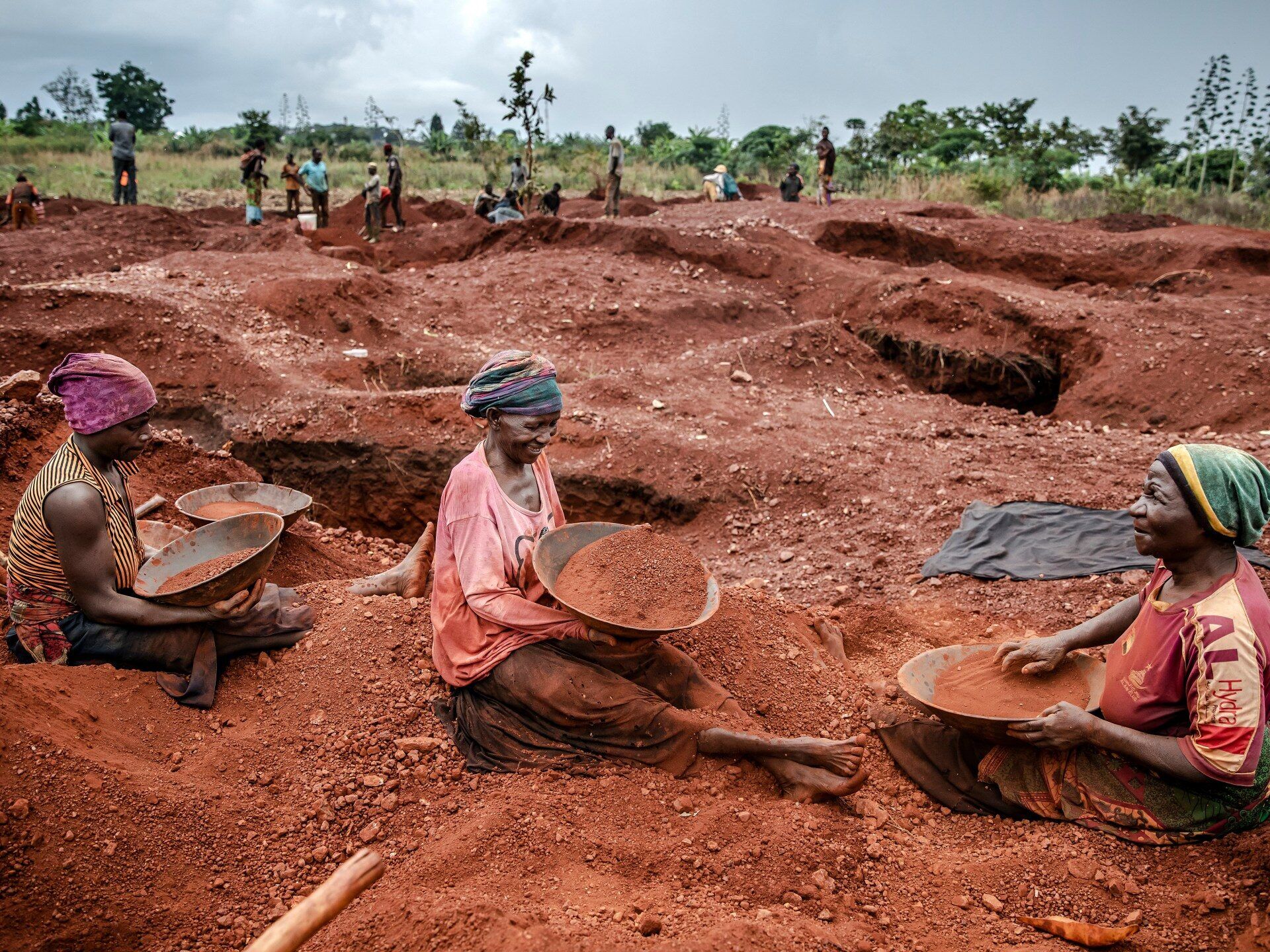
Artisanal and small-scale mining (ASM) contributes up to 30% of Africa’s gold production but operates largely outside formal channels, leading to smuggling, tax evasion, and unsafe working conditions. Governments are now pushing for formalization:
- Tanzania has introduced community mining schemes, providing legal frameworks for ASM operators while ensuring tax compliance and environmental safeguards.
- Guinea has launched artisanal mining cooperatives, offering training, financing, and access to markets to reduce illegal exports.
- South Africa has expanded community shareholding programs, allowing local communities to own stakes in nearby mines.
However, challenges remain. Many small-scale miners lack access to finance, technology, or stable markets, forcing them to sell informally to middlemen who smuggle gold across borders.
3. Developing Domestic Refining Capacity
To break free from offshore refining dominance, African nations are investing in local processing facilities:
- Mali is constructing a state-owned gold refinery in Bamako, with support from Russian and Chinese firms, aiming to reduce dependence on Western refiners.
- Guinea has canceled unproductive mining licenses and restricted unprocessed gold exports, pushing companies to invest in domestic refining.
- Nigeria is exploring joint ventures with Indian refiners to establish a local gold processing hub in Lagos.
Yet, scaling these initiatives requires significant capital, and many projects face delays due to corruption, bureaucratic hurdles, and lack of technical expertise.
The Sahel’s Bold Experiment: State-Led Mining Reforms
In the Sahel region, military-led governments—particularly in Mali, Burkina Faso, and Niger—have taken radical steps to assert control over their mineral wealth, often clashing with foreign investors.
- Mali’s President Assimi Goïta has expanded state ownership in mining, including the nationalization of key gold concessions. The government has also sought Russian and Chinese partnerships to develop domestic refining infrastructure, reducing reliance on French and European firms.
- Burkina Faso has increased state participation in mining, requiring foreign companies to partner with local entities and sell a portion of their output to the central bank.
- The Alliance of Sahel States (AES), formed by Mali, Burkina Faso, and Niger, has discussed monetary cooperation, including the possibility of creating a regional gold-backed currency to reduce dependence on the franc CFA.
However, these moves have alienated some investors, who cite regulatory uncertainty, expropriation risks, and political instability as deterrents. Beverly Ochieng, senior analyst at Control Risks, warns:
“When governments introduce sudden nationalizations or opaque regulations without stakeholder engagement, investor confidence erodes. The challenge is balancing economic sovereignty with long-term stability.”
The Path Forward: Can Africa Capture Full Value?
While policy momentum is growing, Africa’s ability to fully retain gold value depends on three critical factors:
- Infrastructure Development
- Building internationally certified refineries (e.g., LBMA-approved facilities) requires billions in investment.
-
Power shortages, poor transport networks, and logistical inefficiencies remain major hurdles.
-
Technical and Human Capital
- Africa lacks skilled labor in mining engineering, metallurgy, and financial analysis.
-
Training programs and partnerships with global firms (e.g., Anglo American, Barrick Gold) are essential.
-
Stable Governance and Transparency
- Corruption and weak institutions have historically undermined resource revenues.
- Independent oversight bodies (e.g., Extractive Industries Transparency Initiative – EITI) are needed to ensure fair pricing and revenue distribution.
Analysts remain divided on whether Africa can achieve full value capture in the near term. Some, like Ochieng, caution that state-led mining companies may struggle to meet international standards:
“The experiment with state mining operators will be telling. Can they refine gold to LBMA standards, sell it at competitive prices, and maintain long-term contracts? And more fundamentally, will these governments remain stable enough to see these projects through?”
Others, however, believe the long-term trend is irreversible. Fourie suggests:
“In the next decade, we may see a ‘Gold OPEC’ emerge from African nations—a coalition of producers that controls refining, pricing, and trade, much like OPEC does with oil. This would fundamentally shift the global gold market.”
Conclusion: A Continent at a Crossroads
Africa’s gold story is one of contradictions: a continent blessed with wealth but struggling to benefit from it. While foreign refiners and traders continue to dominate the high-value segments of the industry, African governments are aggressively pushing back, using policy reforms, state-led investments, and geopolitical alliances to reclaim control.
The success of these efforts will depend on balancing sovereignty with pragmatism—ensuring that nationalization does not deter investment, that refining capacity is built sustainably, and that artisanal miners are integrated into formal systems. If achieved, Africa could transform from a raw material exporter into a major player in global gold processing and trade—but the road ahead is fraught with challenges.
For now, the gold rush continues, but the real prize—economic sovereignty—remains elusive. The question is no longer if Africa will capture more value, but how quickly and effectively it can do so.
