

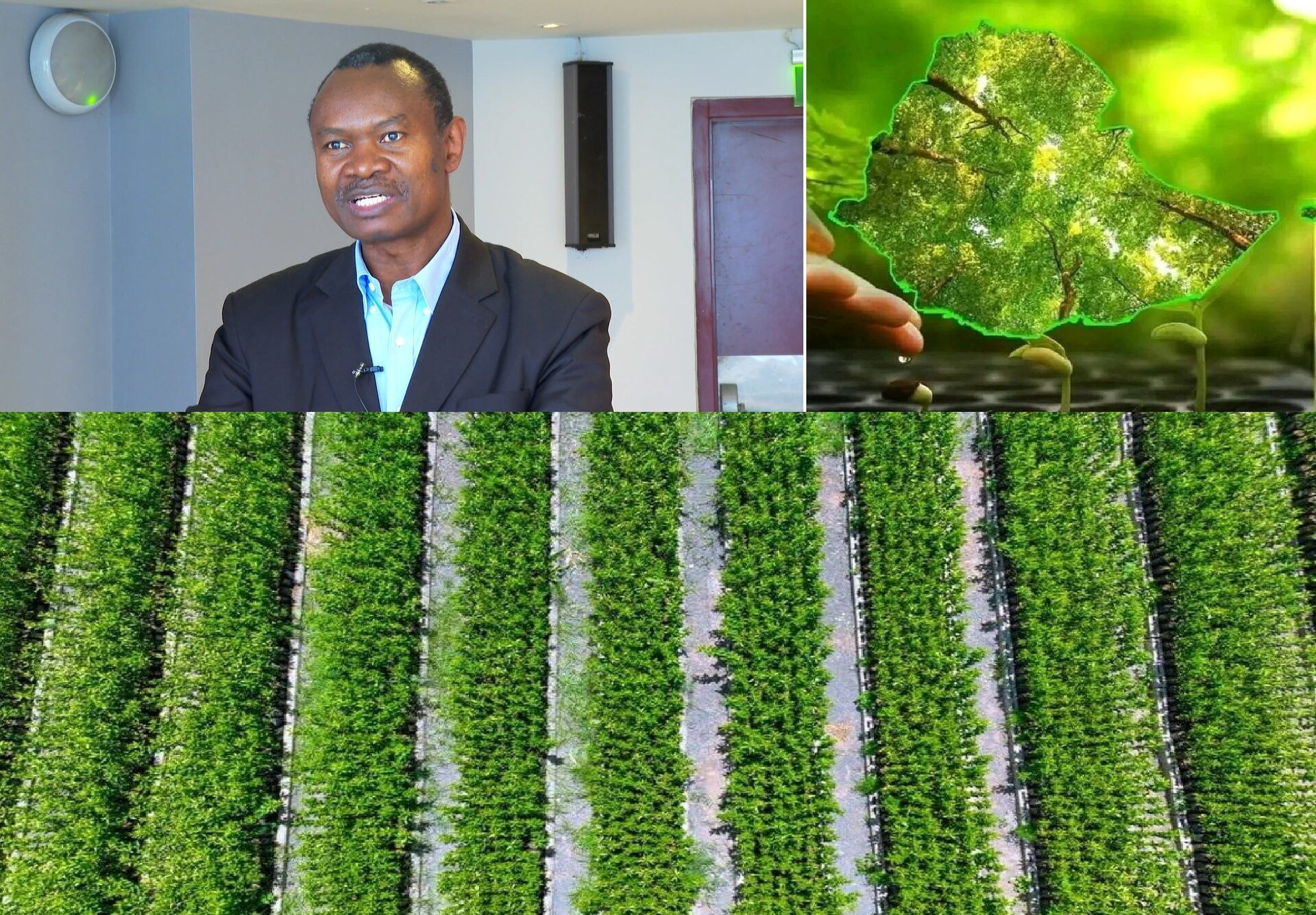
Addis Ababa, July 11, 2026 — Ethiopia’s Green Legacy Initiative (GLI) has positioned itself as a global benchmark in inclusive climate action, demonstrating how multi-sectoral collaboration can drive large-scale environmental restoration, economic growth, and social equity. According to Dr. John Recha, a Climate Smart Agriculture and Policy Scientist at the International Livestock Research Institute (ILRI), the initiative’s holistic, participatory approach—engaging governments, researchers, businesses, and local communities—has made it one of the most effective and scalable climate resilience programs worldwide.
A Multi-Stakeholder Model for Sustainable Development
Dr. Recha emphasized that Ethiopia’s success lies in its unprecedented cross-sectoral coordination, bringing together agriculture, energy, economics, research, and private sector actors under a unified framework to tackle climate challenges.
“Unlike traditional top-down approaches, Ethiopia’s Green Legacy Initiative thrives on collaborative governance, where policymakers, scientists, investors, and communities co-design and implement solutions that are both environmentally impactful and economically viable,” Recha explained.
The initiative operates as a dynamic platform where stakeholders identify high-impact projects, secure financing, and deploy innovative climate solutions—ranging from afforestation to renewable energy integration—while ensuring long-term social and economic benefits for rural and urban populations alike.
The Power of Institutional Coordination in Climate Action
Recha highlighted that well-structured institutional mechanisms are critical to accelerating climate action. Ethiopia’s model ensures that scientific research, policy formulation, financial mobilization, and private-sector innovation are seamlessly aligned with national development priorities.
“Effective climate action requires more than just good intentions—it demands institutional synergy, where each sector contributes its expertise while sharing risks and rewards,” he stated.
This approach contrasts with fragmented climate strategies seen in many nations, where policy, funding, and implementation often operate in silos. Ethiopia’s centralized yet decentralized governance—balancing national oversight with local execution—has allowed the GLI to scale rapidly without compromising community ownership.
African Leadership in Climate Governance
Ethiopia is not alone in Africa in adopting structured climate coordination. Countries like Kenya and Uganda have established dedicated climate change directorates, such as Kenya’s Climate Change Directorate and Uganda’s Climate Change Department under the Ministry of Water and Environment, which serve as model frameworks for integrated climate action.
“These institutions demonstrate how technical expertise, policy planning, and private-sector engagement can converge to create investor-friendly climate initiatives,” Recha noted. “By integrating carbon financing, green technology, and community-based conservation, these countries are not only meeting their Paris Agreement commitments but also unlocking new economic opportunities.”
From Vision to Impact: Ethiopia’s Reforestation Revolution
Launched in 2019, the Green Legacy Initiative has evolved into one of the most ambitious ecosystem restoration programs globally, with measurable environmental and socio-economic outcomes.
Key Achievements (2019–2026)
- Over 48 billion tree seedlings planted nationwide, transforming degraded landscapes into productive, carbon-sequestering ecosystems.
- Forest cover increased from 17.2% (2019) to 23% (2023), reversing decades of deforestation and enhancing biodiversity.
- Carbon sequestration boost: The initiative has significantly reduced Ethiopia’s carbon footprint, contributing to global climate mitigation efforts.
- Food security enhancement: Restored ecosystems have improved soil fertility, benefiting smallholder farmers and livestock production.
- Job creation and economic growth: The program has generated employment in agroforestry, renewable energy, and sustainable tourism, particularly in rural communities.
The 2026 Campaign: Planting for a Greener Future
Building on its unprecedented success, Ethiopia has launched a new phase of the GLI, aiming to plant an additional 8 billion tree seedlings during the 2026 rainy season. This massive expansion underscores the government’s commitment to accelerating Africa’s Green Revolution and positioning Ethiopia as a leader in sustainable development.
“This campaign is not just about planting trees—it’s about transforming livelihoods, securing water resources, and building climate resilience for future generations,” Recha stated.
Why Ethiopia’s Model Matters for the World
In an era where climate change threatens global stability, Ethiopia’s Green Legacy Initiative serves as a proof of concept for how inclusive, multi-sectoral climate action can deliver tangible results.
Key reasons why the GLI stands out:
1. Scalability: The model can be adapted by other nations, particularly in Africa and developing regions, where land degradation and climate vulnerability are severe.
2. Equity Focus: Unlike elite-driven conservation efforts, the GLI actively involves local communities, ensuring fair benefit-sharing and long-term sustainability.
3. Economic Synergy: By integrating green projects with economic development, Ethiopia has shown that climate action can drive GDP growth and reduce poverty.
4. Global Inspiration: The initiative has inspired similar programs in India, Brazil, and the Middle East, proving that large-scale restoration is achievable with strong political will and public-private partnerships**.
Challenges and the Path Forward
While the GLI has achieved remarkable progress, Dr. Recha acknowledged ongoing challenges, including:
– Sustaining long-term funding beyond initial government and donor support.
– Ensuring equitable access to benefits, particularly for marginalized groups.
– Balancing rapid expansion with quality planting and ecosystem health***.
“The next decade will be critical in perfecting the model—ensuring that Ethiopia’s Green Legacy Initiative not only continues to grow but also inspires a global shift toward sustainable development,” he concluded.
A Call to Action for Global Climate Solutions
As nations scramble to meet net-zero targets and SDG commitments, Ethiopia’s Green Legacy Initiative offers a blueprint for success—one that proves climate action can be both environmentally transformative and socially inclusive**.
By fostering partnerships, leveraging technology, and empowering communities, Ethiopia has redefined what is possible in the fight against climate change. As the world watches, the GLI stands as a testament to the power of collective action in building a greener, more resilient future.
