

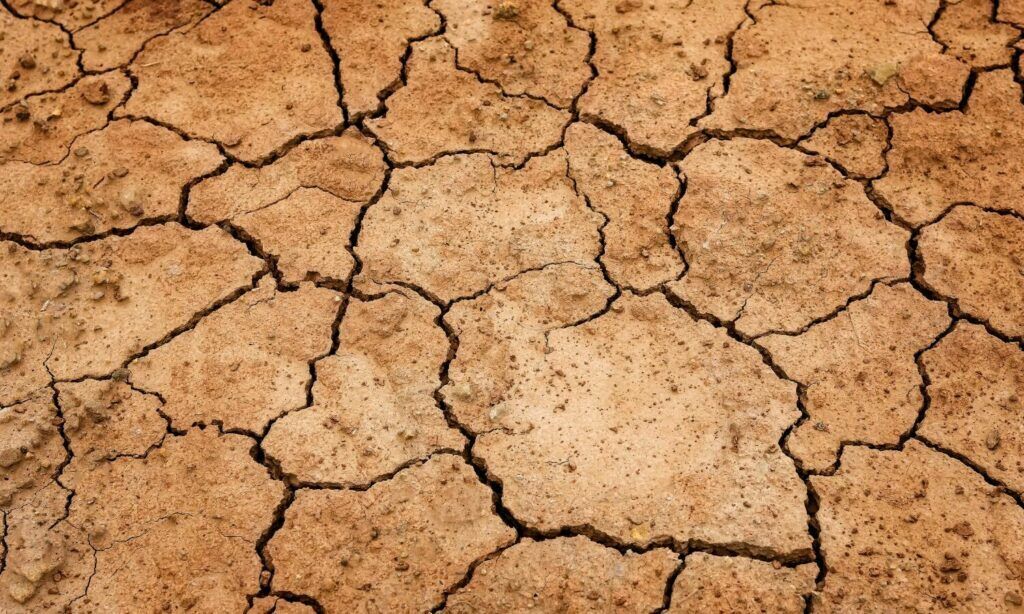
Introduction: A Silent but Devastating Crisis
Desertification, land degradation, and drought (DLDD) represent one of the most pressing yet understated environmental crises of the 21st century. Unlike immediate disasters such as earthquakes or tsunamis, these phenomena unfold gradually, eroding ecosystems, undermining livelihoods, and exacerbating global inequalities. Covering over one-third of the Earth’s land surface, drylands—where desertification predominantly occurs—are home to 2.5 billion people, many of whom rely on agriculture, pastoralism, or natural resource extraction for survival. The United Nations Convention to Combat Desertification (UNCCD) estimates that 1.6 billion hectares of land—equivalent to the size of South America—have been degraded by human activities, directly impacting 3.2 billion people worldwide. These processes are not merely environmental; they are social, economic, and geopolitical crises, driving food insecurity, forced migration, and conflict.
The Intergovernmental Panel on Climate Change (IPCC) has highlighted that desertification and droughts are accelerating due to climate change, with agricultural and ecological droughts increasing in frequency and severity across all continents. The 2021 IPCC Sixth Assessment Report (AR6) underscores that human-induced climate change is directly linked to these trends, particularly in regions already vulnerable to aridity. Meanwhile, the World Meteorological Organization (WMO) reports that droughts have become 29% more frequent since 2000, with projections suggesting that by 2050, over 75% of the global population could face water scarcity for at least one month annually. These statistics paint a grim picture: 4.8 to 5.7 billion people may live in water-scarce regions, and up to 216 million individuals could be displaced due to drought-related factors, including declining crop yields, rising sea levels, and overpopulation.
The Mechanisms of Desertification, Land Degradation, and Drought
1. Desertification: The Slow Unraveling of Drylands
Desertification is defined by the UNCCD as “land degradation in arid, semi-arid, and dry sub-humid areas resulting from various factors, including climatic variations and human activities.” Unlike the expansion of existing deserts, it refers to the decline in productivity of dryland ecosystems due to overexploitation, poor land management, and climate shifts. Key drivers include:
– Expansion of croplands and grazing areas, leading to soil compaction and loss of vegetation cover.
– Unsustainable agricultural practices, such as monocropping, excessive irrigation, and the overuse of chemical fertilizers, which deplete soil nutrients and increase salinity.
– Deforestation and overgrazing, which disrupt natural water cycles and reduce biodiversity.
– Climate change, which intensifies droughts, alters precipitation patterns, and increases the frequency of sand and dust storms.
The IPCC (2019) notes that desertification is occurring 30 to 35 times faster than historical rates, with climate change projected to worsen the crisis by reducing rainfall, increasing evaporation, and expanding arid zones. The consequences are far-reaching:
– Declining vegetation productivity, reducing carbon sequestration and exacerbating climate change.
– Loss of biodiversity, as native species struggle to adapt to degraded conditions.
– Economic losses, particularly for smallholder farmers and pastoralists who depend on land for income.
– Human displacement, as marginalized communities face food insecurity and water shortages.
2. Land Degradation: The Hidden Threat to Ecosystems
Land degradation is a broader concept that encompasses any reduction in the capacity of land to support life and livelihoods. The Intergovernmental Science-Policy Platform on Biodiversity and Ecosystem Services (IPBES) defines it as “human-caused processes that diminish biodiversity, ecosystem functions, or services in terrestrial and aquatic ecosystems.” Unlike desertification, which is geographically specific to drylands, land degradation occurs globally and is driven by:
– Soil erosion, accelerated by deforestation and poor agricultural techniques.
– Salinization, caused by poor irrigation practices that leave salt deposits in soil.
– Pollution, including agricultural runoff, industrial waste, and plastic contamination.
– Urbanization and infrastructure development, which fragment habitats and reduce natural water absorption.
The UNCCD estimates that 10 million hectares of productive land are lost annually due to degradation, with 60% of global croplands already experiencing some form of degradation. This degradation disrupts rainfall patterns, increases the risk of floods and droughts, and contributes to climate feedback loops, such as the release of stored carbon into the atmosphere.
3. Drought: The Invisible Water Crisis
Drought is a climatic phenomenon characterized by prolonged water scarcity, whether due to precipitation deficits, high evaporation rates, or poor water management. The WMO (1992) defines it as “a prolonged absence or marked deficiency of precipitation that results in a serious hydrological imbalance.” Unlike desertification, droughts can occur in any region, though they are most severe in semi-arid and arid zones. Key factors include:
– Climate change, which intensifies evaporation and alters precipitation patterns.
– Over-extraction of groundwater, depleting aquifers faster than they can replenish.
– Poor water governance, leading to inequitable distribution and waste.
The UNCCD’s 2022 report highlights that Africa has been the most affected continent, with over 300 drought episodes in the past century, resulting in millions of deaths and economic losses. Globally, droughts are increasing in duration and severity, with the WMO reporting a 29% rise in frequency since 2000. By 2050, droughts could affect 75% of the global population, with 4.8 to 5.7 billion people experiencing water scarcity for at least one month annually. The economic and social costs are staggering:
– Food insecurity, as droughts reduce crop yields and livestock productivity.
– Forced migration, with up to 216 million people projected to be displaced by 2050.
– Health crises, including malnutrition, waterborne diseases, and respiratory ailments from dust storms.
The Interconnected Crisis: DLDD and the Triple Planetary Emergency
Desertification, land degradation, and drought are not isolated issues but are deeply intertwined with climate change, biodiversity loss, and pollution—the so-called triple planetary crisis. The UNCCD emphasizes that restoring 1 billion hectares of degraded land by 2030 could sequester 3 billion tonnes of carbon annually, equivalent to 10% of global energy-related emissions. This highlights the dual role of land in both mitigating climate change and adapting to its impacts.
However, the crisis extends beyond environmental boundaries. The UN Human Rights Office (OHCHR) has documented that DLDD violates multiple human rights, including:
– The right to life, as droughts and desertification increase mortality from hunger and disease.
– The right to food and water, as agricultural productivity declines and water sources dwindle.
– The right to adequate housing and livelihood, as communities lose access to productive land.
– The right to self-determination, as marginalized groups face displacement and loss of cultural identity.
Women and Indigenous communities are disproportionately affected, as they often rely on traditional land-based livelihoods and lack access to resources for adaptation. The UN Special Rapporteur on the Right to a Clean, Healthy, and Sustainable Environment has called for a rights-based approach to address DLDD, emphasizing that systemic change is essential to protect vulnerable populations.
Geneva’s Leadership in Combating DLDD: A Multilateral Approach
Geneva, as the global hub for international diplomacy and environmental governance, plays a pivotal role in addressing desertification, land degradation, and drought. The city hosts over 200 international organizations, many of which are actively engaged in policy development, research, and on-the-ground interventions. Below is an overview of key initiatives and organizations based in Geneva that are driving progress:
1. The United Nations Convention to Combat Desertification (UNCCD)
Established in 1994, the UNCCD is the only legally binding international treaty dedicated to combating desertification and drought. With 197 Parties (196 countries and the European Union), it operates under three core principles:
– Participation: Engaging local communities, Indigenous Peoples, and civil society.
– Partnership: Collaborating with governments, NGOs, and the private sector.
– Decentralization: Empowering local actors to implement solutions.
The Conference of the Parties (COP)—the UNCCD’s decision-making body—meets every two years to review progress and set new targets. The 16th COP (COP16), held in Riyadh, Saudi Arabia (December 2024), adopted 39 decisions, including:
– Strengthening land restoration efforts to achieve Land Degradation Neutrality (LDN) by 2030.
– Enhancing drought resilience through early warning systems and community-based adaptation.
– Promoting the integration of DLDD into national climate and biodiversity strategies, aligning with the Paris Agreement and the Kunming-Montreal Global Biodiversity Framework.
The 2026 COP17, hosted by Mongolia, will focus on “Restoring Land. Restoring Hope.”, emphasizing ecosystem-based solutions and community-led restoration.
2. The Rio Conventions and Collaborative Frameworks
The UNCCD operates in tandem with two other Rio Conventions:
– The United Nations Framework Convention on Climate Change (UNFCCC)
– The Convention on Biological Diversity (CBD)
These conventions share complementary goals and collaborate through the Joint Liaison Group (JLG), established in 2001 to coordinate efforts on climate change, biodiversity, and land degradation. Key collaborations include:
– The CBD’s work on “Biodiversity of Dry and Sub-Humid Lands” (2010), which integrates ecosystem restoration into biodiversity conservation.
– The UNFCCC’s Reducing Emissions from Deforestation and Forest Degradation (REDD+) program, which supports carbon sequestration in degraded lands.
3. The United Nations Environment Programme (UNEP) and Early Warning Systems
UNEP’s UNEP/GRID-Geneva division leverages satellite data and Earth observation technologies to monitor land degradation and drought. Key initiatives include:
– The GEO Land Degradation Neutrality Flagship (GEO-LDN), which provides governments with tools to track land health and prioritize restoration efforts.
– Research on satellite-based monitoring, such as the study “Knowledge Generation Using Satellite Earth Observations to Support Sustainable Development Goals (SDG 15.3.1)”, which offers scalable solutions for global land assessment.
UNEP also supports the UN Decade on Ecosystem Restoration (2021-2030), a global campaign to protect and revive ecosystems, including degraded lands. The 2024 World Environment Day, themed “Land Restoration, Desertification, and Drought Resilience”, underscored the urgency of these efforts.
4. The World Meteorological Organization (WMO) and Drought Prediction
The WMO, a specialized agency of the UN, plays a critical role in drought forecasting and early warning systems. Its initiatives include:
– The Global Drought Watch, which provides real-time data on drought conditions worldwide.
– Collaboration with the World Health Organization (WHO) to assess health risks associated with droughts, including waterborne diseases and respiratory ailments from dust storms.
– The Early Warnings for All Initiative, which aims to eliminate preventable deaths from disasters, including droughts, by 2027.
5. The Food and Agriculture Organization (FAO) and Sustainable Land Management
The FAO’s Geneva Liaison Office supports climate-resilient agriculture and dryland restoration through programs such as:
– The Action Against Desertification (AAD) program, which empowers local communities to adopt sustainable land-use practices.
– The Green Growth Knowledge Partnership (GGKP), which promotes natural capital accounting to demonstrate the economic benefits of land restoration.
– Collaboration with the UN Convention on Combating Desertification (UNCCD) to integrate agricultural resilience into national climate strategies.
6. The International Union for Conservation of Nature (IUCN) and Nature-Based Solutions
As a partner of the UNCCD since 2011, the IUCN advocates for nature-based solutions (NbS) to combat land degradation. Key contributions include:
– The Global Standard for Land Degradation Neutrality (LDN), which provides guidelines for governments and businesses to achieve LDN.
– Research on soil biodiversity, highlighting how healthy soil ecosystems enhance carbon sequestration and drought resilience.
– Support for Indigenous and local knowledge, recognizing the traditional stewardship of dryland ecosystems.
7. The International Labour Organization (ILO) and Green Jobs
The ILO promotes decent work and environmental sustainability through initiatives such as:
– The Memorandum of Understanding (MoU) with the UNCCD (2019), which focuses on creating green jobs in land restoration and climate adaptation.
– The report “Ensuring Safety and Health at Work in a Changing Climate”, which addresses occupational risks from extreme heat and drought.
8. The International Organization for Migration (IOM) and the Land-Migration Nexus
The IOM, in partnership with the UNCCD, addresses the link between land degradation and forced migration. Key efforts include:
– The “Land-Migration Nexus” initiative, which analyzes how drought and desertification drive displacement.
– Policy recommendations to integrate climate migration into national and international frameworks.
9. The World Health Organization (WHO) and Drought-Related Health Crises
The WHO leads global health responses to droughts, focusing on:
– Food security and nutrition, including emergency supplementation programs.
– Water sanitation and hygiene (WASH) interventions to prevent waterborne diseases.
– Mental health support for communities affected by drought-induced displacement.
10. The World Economic Forum (WEF) and Global Risk Assessment
The WEF’s Global Risks Report (2024) ranks droughts and desertification among the top environmental risks, emphasizing the need for:
– Public-private partnerships to fund land restoration.
– Policy reforms to integrate climate resilience into economic planning.
– Technological innovation, such as drought-resistant crops and precision agriculture.
11. The Ramsar Convention and Wetland Conservation
The Convention on Wetlands (Ramsar Convention) promotes wetland conservation as a natural solution to drought and desertification. Wetlands act as:
– Water reservoirs, mitigating drought impacts.
– Carbon sinks, helping to offset greenhouse gas emissions.
– Biodiversity hubs, supporting ecosystem resilience.
12. The United Nations Office for Disaster Risk Reduction (UNDRR) and Resilience Building
The UNDRR supports disaster risk reduction (DRR) strategies that integrate drought preparedness, including:
– Early warning systems for sand and dust storms.
– Community-based adaptation programs.
– Integration of DRR into national development plans.
13. The United Nations Environment Assembly (UNEA) and Policy Frameworks
The UNEA, the highest-level decision-making body on the environment, has adopted multiple resolutions to combat DLDD, including:
– UNEA 6/Res.14 (2022), which strengthens international efforts to restore degraded lands and achieve Land Degradation Neutrality.
– Collaborative frameworks with the UNCCD, UNFCCC, and CBD to align climate, biodiversity, and land policies.
14. The International Federation of Red Cross and Red Crescent Societies (IFRC) and Humanitarian Response
The IFRC provides drought preparedness and response strategies, including:
– Agricultural planning to reduce crop losses.
– Nature-based solutions, such as shelterbelts and water harvesting.
– Disaster risk reduction (DRR) training for vulnerable communities.
15. The Internal Displacement Monitoring Centre (IDMC) and Climate Migration
The IDMC tracks drought-induced displacement, publishing reports such as:
– “Monitoring Methodology for Displacement Associated with Drought (2020)”, which provides data-driven insights into climate migration trends.
16. The World Vision and Community-Based Restoration
World Vision implements grassroots restoration projects, focusing on:
– Emergency response during droughts.
– Resilience-building programs for marginalized households.
– Climate justice advocacy to ensure vulnerable communities are prioritized in recovery efforts.
The Path Forward: A Global Response to DLDD
The crisis of desertification, land degradation, and drought demands urgent, coordinated, and rights-based action. Geneva’s multilateral institutions, research centers, and NGOs are at the forefront of this effort, but scaling up solutions requires:
1. Strengthening Policy Frameworks:
– Accelerating the implementation of the UNCCD’s Land Degradation Neutrality (LDN) targets.
– Integrating DLDD into national climate and biodiversity strategies, as outlined in the Paris Agreement and Kunming-Montreal Global Biodiversity Framework.
– Enhancing international cooperation through binding agreements on land restoration.
- Investing in Technology and Innovation:
- Expanding satellite monitoring to track land health in real time.
- Developing drought-resistant crops and precision agriculture techniques.
-
Promoting nature-based solutions, such as afforestation, agroforestry, and soil regeneration.
-
Empowering Local Communities:
- Supporting Indigenous and traditional knowledge in land management.
- Providing financial incentives for sustainable land-use practices.
-
Training farmers and pastoralists in climate-resilient techniques.
-
Addressing Human Rights and Equity:
- Ensuring gender-responsive policies to protect women and girls, who are disproportionately affected.
- Recognizing the rights of Indigenous Peoples to their lands and traditional stewardship.
-
Establishing compensation mechanisms for communities displaced by drought and desertification.
-
Global Financial Commitments:
- Increasing funding for land restoration through green finance and climate adaptation funds.
- Encouraging private-sector participation in sustainable land management.
-
Aligning development aid with LDN and SDG targets.
-
Raising Public Awareness:
- Promoting “Desertification and Drought Day” (June 17) as a global campaign to educate communities on sustainable land practices.
- Highlighting success stories of land restoration to inspire action.
- Engaging youth and civil society in climate advocacy.
Conclusion: A Call to Action
Desertification, land degradation, and drought are not inevitable consequences of climate change but preventable crises that require collective action. Geneva’s multilateral ecosystem provides a unique platform for diplomacy, research, and implementation, but real progress depends on global commitment. The UN Decade on Ecosystem Restoration (2021-2030), the Paris Agreement, and the SDGs offer clear roadmaps, but political will, financial investment, and community engagement are essential to turn these frameworks into reality.
The stakes could not be higher: billions of people depend on healthy lands, and the future of our planet hinges on our ability to restore, protect, and sustainably manage the Earth’s ecosystems. As the UNCCD’s theme for COP17 (2026) reminds us—“Restoring Land. Restoring Hope.”—the time to act is now. The choices we make today will determine whether future generations inherit a world of thriving ecosystems or one of irreversible degradation**.
