

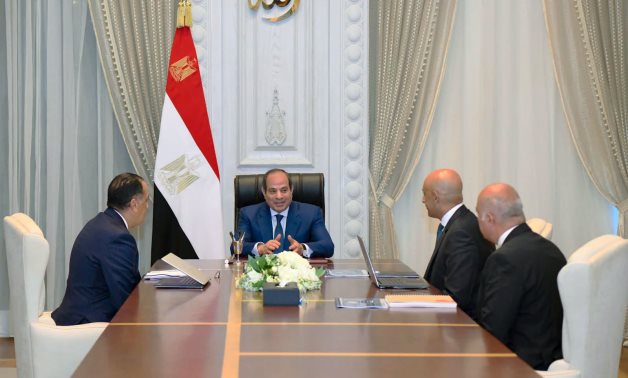
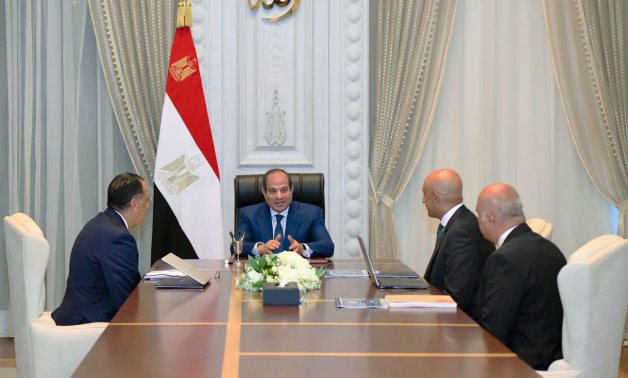
CAIRO, 26 July 2026 — In a strategic move to elevate Egypt’s education sector to global standards, President Abdel Fattah El-Sisi convened a high-level meeting with Prime Minister Mostafa Madbouly and Education Minister Mohamed Abdel Latif to assess progress on international education partnerships and ongoing reforms. The session underscored Egypt’s commitment to modernizing its educational frameworks while fostering collaboration with leading global institutions to cultivate a skilled, future-ready workforce.
Expanding Technical Education: A National Priority
A cornerstone of the discussion was Egypt’s technical education sector, which currently serves 2.35 million students across 3,213 specialized schools. The minister highlighted recent agreements aimed at doubling the number of applied technology schools to 225 by the start of the next academic year, a significant expansion designed to meet the demands of an evolving job market.
At the forefront of these initiatives is a groundbreaking partnership with Italy, which will establish 100 new applied technology schools across diverse specializations. This collaboration aligns with Egypt’s broader strategy to integrate cutting-edge technology, innovation, and production-based learning into its curriculum. The minister emphasized that such partnerships with Italy and Germany serve as blueprints for international cooperation, ensuring graduates emerge with market-relevant skills and globally recognized credentials.
German-Egyptian Collaboration: A Model for Technical Excellence
The meeting delved into the Egyptian-German technical education initiative, a flagship program that has already yielded tangible results. Under this framework, Egypt and Germany’s Federal Ministry for Economic Cooperation and Development signed a Declaration of Intent to further develop Egyptian-German technical schools, with graduates receiving dual accreditation from both nations. This dual-certification system is designed to enhance employability and facilitate international mobility for Egyptian students.
Additionally, the German Agency for International Cooperation (GIZ) has committed to establishing and operating 38 new Egyptian-German technical schools in the upcoming academic year. These institutions will adopt German curriculum standards, ensuring graduates are equipped with industry-aligned technical expertise while also gaining exposure to European educational methodologies.
Curriculum Modernization: Aligning with International Best Practices
Beyond technical education, the discussion centered on revising Egypt’s Baccalaureate curricula in collaboration with the International Baccalaureate Organization (IBO). The overhaul aims to integrate global educational benchmarks while preserving Egypt’s cultural and national identity. Minister Abdel Latif stressed that this partnership reflects Egypt’s vision for a globally competitive education system, one that balances modern pedagogical approaches with Egypt’s unique educational heritage.
The reforms extend to pre-university and technical education, with a focus on innovation-driven learning environments. The minister outlined progress in improving teaching quality, fostering creativity, and aligning educational outcomes with labor market trends, ensuring students are prepared for careers in AI, digital transformation, and advanced manufacturing.
Japan’s Contribution: AI, Programming, and Financial Literacy
Egypt’s collaboration with Japan’s Hiroshima University has introduced cutting-edge educational tools into the national curriculum. The TOFAS assessment, a standardized test for programming and AI proficiency, has been implemented for first-year secondary students, while second-year students are now learning financial literacy—a critical skill for economic independence.
Furthermore, Japan’s QUREO platform has been integrated into the first-year technical secondary curriculum, providing students with hands-on training in AI and digital skills. This initiative is part of Egypt’s broader strategy to bridge the digital divide and prepare students for future technological advancements.
Harvard University Partnership: Elevating Teacher Training
Looking ahead, Egypt is exploring new avenues of cooperation with Harvard University, particularly in teacher training programs at the Egyptian Military Academy. Such partnerships are expected to enhance pedagogical excellence, ensuring educators are equipped with modern teaching methodologies and leadership skills to inspire the next generation.
El-Sisi’s Vision: A Globally Competitive Education System
President El-Sisi reaffirmed his administration’s commitment to accelerating education reforms and strengthening international partnerships to position Egypt as a regional and global leader in education. He underscored the necessity of continuous innovation, expertise exchange, and alignment with global labor market demands to ensure Egypt’s youth remain competitive in an increasingly digital economy.
The president emphasized that these initiatives are not merely about expanding access to education but about transforming the system to produce innovative, skilled, and adaptable graduates who can drive economic growth and technological advancement in Egypt and beyond.
By fostering strategic international collaborations and systemic educational reforms, Egypt is laying the foundation for a new era of learning—one that prioritizes excellence, innovation, and global readiness. These efforts reflect a bold vision for an education sector that is not only world-class but also deeply rooted in Egypt’s cultural and developmental aspirations.
© 2026 All rights reserved to Topix GlobalWire
