

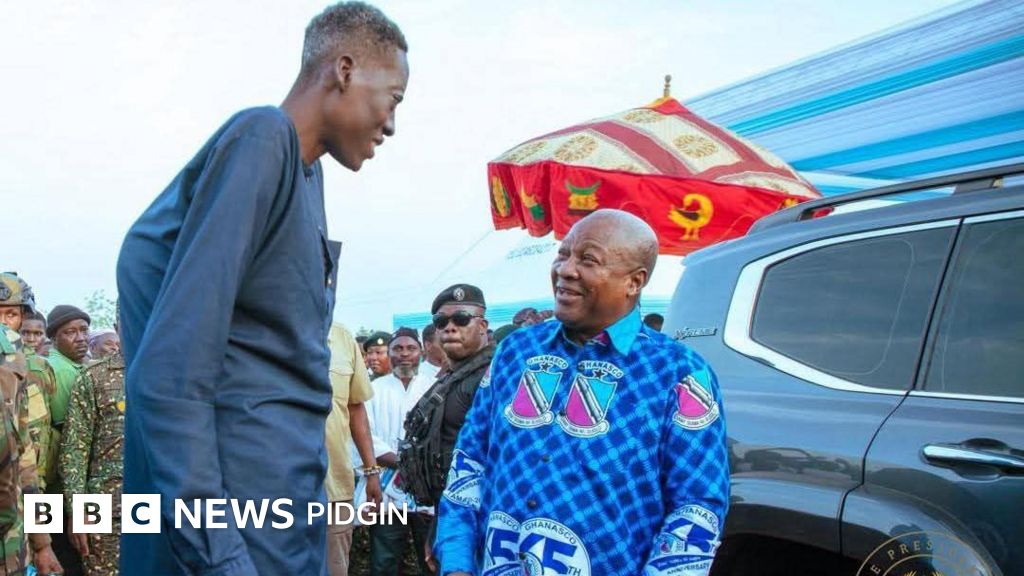

Source: Ghana Presidency
Ghana has mourned the loss of its tallest resident, Awuchie Abdul-Samed Sulemana, a 9.6-foot-tall man whose extraordinary height was a result of gigantism, a rare medical condition. The 32-year-old passed away on Monday, July 27, according to his family, who confirmed his death after a prolonged battle with severe health complications.
A Life Defined by Exceptional Height
Sulemana, affectionately known as Awuche, became a local sensation in Ghana due to his extraordinary stature. His condition, gigantism, caused abnormal growth of his bones and tissues, leading to his towering height. Unlike typical cases of acromegaly, which affects adults after puberty, gigantism occurs when excessive growth hormone is secreted before the closure of growth plates in the bones, resulting in elongated limbs and an overall massive frame.
In a 2022 interview with BBC Pidgin, Awuche recounted how his life transformed overnight in 2015 when he woke up to find his tongue had grown so large that it obstructed his breathing. This marked the beginning of a series of rapid physical changes, with his height increasing noticeably every three to four months. By the time he was discovered, his condition had already made him a local celebrity, with people flocking to see him at public events.
“Every time I show up at events, people come to see me. I became a local celebrity,” he told BBC Pidgin from his home in Gambaga, a town in northern Ghana. Despite the challenges posed by his condition, Awuche expressed hope for a normal life, including marriage and fatherhood.
“This is how Allah created me,” he said, reflecting a sense of acceptance despite the physical and medical hurdles he faced.
Medical Battles and Philanthropic Support
For years, Awuche’s condition worsened, leading to chronic spinal issues and severe ulcer wounds that required constant medical attention. His family had repeatedly appealed for public and private support to cover his medical expenses, as the condition demanded specialized, long-term care that was beyond the reach of many Ghanaians.
In July 2023, a breakthrough in his medical journey occurred when Ibrahim Mahama, a philanthropist and a close associate of former President Nana Akufo-Addo, stepped in to fund his treatment. Mahama, through his organization, had been monitoring Awuche’s condition and had previously reported on his spinal issues in a social media post.
In an update on July 11, Mahama’s spokesperson, Rafik Mahama, announced that Awuche had been admitted to the Tamale Teaching Hospital for assessment. Initially, medical teams had considered amputation as a last-resort option due to the severity of his leg ulcers, but after further evaluation, they reversed their decision, opting instead for non-surgical interventions to manage his condition.
“I have engaged with the medical team at Tamale Teaching Hospital after their assessment confirmed that they will not proceed with amputation as previously planned,” Rafik Mahama stated. “I want to assure Awuche’s family that Oga Ibrahim Mahama will continue to support his treatment and cover all medical bills. We wish him a successful treatment and smooth recovery.”
However, despite this renewed hope, weeks later, Awuche’s family confirmed his death, marking the end of a life that had captivated Ghana and beyond.
The Medical Reality of Gigantism
Gigantism is a rare and severe form of acromegaly, caused by excessive secretion of growth hormone (GH) from the pituitary gland, typically due to a benign tumor (adenoma). Without treatment, the condition leads to progressive growth, affecting nearly every organ system in the body. Common complications include:
– Cardiovascular issues (hypertension, heart enlargement)
– Respiratory problems (sleep apnea, difficulty breathing)
– Joint and bone deformities (severe arthritis, spinal curvature)
– Diabetes and metabolic disorders
– Neurological complications (headaches, vision problems)
Awuche’s case was particularly severe, as his rapid growth likely exacerbated these risks. While surgical removal of the pituitary tumor is the primary treatment, radiation therapy and medication (such as somatostatin analogs) are often used to control hormone levels. However, access to such specialized care remains limited in many parts of Ghana, making Awuche’s condition a tragic reflection of healthcare disparities.
A Legacy of Resilience and Public Attention
Despite his physical struggles, Awuche’s story became a symbol of resilience for many in Ghana. His unconventional appearance made him a social media sensation, with videos of him interacting with the public going viral. He was often invited to charity events, school visits, and cultural gatherings, where his presence drew large crowds.
In interviews, Awuche spoke about his desire for a normal life, including marriage and children—a goal that remained unattainable due to the physical and logistical challenges posed by his condition. His family had hoped that with proper medical intervention, he might have had a chance at a more stable future.
The Aftermath: A Nation in Mourning
The news of Awuche’s death has stirred emotions across Ghana, with many expressing sympathy and admiration for his strength in the face of adversity. Social media platforms have been flooded with tributes, with users sharing memories of meeting him and expressing shock at his passing.
“Awuche was not just tall—he was a symbol of hope for those with rare conditions,” one user commented on Twitter. “His story should remind us of the importance of healthcare access for all, regardless of how unusual their circumstances may be.”
His family has requested privacy during this difficult time, though details about his final days and funeral arrangements are still emerging.
Looking Ahead: Lessons from Awuche’s Story
Awuche’s death serves as a poignant reminder of the critical gaps in Ghana’s healthcare system, particularly in managing rare and complex medical conditions. While philanthropic efforts like those of Ibrahim Mahama have provided temporary relief, sustainable solutions—such as specialized medical centers, insurance coverage for rare diseases, and public awareness campaigns—are needed to prevent similar tragedies.
His story also highlights the human cost of untreated gigantism, where progressive organ damage and disability can lead to premature death. For medical professionals, it underscores the urgency of early diagnosis and intervention in such cases.
As Ghana continues to grapple with healthcare challenges, Awuche’s legacy will remain a call to action—one that demands greater investment in medical infrastructure and compassionate care for those living with extraordinary circumstances.


