

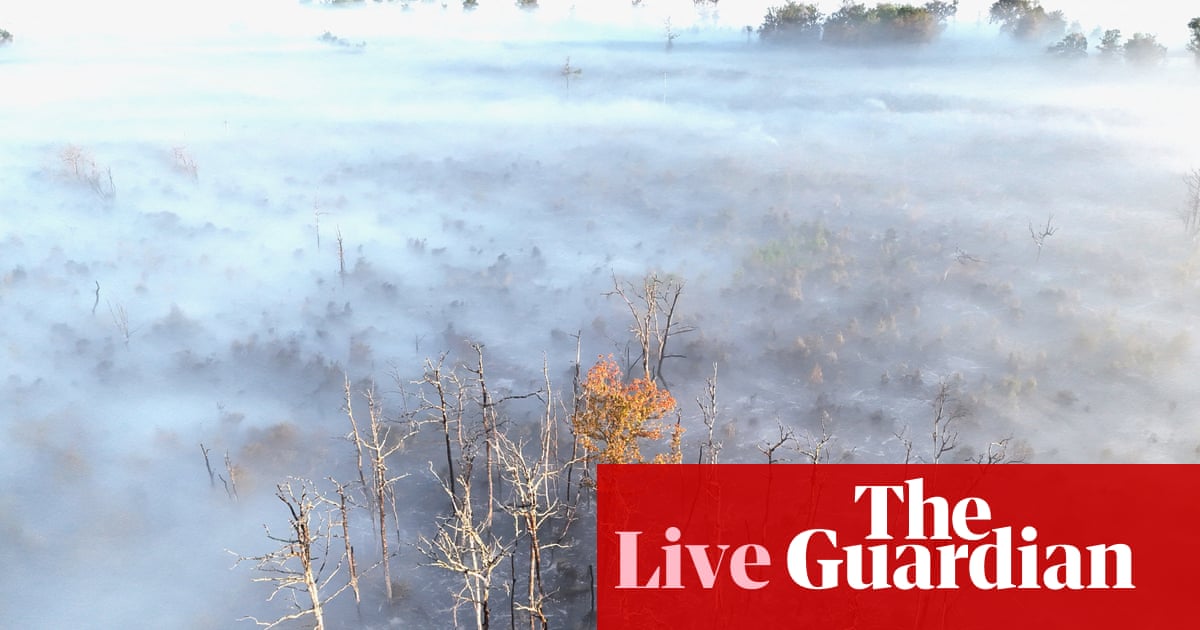
As Europe braces for another round of scorching temperatures, firefighters in France and Spain are engaged in a desperate race against time to contain some of the continent’s most devastating wildfires of the summer. The impending heatwave—set to peak in France today and escalate in Spain tomorrow—threatens to exacerbate the crisis, turning already perilous conditions into an even greater challenge for emergency responders.
France: A Catastrophic Blaze in Bordeaux and Beyond
In the southwestern region of Bordeaux, a monstrous wildfire has already burned through 42,000 hectares (103,000 acres)—an area roughly the size of Dublin, Ireland—forcing 220,000 people to evacuate their homes. The blaze has left 240 residences destroyed, with entire neighborhoods reduced to ash. The sheer scale of the fire has generated a pyrocumulonimbus cloud, a rare and dangerous phenomenon where wildfire-induced storms produce lightning, further fueling the blaze with new embers.
French President Emmanuel Macron visited a crisis command center in Bordeaux, delivering a stark warning to the nation: “The coming weeks will be difficult, and we must endure.” While firefighters reported a temporary stabilization of the fire’s spread overnight—a rare respite—Macron acknowledged that the situation remains highly volatile. He noted that while a separate fire in the neighboring Landes department had been brought under control after displacing 30,000 people, the blaze “remains virulent,” requiring constant vigilance.

Spain: A Nation on Edge as Fires Spread Across Multiple Regions
Spain is facing its own catastrophic wildfire crisis, with 77,000 hectares (190,000 acres) engulfed—an area nearly equivalent to the entire city of New York. Authorities have ordered the evacuation of 60,000 people, many of whom were given minutes to flee before flames overtook their homes. The situation has been compounded by wildfires in Catalonia, Valencia, and the Balearic Islands, where entire villages have been threatened.
Prime Minister Pedro Sánchez addressed the nation in a televised address, urging citizens to “brace for difficult, complex hours ahead.” The Spanish state meteorological agency, AEMET, has officially declared a heatwave, the fourth of the summer, beginning on Wednesday and lasting at least until Sunday. With temperatures expected to soar, officials warn that the combination of dry vegetation, high winds, and extreme heat will make firefighting efforts far more perilous.
The Looming Threat of the Heatwave
Both countries are now in a critical window before the heatwave fully takes hold. In France, where temperatures are already climbing, firefighters are working around the clock to create firebreaks and reinforce defenses before the next surge in heat and wind intensifies the fires. Meanwhile, Spain’s emergency services are stretched thin, with hundreds of firefighters, military personnel, and volunteers deployed across multiple fronts.
The Landes fire, though partially contained, serves as a grim reminder of how quickly conditions can deteriorate. With drought conditions persisting across much of southern Europe, the risk of new fires breaking out remains high. Experts warn that if the heatwave coincides with strong winds, the situation could spiral out of control, threatening additional mass evacuations and infrastructure damage.
International Response and Ongoing Challenges
Beyond France and Spain, Italy has also seen hundreds evacuated due to smaller but no less dangerous wildfires. The European Union has mobilized additional resources, including helicopters, water-dropping aircraft, and specialized firefighting teams, to assist in the crisis. However, officials stress that local efforts remain the most critical in the early stages of containment.
As the heatwave approaches, one question looms large: Can firefighters make enough progress before the next wave of extreme weather turns the battle into a losing one? With climate change amplifying the frequency and intensity of wildfires, Europe’s leaders are under increasing pressure to strengthen prevention strategies, including controlled burns, forest thinning, and improved early warning systems.
For now, the focus remains on saving lives and protecting communities—but the coming days will determine whether the worst is yet to come.
This report will be updated with the latest developments as the situation evolves.
