

Regional Security Under Strain: Iraq Bolsters Defenses Amid U.S.-Saudi Strikes on Pro-Iran Militants
Iraq has escalated its security measures following a series of targeted U.S.-Saudi airstrikes against pro-Iranian militant bases in the country. Prime Minister Ali al-Zaidi issued urgent directives to Sabah al-Numan, a government spokesperson, mandating the full mobilization of air defense systems and intelligence networks across all military installations, including those of the Hashd al-Shaabi—a powerful paramilitary alliance with deep ties to Tehran.
Al-Numan emphasized that modernizing air defense infrastructure is now a top national priority, including the rapid deployment of advanced radar networks, early-warning systems, and precision-guided missile defenses. The strikes, which struck Hashd al-Shaabi strongholds on Wednesday, have reignited concerns over the alliance’s unilateral actions, which often operate outside Baghdad’s direct control.
[IMAGE_1]
Iraqi military personnel conduct air defense drills near a Hashd al-Shaabi base in Anbar Province, July 2026.
The escalation follows a pattern of retaliatory strikes between the U.S. and Iranian-backed groups, raising fears of a broader regional conflict. Analysts warn that Iraq’s decision to accelerate defense upgrades could signal an attempt to balance between Iranian influence and Western military pressure, though the long-term implications remain uncertain.
Cyber Warfare Unleashed: U.S. Water Systems Targeted in Suspected Iranian Attack
A coordinated cyber intrusion has disrupted water treatment facilities across at least seven U.S. states, forcing utilities to switch to manual operations while federal investigators scramble to attribute the attack. The Federal Bureau of Investigation (FBI) confirmed the incidents but declined to name the affected states, citing ongoing investigations.
Sources familiar with the case suggest Iranian state-sponsored hackers may be behind the assault, though officials stress that definitive attribution remains pending. Investigators are also examining whether the attackers intentionally misled investigators by falsely flagging the origin to exploit tensions between Washington and Tehran.
The cyberattack follows a wave of malicious activity targeting critical infrastructure, including power grids and communication networks, raising alarms about Iran’s expanding cyber warfare capabilities. While no direct damage has been confirmed, the incident underscores the growing vulnerability of U.S. infrastructure in an era of hybrid warfare.
Trump’s War Rhetoric: “Iran Is Doing Very Poorly,” But Negotiations Remain Stalled
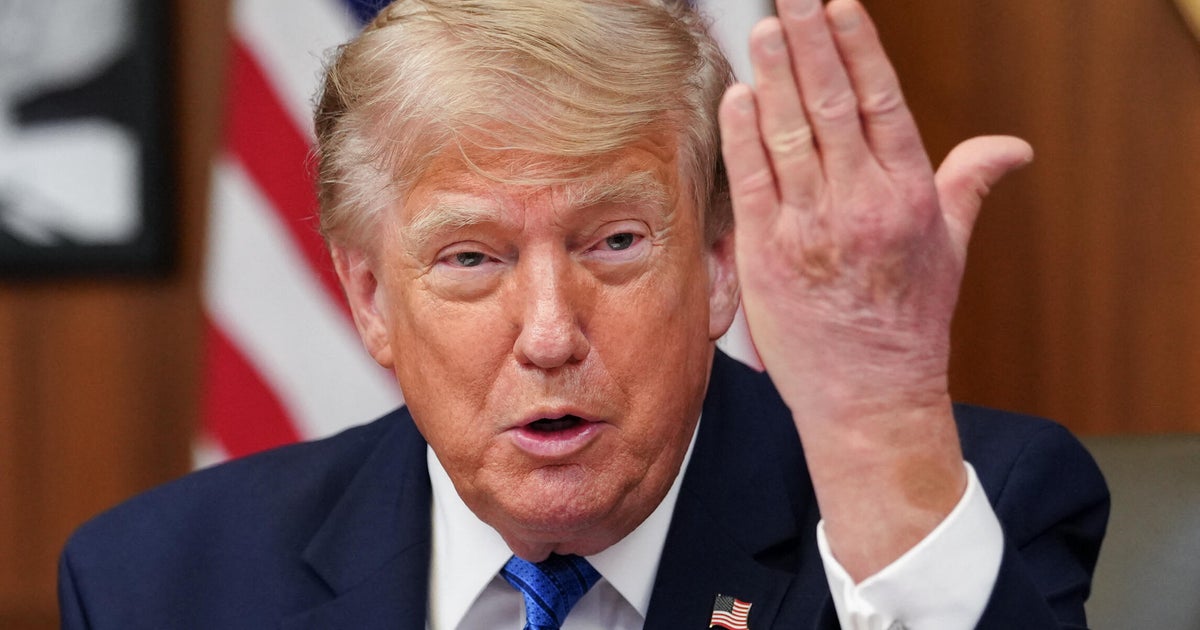
President Donald Trump delivered a blistering critique of Iran’s military and diplomatic efforts during a Friday Cabinet meeting at Camp David, claiming the U.S. has achieved “amazing results” in its five-month-old conflict with Tehran.
“We’ve obliterated their military capacity,” Trump asserted, contrasting the U.S. campaign with decades-long wars in Vietnam, Afghanistan, and Korea. However, his claims were met with skepticism as Iranian state media continues to report sustained attacks on U.S. bases in Jordan, Kuwait, and Iraq.
Trump also dismissed Iranian claims of progress, accusing Tehran of “dishonesty” in negotiations. “They break their word so often,” he said, citing a recent missile strike on a Jordanian base that killed three U.S. soldiers—an incident that disrupted ongoing talks.
Despite his hawkish stance, Trump hinted at possible future concessions, warning: “We’ll be hitting them very hard until they say, ‘We just can’t take it anymore.’” His remarks followed a failed Senate vote (49-50) to limit his war powers, with only three Republicans supporting the resolution.
[IMAGE_2]
President Trump addresses the Cabinet on Iran policy, July 2026.
Global Oil Market Disrupted: Exxon and Chevron Profit as Prices Soar Amid Strait of Hormuz Blockade
The U.S.-Iran conflict has disrupted global oil supplies, sending Brent crude prices surging to $126 per barrel at peak levels, while Exxon Mobil and Chevron reported record profits in the second quarter.
- Exxon Mobil saw Q2 profits double to $14.53 billion (up 105% YoY), with $116.02 billion in revenue—a 42% increase.
- Chevron nearly quadrupled profits to $12.07 billion (up 385% YoY), with $70.06 billion in revenue (up 56%).
The blockade of the Strait of Hormuz, which carries 20% of global oil shipments, has constrained supplies, leading to fuel shortages in Australia, Nepal, and Sri Lanka. Iran has formally declared the strait “unusable” due to “U.S. aggression,” while the Revolutionary Guard Corps (IRGC) claimed to have sank two tankers under U.S. military escort.
The U.S. Central Command reported redirecting 24 commercial vessels since resuming a blockade on Iranian ports, escalating tensions in the Persian Gulf.
[IMAGE_3]
Oil tankers navigate the Strait of Hormuz under U.S. naval escort, July 2026.
Israel Strikes Hezbollah Tunnels Near UNESCO-Listed Beaufort Castle
Israeli forces conducted massive explosions near the historic Beaufort Castle in southern Lebanon, destroying Hezbollah tunnels used for military operations. The UNESCO-listed fortress, added to the World Heritage in Danger list last week, was damaged by the blasts, which shattered windows in nearby villages.
Israel’s Defense Ministry confirmed the destruction of a “central Hezbollah command center” using 700 tons of explosives, citing a “ceasefire violation” by the militant group. Lebanon’s Culture Ministry warned of potential structural damage to the castle, while Hezbollah has not claimed responsibility since the June 20 ceasefire.
The strike follows months of cross-border tensions, with Iran-backed groups expanding tunnel networks along the Israel-Lebanon border.
China Denies Casualties in Iranian Attack on Kuwaiti Facility
China’s Foreign Ministry confirmed no Chinese citizens were harmed in an Iranian drone strike on a Kuwaiti company building in Kuwait on Thursday, though one worker (nationality unspecified) was killed.
The attack, which damaged infrastructure near the Strait of Hormuz, has further strained regional stability. China urged Kuwait to enhance citizen protection, though no group has officially claimed responsibility.
Egypt Investigates Drone Attack on Strategic Gas Port
Egypt’s Prime Minister Mostafa Madbouly announced an ongoing forensic investigation into a drone strike on the Damietta port, which houses a floating regasification unit (FSRU) critical for national gas supply.
The attack, which caused a fire on two adjacent vessels, could have triggered a catastrophic explosion if not swiftly contained. Madbouly stated that no party has claimed responsibility, though Iran’s Foreign Minister hinted at an “Israeli false flag” operation—without evidence.
[IMAGE_4]
Egyptian security personnel examine damage at the Damietta port, July 2026.
U.K. Arrests Azerbaijani Man Accused of Spying for Iran on RAF Base
A British-Azerbaijani dual citizen, Rashad Sultanov (44), was arrested in Cyprus as part of a U.K. counterterrorism probe into hostile surveillance of RAF Akrotiri, a key U.S. military base used for anti-Iran operations.
Sultanov, first detained in June 2025, is accused of sharing intelligence with Iran’s Revolutionary Guard Corps (IRGC). The U.K.’s National Security Act now governs the case, with plans to extradite him for trial.
The arrest comes as Western military bases in the Middle East face heightened espionage risks, with Iran-linked operatives increasingly targeting U.S. and allied facilities.
Iran Launches Drone Strikes on U.S. Base in Kuwait, Killing Family on Qeshm Island
Iran’s military responded to U.S. strikes on Qeshm Island (where three family members died) with drone attacks on Ahmad al-Jaber Air Base in Kuwait, targeting fighter jet shelters and satellite communications.
Kuwait’s Defense Ministry confirmed intercepting and destroying the drones, though falling debris caused minor damage. Iran’s Revolutionary Guard Corps (IRGC) claimed the strikes were retaliation for U.S. aggression, including airstrikes on Iranian coastal provinces.
The Strait of Hormuz remains effectively closed, with Iran blocking commercial shipping—a move that has further destabilized global energy markets.
Trump Claims “Historic” Hamas Disarmament Deal, But Senate War Powers Vote Fails
President Trump announced a “HISTORIC agreement” for Hamas’ complete disarmament in Gaza, citing a peace plan brokered by his “Board of Peace.” However, no official Hamas confirmation has been released, and timelines remain unclear.
Meanwhile, a Senate vote to limit Trump’s war powers (49-50) failed, with only three Republicans supporting the resolution. The defeat effectively ends congressional efforts to curb the conflict before an August recess.
AI-Generated Imagery Complicates War Verification
Google’s Nano Banana 2 AI tool, which allows digital editing of satellite imagery, has raised concerns about misinformation in the U.S.-Iran conflict.
A CBS News analysis demonstrated how the tool could fabricate images of destroyed U.S. military equipment at Muwaffaq Salti Air Base in Jordan, where Iranian attacks have killed soldiers. Google watermarks AI-generated images but failed to detect manipulation when the altered photo was cropped and re-analyzed.
Iran has repeatedly released unverified satellite images claiming to show U.S. base damage, while Western officials warn of escalating propaganda risks.
[IMAGE_5]
AI-generated satellite imagery of Muwaffaq Salti Air Base, Jordan—demonstrating potential for misinformation.
Conclusion:
The U.S.-Iran conflict continues to spread instability across the Middle East, with cyberattacks, economic disruptions, and proxy wars intensifying. As regional powers scramble for defense upgrades and oil markets remain volatile, the risk of broader escalation grows. Meanwhile, AI-driven misinformation complicates verification efforts, raising concerns about public perception and diplomatic trust. The path forward remains uncertain, with negotiations stalled and military actions escalating.
