

Trump Abruptly Cancels Iran Strikes, Citing “Progress in Talks” Amid Regional Pressure
In a dramatic shift, U.S. President Donald Trump announced late Saturday that he was canceling planned military strikes against Iran, citing “progress in talks” and pressure from Tehran and other Middle Eastern nations. The decision came after days of heightened tensions, including reports of Iranian-backed attacks in the region and escalating rhetoric from both sides. However, Iranian state media dismissed claims that Tehran had requested the halt, instead portraying Trump’s reversal as a retreat from “hollow threats.”
Trump’s announcement followed a high-stakes phone call with Saudi Crown Prince Mohammed bin Salman (MBS), during which the Saudi leader urged de-escalation and raised concerns about potential U.S. military action. Saudi state media confirmed the call, stating that MBS “stressed the need to prioritize dialogue to reduce escalation and achieve calm.” Multiple sources told CNN that MBS explicitly warned Trump about the risks of further strikes, emphasizing the economic and strategic vulnerabilities of Gulf nations if hostilities intensified.
“This would include the Immediate, Complete, and Total OPENING OF THE HORMUZ STRAIT,” Trump declared in a Truth Social post, suggesting that the pause was contingent on securing a broader deal. However, Iranian officials, including state-run media outlets, rejected the notion that Tehran had requested the halt, instead framing the U.S. decision as a strategic retreat. The semi-official Fars News Agency mocked Trump, calling him “Trump the fool,” while KayhanOnline, aligned with Iran’s Supreme Leader, accused him of “backing away from his positions after a week of boasting.”

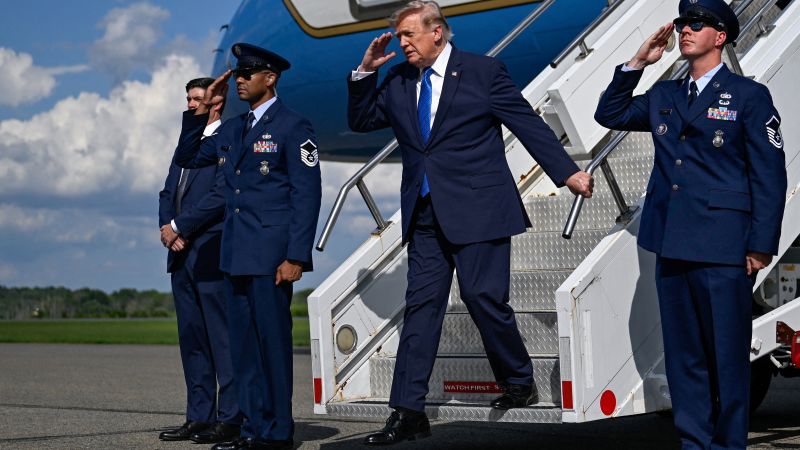
U.S. President Donald Trump addresses the nation amid escalating tensions with Iran.
Regional Diplomacy Intensifies as Gulf States Push for De-escalation
The cancellation of strikes follows a delicate diplomatic push by regional mediators, including Qatar and Pakistan, which have been facilitating backchannel negotiations between Washington and Tehran. Officials from these nations have been in urgent contact with U.S. and Iranian representatives, including Trump’s special envoy Steve Witkoff, to prevent further escalation. A key focus has been resuming commercial traffic through the Strait of Hormuz, a critical chokepoint for global oil shipments that Iran has intermittently restricted in response to Western sanctions and military pressure.
“We will be hitting them very hard,” Trump had warned at a Cabinet meeting on Friday, hinting at imminent strikes. However, the absence of U.S. airstrikes overnight into Sunday—despite earlier reports of preparations—suggested that diplomatic efforts had temporarily stalled the conflict. Kuwait, a key Gulf ally, had previously reported Iranian attacks, including a strike on a Chinese-owned building in northern Kuwait on Thursday, killing one employee. Kuwait’s military also intercepted drone attacks on Saturday, blaming Iran for the aggression.
Iran’s “Axis of Resistance” Reasserts Influence Amid U.S. Military Strain
Analysts warn that Iran’s network of proxy militias, collectively known as the “Axis of Resistance,” remains a formidable force, complicating U.S. military strategy in the region. While these groups were weakened by Israel’s 2023 military response to the Hamas attack, they have since regrouped and expanded their operations, targeting U.S. and allied forces across Iraq, Syria, and Yemen.
“Iran’s relationship with these groups is more complex than simply calling them ‘proxies,’” said Ali Ahmadi, a fellow at the Geneva Centre for Security Policy. “They have their own political agendas, but they serve Tehran’s broader strategic goals—deterring direct U.S. and Israeli attacks while pressuring Gulf states.”
The economic and military toll on both sides has further complicated the conflict. Iran, despite its resilient defense capabilities, faces severe economic strain from sanctions and the closure of the Strait of Hormuz. Meanwhile, the U.S. military’s stockpiles of critical defense systems—such as Patriot and THAAD interceptors—have dwindled significantly due to sustained combat operations.
A recent report from the Center for Strategic and International Studies (CSIS) revealed that U.S. Patriot missile inventories have dropped from 2,330 pre-war to 759-827 as of July 27, while THAAD interceptors have fallen from 452 to 278 or fewer. The depletion of these systems, combined with extended deployments of U.S. naval and air assets, raises questions about Washington’s ability to sustain prolonged military operations.
“For an expansive military like the U.S. joint force, readiness hits are cumulative,” noted Ariane Tabatabai, a senior fellow at the Chicago Council on Global Affairs. “The trade-offs are immediate, and the question now is whether the U.S. can deliver a decisive blow—or if Iran’s resilience will force another retreat.”
Gulf Nations Fear Escalation Will Backfire, Leaving Them as Primary Victims
Critics argue that direct U.S. strikes on Iran would further destabilize the Gulf, where nations like Saudi Arabia, the UAE, and Kuwait already bear the brunt of Iranian counterattacks. Trita Parsi, executive vice president of the Quincy Institute for Responsible Statecraft, warned that “all that would lead to is more suffering for them without changing the facts on the ground.”
“The Saudis don’t have confidence that the U.S. has a winning military strategy,” Parsi said. “They know that escalation will only lead to a counter-escalation, and they’ll be the biggest victims.”
Former U.S. Air Force Colonel Cedric Leighton, a military analyst, echoed these concerns, stating that both Riyadh and Tehran have a vested interest in avoiding full-scale war. “The Saudis are economically at risk if the Strait of Hormuz remains closed,” he explained. “And while Iran is under military pressure, they’re not going to back down without a fight.”
State Department Warns Americans to Evacuate as Tensions Remain High
Amid the shifting dynamics, the U.S. State Department has renewed travel advisories, urging Americans in the Middle East to “consider departing now” or be prepared for “flight cancellations, airspace closures, and travel disruptions.” The warning comes as humanitarian crises worsen, particularly in Gaza, where Israeli strikes have devastated medical infrastructure despite Trump’s earlier claims of a ceasefire breakthrough.

Israeli military strikes in Gaza have disrupted humanitarian efforts, exacerbating the region’s crisis.
Gaza Crisis Deepens as Israeli Strikes Hit Hospitals Amid Ceasefire Uncertainty
Just hours after Trump’s Iran announcement, Israeli airstrikes in Gaza targeted Hamas weapon storage facilities, including one near Al-Aqsa Martyrs Hospital, leaving a massive crater and destroying critical medical supplies. A nurse at the hospital told CNN that the strike had “returned us to square one” in securing dialysis supplies for over 1,000 patients, many of whom now face life-threatening risks.
“This is not just about Iran—it’s about the broader instability in the Middle East,” said Sophie Tanno, a senior analyst at International Crisis Group. “The U.S. pulling back from Iran doesn’t mean the region is safer. It just means the conflict is shifting gears—perhaps to other fronts, like Gaza or Yemen.”
Conclusion: A Fragile Truce or Temporary Pause?
While Trump’s decision to halt strikes against Iran has temporarily eased tensions, analysts caution that the underlying conflicts—between the U.S. and Iran, Israel and Hamas, and regional proxies—remain unresolved. The Strait of Hormuz remains a flashpoint, Iran’s military and economic pressures persist, and the Gulf states face growing uncertainty about U.S. commitment.
“Trump does not have an escalatory way out of this conflict,” Parsi concluded. “The only real solution is diplomacy—but for that to work, both sides must be willing to compromise. Right now, neither seems ready.”

U.S. military readiness remains a concern as stockpiles of critical defense systems deplete.

Saudi Crown Prince Mohammed bin Salman has been a key mediator in efforts to de-escalate tensions with Iran.

Iran’s “Axis of Resistance” militias continue to operate across the Middle East, complicating U.S. military strategy.

Iranian Foreign Minister Abbas Araghchi warns of retaliatory strikes against any U.S. aggression.

U.S. air defense systems face severe shortages, raising questions about their ability to protect forces in the region.

Gulf nations like Saudi Arabia and Kuwait remain vulnerable to Iranian counterattacks.

Humanitarian crises in Gaza worsen as Israeli strikes disrupt medical services.

U.S. and Saudi airstrikes in Iraq target Iranian-backed militias, escalating regional hostilities.

Iran’s defense strategy remains “eye for an eye,” threatening retaliation against any attacks on its infrastructure.

U.S. military assets face extended deployments, straining readiness and maintenance capabilities.

Travel advisories remain in effect as tensions between the U.S. and Iran persist.

Israeli strikes in Gaza continue despite diplomatic efforts to secure a ceasefire.
