

Unidentified Attack in Strait of Hormuz Sparks Maritime Security Concerns
A commercial vessel operating in the Strait of Hormuz, a critical global shipping lane off the coast of Oman, was struck by an “unknown projectile” on Tuesday, according to the United Kingdom Maritime Trade Operations (UKMTO). The incident, occurring approximately 20 nautical miles northeast of Al Khasab, remains under investigation, with no immediate details on the extent of damage or potential casualties. The attack underscores the escalating risks to maritime trade in a region already destabilized by prolonged conflict.
The Strait of Hormuz, through which roughly 20% of the world’s oil and natural gas transits, has become a flashpoint since the U.S.-led airstrikes on Iran in late February 2026, which triggered a broader regional war. Iran has since imposed de facto control over shipping routes, requiring vessels to navigate a designated Iranian-monitored corridor—a move that has disrupted global trade flows and driven up energy prices.
Trump’s Diplomatic Shift: From Military Threats to Negotiations
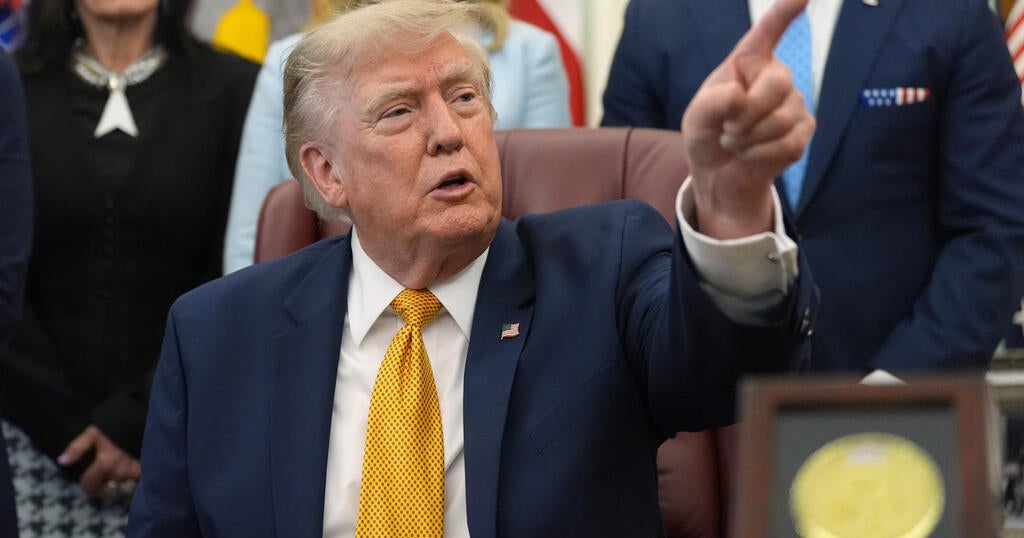
President Donald Trump abruptly shifted course on Monday, announcing a pause in military operations against Iran and signaling a renewed push for diplomacy. Speaking from the Oval Office, Trump criticized ExxonMobil and Chevron for profiting from soaring oil prices, attributing the surge to Iran’s disruption of crude exports through the Strait of Hormuz.
“They made too much money, too much money,” Trump declared, adding that oil prices would “drop through the floor” once the conflict concluded. The president’s remarks followed weeks of threatened retaliatory strikes, including potential attacks on Iran’s energy infrastructure—described by Trump as “the biggest since World War II.”
Yet, despite his claims of an “imminent deal,” U.S. officials have dismissed reports of new negotiations, stating that ongoing discussions—led by Special Envoy Steve Witkoff and Jared Kushner—remain indirect, mediated through third parties rather than direct U.S.-Iran talks.
Trump’s Truth Social post on Sunday framed the pause as a concession to regional allies, including Saudi Arabia, the UAE, Qatar, and even Iran itself, who allegedly urged restraint. However, Iran’s Foreign Ministry categorically denied any plans for direct negotiations with Washington, stating that current discussions are solely with Oman to establish a temporary shipping route through the Strait of Hormuz.
“Our negotiations are with Oman,” Foreign Ministry Spokesperson Esmaeil Baqaei affirmed. “We are focused on ensuring safe passage through the strait—not reopening it to unrestricted traffic.”
Iran’s Strategic Maneuvering: Shipping Routes, Espionage, and Regional Mediation
Iran’s de facto blockade of the Strait of Hormuz has forced shipping companies to navigate a single, Iran-monitored corridor, with vessels required to coordinate with Tehran—sometimes paying tolls for passage. Data firm Kpler reported that on Sunday, only nine confirmed transits occurred, including two sanctioned and two shadow fleet vessels, with seven adhering to Iran’s designated route.
In the Bab el-Mandeb, another critical chokepoint linking the Red Sea to the Gulf of Aden, shipping activity has also declined sharply. Kpler noted 30 crossings on Sunday—down from 41 the prior week—with 20 vessels exiting the Red Sea and 10 entering. The firm warned that “until U.S., Iranian, and Omani signals converge into clear navigation arrangements, operators should treat both chokepoints as contested.”
Meanwhile, Iran has intensified its espionage crackdown, executing two men accused of passing military intelligence to Israel’s Mossad. Omid Behzad and Pouria Safvat, both convicted of espionage and intelligence cooperation, were hanged after allegedly providing coordinates, images, and sensitive location data to Israeli-linked channels. Iran’s Mizan News Agency confirmed their executions, though independent verification remains pending.
Gaza Peace Talks Stalled as Israel and Hamas Clash Over Disarmament
While U.S.-Iran diplomacy remains in limbo, Lebanon’s delegation is set to travel to Rome on Tuesday for the latest round of U.S.-mediated talks with Israel, aimed at implementing a June 26 framework agreement for a ceasefire in southern Lebanon. The delegation, led by Ambassador Simon Karam, includes military officers, legal experts, and economic advisors, with Lebanon seeking:
– A complete halt to Israeli military operations in southern Lebanon.
– A second “pilot zone” for Israeli withdrawal and Lebanese Army deployment.
– An end to Israeli demolitions and home destruction, which Lebanese officials warn could undermine the peace framework.
However, Israel has reaffirmed its stance, with a senior political source telling CBS News that “Israel will not retreat from its current stance in Gaza.” The country’s Prime Minister Benjamin Netanyahu, facing reelection pressures, has pushed back against Trump’s Gaza disarmament plan, arguing that Hamas remains armed despite ceasefire commitments.
Hamas, meanwhile, has accused Israel of violating the truce, with a senior leader telling Al Jazeera that continued strikes “obstruct negotiations.” Since October, at least 13 Gazans—including children—have been killed in Israeli airstrikes, according to the BBC.
Pakistan and Iraq as Potential Mediators in U.S.-Iran Tensions
As direct U.S.-Iran negotiations stall, Pakistan and Iraq have emerged as unofficial mediators. Pakistan’s Foreign Ministry announced that Foreign Minister Seyyed Abbas Araghchi had been invited for a visit, following a phone call with Deputy Prime Minister Mohammad Ishaq Dar. The discussion covered “regional and international developments, including the situation in Occupied East Jerusalem.”
Meanwhile, an Iraqi politician, Meysar al-Shammari, claimed that Prime Minister Ali al-Zeidi had carried U.S. messages to Tehran during a recent White House visit. Al-Shammari suggested that Iraq is “advancing diplomatic efforts to bring the U.S. and Iran closer,” though specifics remain undisclosed.
Oil Markets React to Diplomatic Uncertainty
Financial markets rallied Monday on Trump’s pause in strikes, with the Dow Jones rising 1.1%, the S&P 500 up 0.6%, and the Nasdaq climbing 0.8%. However, crude oil futures plunged over 6%, despite Iran’s denial of negotiations, as traders priced in the risk of renewed conflict.
The OPEC+ production boost—announced earlier in the week—mitigated some pressure, but analysts warn that geopolitical tensions remain the dominant factor. With U.S. troop levels still at 50,000 and 18 American service members killed, the war’s sixth month has seen no clear end in sight.
Iran’s Domestic Divisions and Ukraine’s Caspian Sea Strike
Internally, Iran’s leadership appears united in its war strategy but divided over diplomacy. Some factions oppose all negotiations, while others leverage military pressure to gain leverage. Defense Minister Mohammad Reza Naqdi dismissed Trump’s diplomatic overtures, stating that Iran remains “neither surprised nor passive” against U.S. threats.
Meanwhile, Iran’s foreign ministry condemned a Ukrainian airstrike on an Iranian commercial vessel in the Caspian Sea, killing one soldier and wounding another. Foreign Minister Abbas Araghchi accused Ukraine of “deliberate aggression,” despite Kyiv’s claims of an unintentional strike. Iran warned of “necessary measures” in response, signaling potential escalation in a separate conflict zone.
The Path Forward: A Strait of Hormuz in Limbo
With no direct U.S.-Iran talks confirmed, the Strait of Hormuz remains a battleground of economic and strategic interests. Iran’s Baqaei has warned that the status quo will not revert to pre-war conditions, while Trump’s diplomatic gambit faces skepticism from both sides.
As regional powers maneuver for influence—from Pakistan’s mediation efforts to Iraq’s backchannel diplomacy—the realpolitik of the Middle East continues to dictate the pace of conflict and potential resolution. For now, shipping remains constrained, oil prices volatile, and the prospect of a lasting ceasefire elusive.

[Visual of a commercial vessel in the Strait of Hormuz, highlighting maritime security concerns.]

[Map of the Strait of Hormuz and Bab el-Mandeb, showing shipping routes and conflict zones.]

[President Trump addressing reporters aboard Air Force One, discussing Iran diplomacy.]

[Iranian Foreign Minister Abbas Araghchi speaking at a press conference, denying U.S. negotiations.]
