

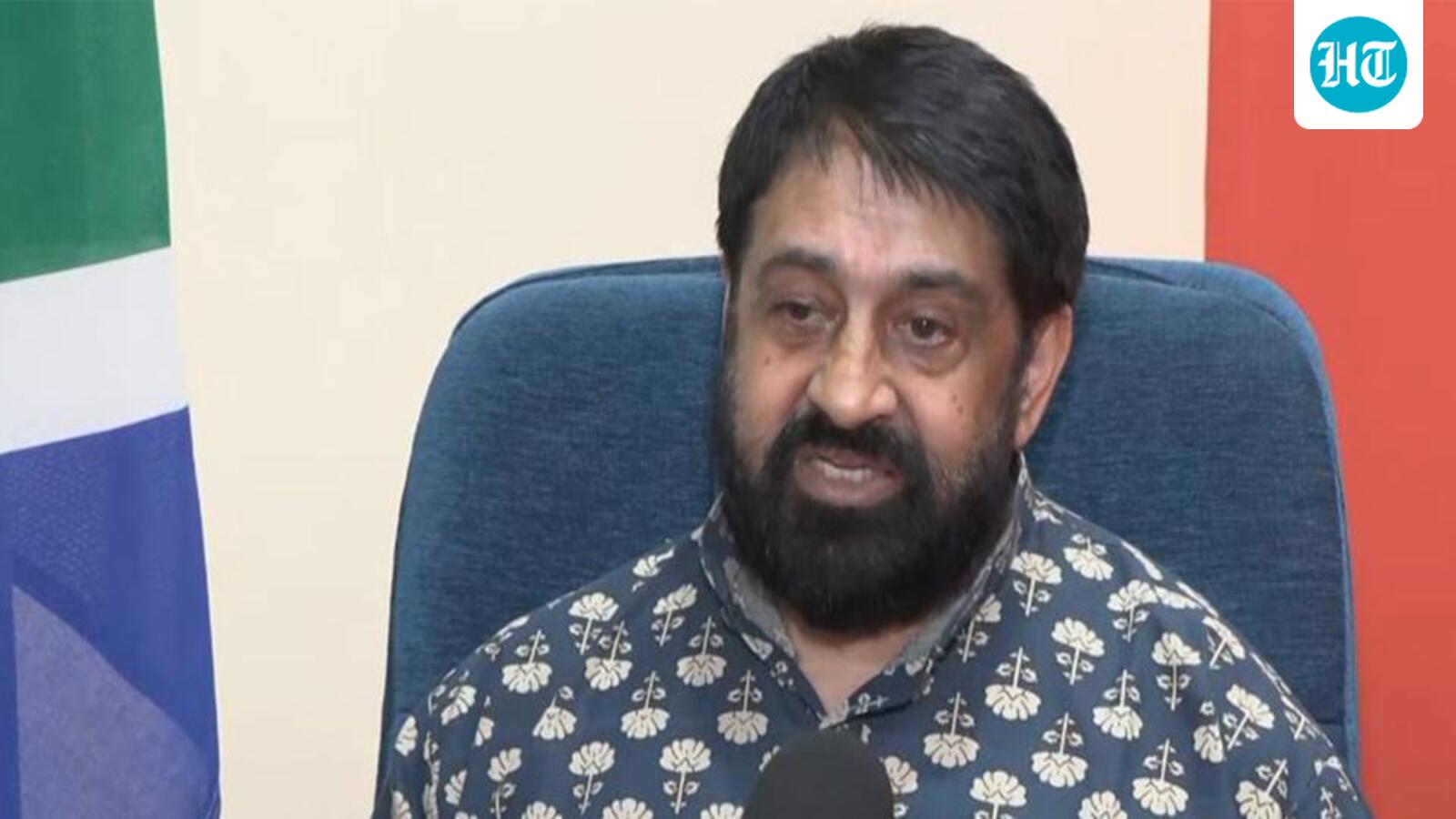
South Africa has taken a significant diplomatic step by recalling its high commissioner to India, Anil Sooklal, following his alleged involvement in a high-profile gathering with former President Jacob Zuma and Ajay Gupta, one of the brothers accused of orchestrating a vast web of political corruption in the country. The move, announced by Foreign Minister Ronald Lamola, comes weeks after leaked photographs surfaced, depicting the trio at a temple ceremony in Haridwar on June 26, 2024. The incident has reignited long-standing controversies surrounding the Gupta family’s alleged influence over South Africa’s political and economic landscape during Zuma’s presidency (2009–2018).
A Diplomatic Fallout Over Alleged Political Capture
The recall was confirmed during a media briefing in Pretoria, where Lamola stated that Sooklal had been summoned to South Africa’s foreign ministry headquarters for further consultations. While the minister did not disclose specific details, he emphasized that the Department of International Relations and Cooperation (DIRCO) had recommended a new protocol framework to govern future diplomatic engagements involving former presidents. The decision underscores growing concerns within South Africa’s foreign service about potential political interference and the erosion of diplomatic neutrality.
Sooklal, a 30-year veteran of South Africa’s foreign ministry, had previously served as the country’s longest-serving BRICS sherpa and was awarded the Pravasi Bharatiya Samman in 2019 for his contributions to global diplomacy. His tenure as G20 sherpa and ambassador to the European Union (2006–2012) further cemented his reputation as a seasoned diplomat. However, his appointment as high commissioner to India in June 2024 has now become a focal point of scrutiny, particularly after the Haridwar incident raised questions about his judgment and adherence to diplomatic protocol.
The Gupta-Zuma Nexus: A Persistent Shadow Over South African Politics
The Gupta brothers—Ajay, Atul, and Rajesh—have long been at the center of corruption allegations in South Africa. Born in India, the family migrated to South Africa in the 1990s and allegedly leveraged their connections with Jacob Zuma to secure lucrative state contracts, influence cabinet appointments, and siphon off public funds during his presidency. The Zondo Commission, a judicial inquiry into state capture, concluded that the Guptas systematically undermined democratic institutions to enrich themselves and their associates.
Despite these findings, Zuma and the Guptas have consistently denied wrongdoing, with Zuma publicly defending Ajay Gupta as a “brother and friend” during his recent visit to India. In an interview with Indian media, Zuma claimed that Ajay Gupta was “forced to leave South Africa” and that his visit to India was motivated by a desire to reconnect. However, South African authorities have formally accused the Guptas of corruption, with Ajay currently residing in India, while Atul and Rajesh remain in the United Arab Emirates (UAE). A 2023 UAE court ruling dismissed South Africa’s extradition request on technical grounds, further complicating efforts to hold the brothers accountable.
A Diplomatic Crisis and Political Fallout
The controversy has sparked sharp criticism from opposition parties, with the Democratic Alliance (DA), South Africa’s second-largest political party, demanding an independent departmental inquiry. DA leader John Steenhuisen described Sooklal’s presence at the meeting as a “grave violation of diplomatic protocol” that demonstrates the political capture of South Africa’s foreign service. The party argued that the incident undermines the credibility of South Africa’s diplomacy and raises concerns about foreign interference in domestic affairs.
DIRCO has initiated an internal inquiry into Sooklal’s actions, with a spokesperson stating that the department seeks an explanation from the envoy before proceeding with further disciplinary measures. The recall itself signals a serious breach of diplomatic norms, particularly given Sooklal’s extensive experience and the high-profile nature of the individuals involved.
Broader Implications for South Africa-India Relations
The incident has complicated diplomatic ties between South Africa and India, a relationship that has historically been marked by strategic cooperation in areas such as trade, defense, and multilateral forums like the BRICS alliance. While India has not yet issued an official statement on the matter, the presence of a former South African president and a corruption-accused businessman at a religious ceremony in India could strain perceptions of South Africa’s commitment to anti-corruption efforts.
Zuma’s visit to India, conducted in a personal capacity, has also drawn scrutiny over whether it normalizes the Gupta family’s influence despite ongoing legal and political controversies. South Africa’s decision to recall Sooklal may be seen as an attempt to distance itself from the Gupta-Zuma nexus, but it also risks damaging diplomatic relations with India, where the Guptas maintain significant business and social networks.
The Path Forward: Accountability and Diplomatic Reforms
As South Africa navigates this diplomatic crisis, the Zondo Commission’s recommendations—which called for stricter oversight of state capture—remain unfulfilled. The recall of Sooklal, while a symbolic gesture, may not be sufficient to address deeper concerns about political interference in the foreign service. The DA’s call for an independent inquiry suggests that the issue extends beyond individual misconduct, pointing to systemic failures in ensuring diplomatic neutrality.
Moving forward, South Africa’s foreign ministry will likely strengthen protocols for engagements involving former leaders, particularly those with controversial backgrounds. The case also underscores the global implications of state capture, where foreign governments must balance diplomatic relations with moral and legal obligations to combat corruption.
For now, the Haridwar incident stands as a watershed moment in South Africa’s diplomatic history, forcing the government to confront long-overdue questions about accountability, transparency, and the role of former leaders in shaping foreign policy.


