
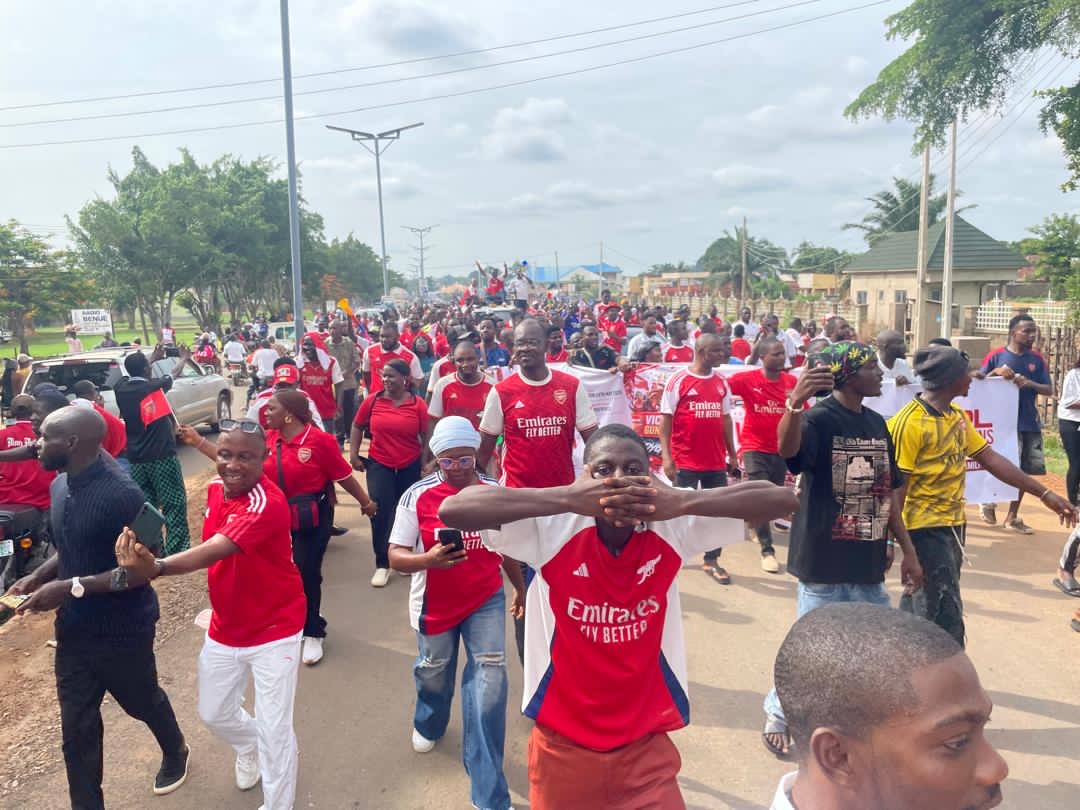
In a dazzling display of football fervor, the streets of Makurdi, the heart of Benue State, transformed into a sea of red and white on a sun-drenched afternoon. The air thrummed with chants, laughter, and the unmistakable rhythm of victory drums as Arsenal fans converged to celebrate their club’s hard-won Premier League title. This wasn’t just another football match—it was a cultural moment, a shared triumph that transcended borders and united a community under the banner of their beloved Gunners.
The scene was electric. From the moment the final whistle blew in London, the news rippled across social media, and within hours, Makurdi’s faithful had mobilized. Clad in Arsenal jerseys, scarves draped over shoulders, and faces painted in the club’s signature hues, supporters spilled onto the streets of Kenville and beyond. The city’s usual hum of traffic gave way to a spontaneous carnival, where strangers became comrades, and every passerby was swept into the euphoria.

What made this celebration particularly poignant was its spontaneity. Unlike planned rallies or pre-arranged events, this was organic—fueled purely by the passion of fans who had waited decades for this moment. The energy was infectious, with children mimicking the celebratory dances of their heroes and elders reminiscing about Arsenal’s past glories. For many, it was more than just football; it was a reminder of the power of sport to unite, to heal, and to create shared memories that outlast individual lifetimes.
The procession wound its way through Makurdi’s bustling markets and quiet neighborhoods, drawing curious onlookers into its orbit. Vendors hastily draped red and white bunting over their stalls, while motorcyclists—known locally as okadas—joined the parade, honking their horns in solidarity. The city’s police, usually tasked with maintaining order, found themselves smiling as they navigated the throng, their stern demeanors softened by the collective joy.
At the heart of the festivities was a makeshift stage where fans took turns belting out Arsenal anthems, their voices rising in unison. Some sang in English, others in local dialects, but the message was clear: this was a victory for everyone. The chants of “Ole, Ole, Ole!” echoed through the streets, a universal language of triumph that needed no translation. Even those who had never watched a Premier League match before found themselves swept up in the emotion, their hands clapping in time with the rhythm.
From London to Makurdi: A Global Passion Made Local
Arsenal’s success on the pitch has always resonated far beyond England’s shores, but Makurdi’s reaction was something special. The Premier League’s global reach means that fans in even the most remote corners of the world feel a personal connection to its clubs. For the supporters in Benue State, this victory wasn’t just about 3 points or a trophy; it was about being part of a global family united by a shared love of the game.
The club’s recent dominance under Mikel Arteta has only deepened this connection. After years of near-misses and heartbreak, the 2025/26 season saw Arsenal dismantle their rivals with a blend of tactical brilliance and relentless attacking flair. Fans in Makurdi, like their counterparts in Lagos, Nairobi, and Accra, had followed every match with bated breath, their emotions tied to every goal, every defensive clearance, every last-gasp winner. When the final whistle blew to confirm the title, the relief and joy were palpable—not just in the stands, but in living rooms, bars, and now, the streets of Makurdi.
The global football community has long recognized Africa’s role in shaping the sport’s future. From the raw talent emerging from the continent’s academies to the unwavering passion of its fans, Africa’s influence is undeniable. Makurdi’s celebration was a microcosm of this phenomenon—a testament to how football, in all its forms, can bridge divides and create moments of pure, unfiltered joy.

The Cultural Ripple Effect of a Football Triumph
Football is more than a sport in many African communities; it’s a cultural cornerstone. In Makurdi, as in countless other cities, the game weaves itself into the fabric of daily life, shaping conversations, traditions, and even local economies. The sudden influx of Arsenal merchandise—jerseys, flags, and scarves—into the city’s markets was a clear indicator of the economic ripple effect. Small vendors, who might otherwise struggle to sell their wares, saw a surge in demand, their stalls becoming temporary hubs of celebration.
The victory also sparked conversations about the role of football in fostering social cohesion. In a region where ethnic and religious divides can sometimes strain community bonds, football offers a unifying force. The Arsenal fanbase in Makurdi, like those elsewhere, transcends tribe, class, and age. On this day, those differences melted away, leaving only a shared sense of pride and belonging.
Local leaders, too, recognized the significance of the moment. While the Nigerian government often grapples with issues of national unity, this spontaneous celebration served as a reminder of what can be achieved when people come together around a common cause. The governor of Benue State, though not directly involved in the festivities, later praised the fans for their orderly conduct and emphasized the importance of such communal expressions of joy in building a stronger society.
Why Makurdi’s Celebration Stood Out
Not all football victories inspire such visceral reactions. What made Makurdi’s celebration unique was its authenticity. There were no corporate sponsors, no paid performers, no scripted moments—just raw, unfiltered passion. The fans owned the moment, and in doing so, they created something far more powerful than a staged event ever could.
The timing of the victory added to its magic. Coming at the tail end of a season that had seen its fair share of ups and downs, the title win felt like a reward for perseverance. For the older generation of fans, it harked back to Arsenal’s “Invincibles” era, a golden period they had clung to during years of disappointment. For the younger supporters, it was a new chapter, one that promised even greater heights in the seasons to come.
The social media frenzy that followed was another hallmark of this celebration. Videos and photos of the Makurdi parade spread like wildfire across platforms like X (formerly Twitter), Instagram, and Facebook, with fans from Lagos to London chiming in with their own reactions. The hashtag #ArsenalWembleyToMakurdi trended locally, a digital echo of the physical parade that had taken over the streets. For a brief moment, Makurdi wasn’t just a city in Nigeria—it was the epicenter of the football world.

Looking Ahead: What’s Next for Nigeria’s Arsenal Fans?
With the Premier League title secured, the question on every fan’s lips is: what comes next? For the supporters in Makurdi, the victory is just the beginning. The FA Cup, the Champions League, and even the upcoming transfer window will dominate conversations in the coming weeks. But more than trophies and signings, the real story is the sense of community that this celebration has reinforced.
Already, whispers of a Makurdi Arsenal supporters’ club are circulating. Such a group would formalize the bonds forged on that celebratory day, creating a space for fans to meet, watch matches together, and organize future events. It’s a small step, but one that could have a lasting impact on the local football culture.
The victory has also reignited debates about Nigeria’s own footballing future. With talents like Victor Osimhen and Wilfred Ndidi plying their trade in Europe’s top leagues, there’s a growing sense that the country’s footballing infrastructure is finally coming of age. Could this be the year Nigeria produces its own Premier League-winning side? The Makurdi celebrations might just be a preview of what’s to come.
For now, though, the focus remains on savoring the moment. In Makurdi, the red and white banners still flutter in the breeze, the chants still echo in the air, and the memories of that joyous day remain fresh. It’s a reminder that football, at its best, is more than just a game—it’s a celebration of life, unity, and the unbreakable spirit of its fans.
The Global Stage: How African Fans Are Redefining Football Culture
Makurdi’s celebration is part of a broader trend that’s reshaping how football is experienced around the world. African fans, in particular, have long been recognized for their passion, creativity, and unwavering loyalty. From the vibrant vuvuzelas of South Africa to the choreographed displays of Egypt’s Ultras, the continent’s supporters bring a unique flair to the global football landscape.
What sets Makurdi apart, however, is the organic nature of its celebration. In an era where football is increasingly commercialized, with clubs and sponsors dictating the narrative, Makurdi’s fans reminded everyone that the soul of the game lies in its people. Their joy wasn’t manufactured; it was genuine, a spontaneous outpouring of emotion that couldn’t be replicated or controlled.
This authenticity is something that even the biggest clubs in Europe are beginning to recognize. As Arsenal and other Premier League sides look to expand their global fanbase, they’re turning to local supporters’ groups like the one in Makurdi for inspiration. These groups, often run by volunteers, are the lifeblood of the club’s international presence, organizing watch parties, charity events, and cultural exchanges that deepen the bond between the club and its fans.
The future of football, it seems, is being written in cities like Makurdi—far from the glitz of stadiums and the glare of television cameras. It’s being written in the streets, in the homes, and in the hearts of fans who live and breathe the game every single day.
As the sun set on Makurdi’s streets, the red and white lights dimmed, but the spirit of celebration lingered. For one fleeting afternoon, the world had paused to acknowledge the power of football—and in doing so, it had reminded us all of the beauty of shared joy. In Makurdi, and in countless other places across Africa and beyond, the game continues to unite, to inspire, and to create moments that will be cherished for generations to come.

Topix News Desk is a digital editorial team focused on delivering clear, timely, and useful news coverage for readers worldwide. Our reporting highlights African news with global context, including politics, business, economy, technology, health, sports, entertainment, travel, and culture. We aim to publish accessible, well-structured, and informative articles that help readers understand the stories shaping Africa and the world.