
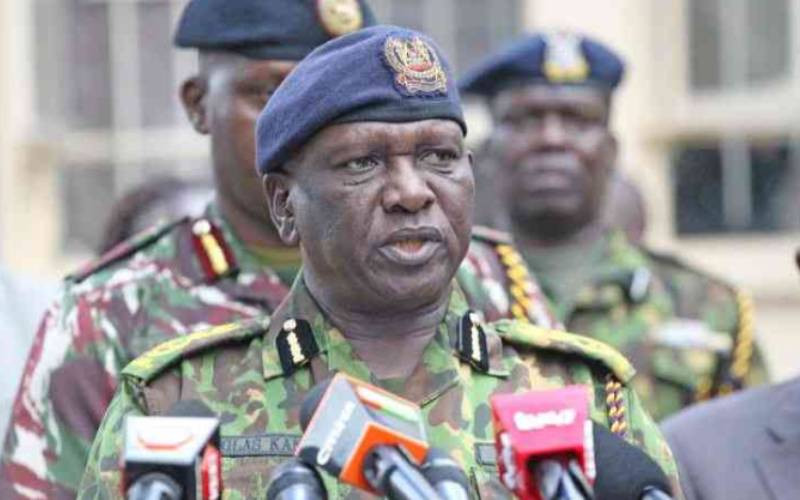
In a decisive move that underscores the gravity of security lapses in Kenya, Inspector General of Police Douglas Kanja has ordered sweeping changes within the force following a breach during President William Ruto’s recent tour of Ganze in Kilifi County. The incident, which unfolded without immediate public fanfare, has since sparked internal reviews and calls for accountability. As Kenyans digest the implications, the IG’s swift response signals a shift in how such breaches are addressed—or at least how they are publicly framed.
What Exactly Happened During President Ruto’s Kilifi Visit?
The breach occurred on the morning of [DATE], when President Ruto’s convoy was en route to Ganze, a coastal constituency known for its strategic and political significance. According to preliminary reports, the security detail assigned to the presidential motorcade failed to secure a key junction, allowing an unauthorized vehicle to enter the convoy’s path. Eyewitness accounts describe a moment of palpable tension as the president’s vehicles were forced to brake sharply, narrowly avoiding a collision. While no injuries were reported, the incident exposed vulnerabilities in the protocol for high-profile movements.
Local residents, who spoke to reporters under anonymity, described the scene as chaotic. Some claimed the breach was deliberate, an assertion that police sources dismissed as speculative. What remains undisputed is the fact that the incident took place, and its timing—amidst heightened political sensitivities—has only amplified scrutiny of the police’s operational readiness.

IG Kanja’s Response: A Rare Display of Accountability?
Within 24 hours of the breach, Inspector General Kanja convened an emergency meeting with senior police officials, including the Coast Regional Police Commander and the head of the Presidential Escort Unit. The outcome was an immediate order for a forensic audit of the security arrangements for presidential movements. Kanja also directed the suspension of two officers pending investigations, a move that, while symbolic, has been noted for its rarity in a force often criticized for inaction.
In a statement released to the media, Kanja acknowledged that the breach was “unacceptable” and pledged to implement reforms to prevent recurrence. He emphasized the need for “enhanced coordination” between the police and other security agencies, though specifics on what that entails remain vague. Political analysts suggest the IG’s response may be as much about managing public perception as it is about addressing systemic failures. Still, the swiftness of the action stands in contrast to past incidents where security lapses were met with silence or delayed investigations.
The IG’s directives also included a review of training protocols for officers assigned to presidential escorts. Sources within the police force indicate that gaps in communication between ground units and command centers were a contributing factor. Whether these reforms will translate into tangible improvements remains to be seen, but the acknowledgment of failure is a step forward in a system often resistant to transparency.
Why Kilifi Matters in Kenya’s Political Landscape
Ganze, where the breach occurred, is not just another coastal constituency—it is a political battleground. The area has been a flashpoint for tensions between the national government and local communities, particularly over land rights and marginalization. President Ruto’s visit was part of a broader strategy to consolidate support in a region where his administration faces skepticism. The security breach, therefore, carries implications beyond protocol failures; it risks undermining the president’s outreach efforts and fueling narratives of vulnerability.
Political analysts argue that the incident could embolden opposition groups to question the government’s grip on security, especially in regions perceived as opposition strongholds. The police’s response—or lack thereof—has historically been a sore point for many Kenyans, who view security agencies as tools of political manipulation rather than impartial enforcers of the law. Kanja’s intervention, while necessary, may do little to dispel these perceptions unless followed by concrete, measurable changes.
What’s Next for Kenya’s Security Apparatus?
The IG’s orders have set in motion a series of investigations that will likely drag on for weeks, if not months. A forensic team has been tasked with reconstructing the events leading up to the breach, including the chain of command and communication failures. Meanwhile, the suspended officers will face disciplinary hearings, the outcomes of which could either reinforce public trust or deepen skepticism about the police’s commitment to reform.
For Kenyans, the incident serves as a reminder of the fragility of security arrangements, even for the highest offices in the land. It also highlights the broader challenges facing the police force, from underfunding to corruption. While Kanja’s actions are a step in the right direction, the true test will be whether these reforms lead to lasting change—or if they are merely performative gestures in the face of public outrage.
The coming days will reveal whether the IG’s directives are followed through with the urgency they demand. For now, Kenyans watch closely, aware that the next security breach could be just around the corner—and that the police’s response may once again fall short of expectations.

Topix News Desk is a digital editorial team focused on delivering clear, timely, and useful news coverage for readers worldwide. Our reporting highlights African news with global context, including politics, business, economy, technology, health, sports, entertainment, travel, and culture. We aim to publish accessible, well-structured, and informative articles that help readers understand the stories shaping Africa and the world.