

High-Stakes Talks Begin in Switzerland as Iran and US Clash Over Strait of Hormuz and Lebanon War
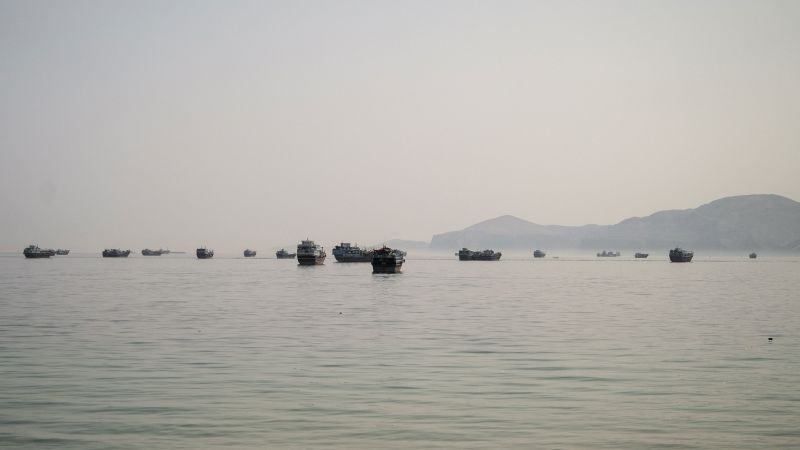
June 20, 2026 – The delicate balance of global energy security hangs in the balance as the United States and Iran prepare for high-stakes negotiations in Switzerland, with Iran’s sudden announcement of closing the Strait of Hormuz casting a shadow over diplomatic efforts. The critical waterway, through which nearly one-third of the world’s seaborne oil passes, has become a flashpoint in the escalating tensions between Tehran and Washington. Meanwhile, persistent violence in Lebanon—where Israel and Hezbollah continue their deadly exchange—risks derailing the entire diplomatic process.

Iran’s Bold Move: Closing the Strait of Hormuz
Iran’s Revolutionary Guard Corps (IRGC) announced Saturday that the Strait of Hormuz would be closed in response to what it calls “ongoing Israeli violations of the ceasefire in Lebanon” and the United States’ failure to enforce the first clause of the 14-point memorandum of understanding (MoU) signed earlier this week. The move has sent shockwaves through global markets, with oil prices already spiking amid concerns over supply disruptions.
In a direct challenge to Iran’s claim, the U.S. Central Command (CENTCOM) dismissed Tehran’s assertion, stating:
“Iran does not control the Strait of Hormuz. Traffic continues to flow, and U.S. forces are monitoring the situation to ensure this remains the case.”
Yet, Iran’s naval warnings have already taken effect. The IRGC Navy issued direct communications to vessels, cautioning that ships attempting to transit the strait risk “mining or military engagement.” State-run media reported that maritime traffic in the Persian Gulf had “dramatically decreased” within hours of the announcement, with some shipping companies rerouting cargo through alternative routes, including the Suez Canal and Cape of Good Hope.

U.S. Threatens Economic Retaliation: Toll Fees on the Strait
Adding fuel to the fire, President Donald Trump threatened to impose “tolls” on ships transiting the Strait of Hormuz if a final deal with Iran is not reached within 60 days. In a post on Truth Social, Trump framed the fees as “services rendered as the Guardian Angel to the countries of the Middle East,” claiming they would cover “past, present, and future reimbursement of costs.”
The proposal has drawn skepticism from analysts, who warn that such a move could further destabilize regional trade and provoke Iranian retaliation. The 60-day toll-free period—a condition outlined in the MoU—has already sparked debate over whether Iran will be allowed to impose its own fees afterward, potentially creating a dual-toll system that could disrupt global shipping logistics.
Lebanon Ceasefire Collapses: Hezbollah and Israel Exchange Fire
The Lebanon conflict remains the most urgent obstacle to diplomatic progress. Despite a formal truce agreement supposed to take effect Friday at 4:00 PM local time, Israeli forces and Hezbollah have continued intense firefights, resulting in dozens of civilian deaths over the past two days. The Israeli military confirmed the killing of Sergeant 1st Class Nir Ben Ari in a Hezbollah rocket and drone attack near Kfar Tebnit, marking the fifth Israeli fatality since the MoU was signed.
The Lebanese Health Ministry reports that over 4,000 civilians have died in Israeli strikes since early March, though Israel maintains its operations target “Hezbollah strongholds.” An Iranian official told CNN that ending the Lebanon war is “the most important item on Tehran’s agenda,” insisting that progress on the MoU cannot advance until Israel halts its military campaign.

Swiss Talks Kick Off: U.S. and Iran Delegations Face Off
The first face-to-face negotiations between the U.S. and Iran since the MoU’s signing are underway in Bürgenstock, Switzerland, with Vice President JD Vance leading the American delegation alongside Jared Kushner and Special Envoy Steve Witkoff. Iran’s team is headed by Parliament Speaker Mohammad Bagher Ghalibaf, accompanied by Foreign Minister Abbas Araghchi and other high-ranking officials, including banking and oil sector representatives.
Vance, who arrived in Switzerland after a “delicate coordination dance” of shifting travel plans, emphasized that the talks would focus on:
1. Structuring the negotiation framework
2. Making progress on Iran’s nuclear program
3. Securing a ceasefire in Lebanon
However, Iran’s delegation has made it clear that Lebanon will be addressed first—an emergency session was added to the agenda, signaling Tehran’s refusal to engage on nuclear or economic issues until Israel’s military actions in Lebanon cease.

Pakistan’s Role as Mediator: A Key Player in the Talks
Pakistan, a longtime mediator in U.S.-Iran negotiations, has sent Prime Minister Shehbaz Sharif and Army Chief Syed Asim Munir to Switzerland to facilitate discussions. Pakistan’s foreign ministry stated:
“Pakistan will continue to support and advance the implementation of understandings reached between the Islamic Republic of Iran and the United States.”
Qatar, another regional mediator, is also involved in the process. The presence of these neutral parties underscores the high stakes of the talks, as both sides seek to avoid a full-blown crisis that could spiral into broader conflict.

Humanitarian Crisis in Lebanon: The Human Cost of War
Beyond the geopolitical tensions, the humanitarian toll of the Lebanon conflict is devastating. A Lebanese conservationist, Mona Khalil, who dedicated her life to protecting endangered sea turtles along the southern coast, was killed in an Israeli airstrike earlier this month. Khalil, a 70-year-old ecologist, had spent decades working on The Orange House Project, a conservation initiative that safeguarded turtle nests.
Her death has drawn international condemnation, with critics accusing Israel of indiscriminate bombing that has targeted civilians and cultural landmarks. The Lebanese Ministry of Public Health reports that over 4,000 people have died since the conflict escalated in March, with dozens more killed in recent Israeli strikes.

Iran’s Economic Leverage: The Strait of Hormuz as a “New Superpower”
Iran’s decision to close the Strait of Hormuz is not just a symbolic gesture—it is a calculated economic weapon. The move threatens to disrupt global oil supplies, potentially causing market volatility and economic strain on Iran’s adversaries. An Iranian official, Mohammad Mokhber, a close aide to Supreme Leader Mojtaba Khamenei, warned that:
“As long as the agreement remains only on paper, energy flows in the Middle East will also remain halted.”
This strategy reflects Iran’s belief that economic pressure—rather than military force—will be the most effective tool in negotiations. By controlling a chokepoint for 20% of the world’s oil, Tehran has positioned itself as a critical player in any final deal.

U.S. Military Assurance: Ensuring Uninterrupted Shipping
Despite Iran’s threats, the U.S. military has pledged to maintain open transit through the Strait of Hormuz. CENTCOM spokesperson Capt. Tim Hawkins stated:
“55 merchant ships transited the strait today, moving large amounts of cargo and over 17 million barrels of oil to global markets. U.S. forces remain vigilant to ensure compliance with the agreement.”
However, the duality of Iran’s warning and U.S. denial has created confusion among shipping companies, some of which have diverted vessels to avoid potential risks. Analysts warn that if tensions escalate, private military contractors (PMCs) or regional allies (such as Saudi Arabia or the UAE) may be deployed to escort ships, further complicating the situation.

The Path Forward: Can Diplomacy Override Military Escalation?
With two major flashpoints—the Strait of Hormuz blockade and the Lebanon ceasefire violations—the success of the Swiss talks hinges on whether both sides can de-escalate militarily while making substantive concessions. Iran’s demand for an immediate halt to Israeli strikes in Lebanon is non-negotiable, while the U.S. insists on progress on nuclear constraints before further sanctions relief.
The 60-day deadline for a final agreement looms, and both nations must decide whether to compromise on economic incentives (such as the $6 billion in frozen Iranian funds) or risk prolonged conflict. The humanitarian crisis in Lebanon, coupled with the global energy security threat, makes this moment one of the most critical in recent Middle East diplomacy.

Conclusion: A Delicate Balance Between Diplomacy and Deterrence
As the U.S. and Iran enter these high-stakes negotiations, the world watches closely to see whether diplomatic resolve can outweigh military brinkmanship. The Strait of Hormuz remains the wild card—if Iran follows through on its closure, the economic consequences could be catastrophic. Meanwhile, the Lebanon war continues to burn, with no clear end in sight.
One thing is certain: The next 60 days will determine whether cooperation or confrontation prevails in one of the most volatile regions on Earth.


