
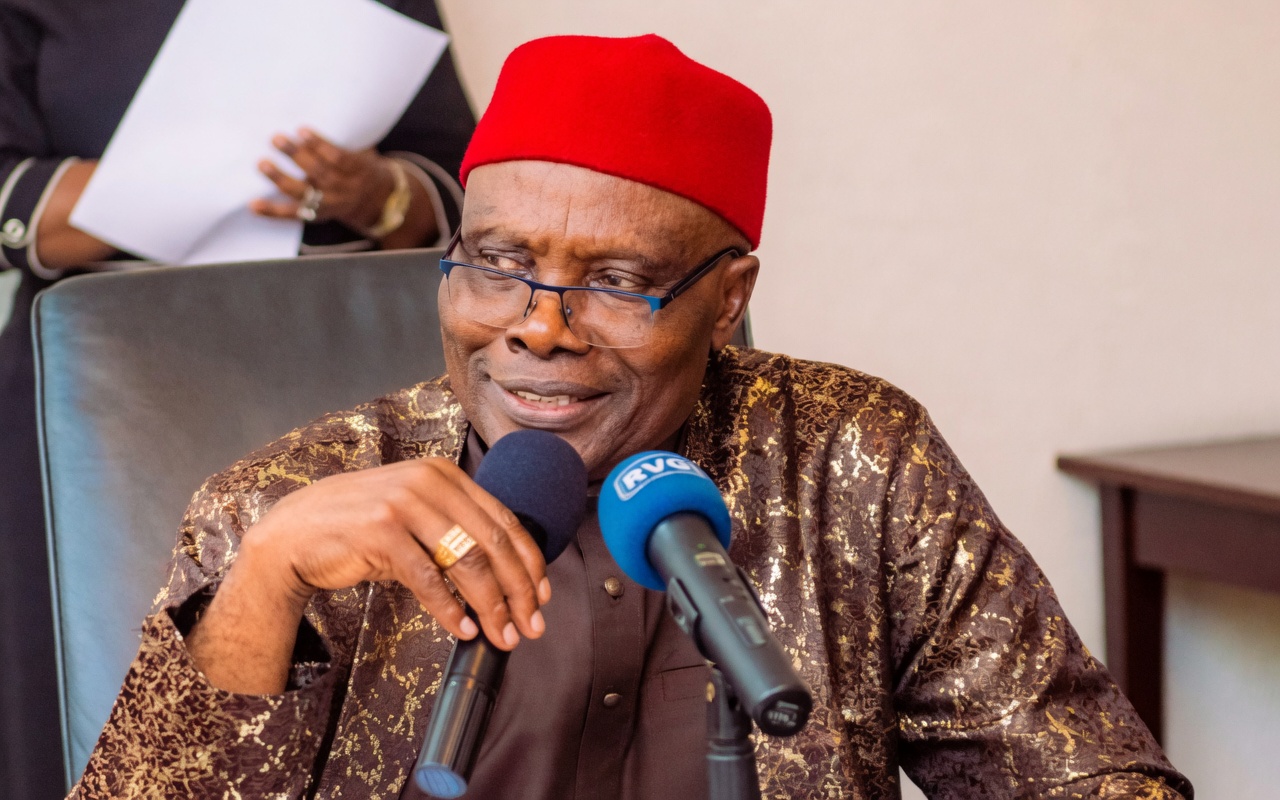
In a move that has sent ripples through Nigeria’s political landscape, Ibrahim Akut, a former sole administrator of Kaura Local Government Area in Kaduna State, has formally severed ties with the All Progressives Congress (APC) and thrown his weight behind the Labour Party’s presidential candidate, Peter Obi. The decision, announced in a fiery press conference on Monday, marks a dramatic shift in Nigeria’s 2027 electoral calculus—and signals a growing disillusionment with the ruling party’s unfulfilled promises after more than a decade in power.
Akut’s announcement is not just another political defection; it’s a thunderclap in Kaduna’s political firmament. As a former APC stalwart turned NDC candidate for the House of Representatives, his defection underscores a deepening fracture within the ruling party, where grassroots supporters are increasingly questioning the APC’s ability to deliver on its 2015 campaign pledges of change and transformation. The timing, just months before the 2027 polls, suggests that Nigeria’s political chessboard is being reshuffled with high stakes—and Akut is positioning himself as a key player in the reshuffle.

From APC Loyalist to NDC Challenger: The Breaking Point
Akut’s decision to abandon the APC did not come overnight. In a scathing statement that laid bare his frustrations, he accused the ruling party of failing to address the core issues that matter most to Kaduna’s electorate—security, infrastructure, and economic empowerment. “The APC rode into power on the wings of hope, but what we’ve seen is a decade of dashed expectations,” Akut declared. “Promises of jobs, stable electricity, and improved security have remained unkept, while the people continue to suffer.”
The former sole administrator’s critique resonates with a growing chorus of discontent across Nigeria’s northern states, where many feel sidelined in the APC’s governance agenda. His defection to the NDC, a party that has positioned itself as a viable alternative to the APC’s dominance, reflects a strategic realignment that could redefine the 2027 elections. By aligning with Peter Obi, a figure who has carved a niche as a reformist leader, Akut is not just switching parties—he’s betting on a political movement that promises to prioritize the needs of the masses over entrenched interests.
Kaduna’s Political Temperature: A State at a Crossroads
Kaduna, one of Nigeria’s most politically volatile states, has become a microcosm of the APC’s broader struggles. Once a stronghold of the ruling party, the state is now witnessing a groundswell of support for opposition figures, including Obi’s Labour Party. Akut’s defection is the latest in a series of high-profile shifts that suggest Kaduna’s voters are increasingly hungry for change. In a state where ethnic and religious tensions often simmer beneath the surface, the APC’s inability to foster unity and deliver tangible improvements has left a vacuum—and opposition parties are rushing to fill it.
Local analysts warn that the APC’s loss of key figures like Akut could have cascading effects. “When a former APC loyalist like Ibrahim Akut defects, it sends a message that the party’s grip on the north is weakening,” said a political observer in Kaduna. “The APC’s traditional base is eroding, and if this trend continues, the party could face an uphill battle in retaining its dominance.”

The Obi Factor: A New Dawn or a Fleeting Moment?
Peter Obi’s rise as a political force in Nigeria has been nothing short of meteoric. Since his 2023 presidential bid, Obi has cultivated a reputation as a leader who prioritizes transparency, economic prudence, and grassroots engagement. His alliance with the NDC—and now figures like Akut—has given his movement a new lease on life, particularly in northern Nigeria, where his message of hope has struck a chord with young voters and disillusioned APC supporters alike.
Akut’s decision to back Obi is a strategic coup for the Labour Party. By aligning with a former APC heavyweight, Obi is not only broadening his appeal but also challenging the narrative that his movement lacks the depth to govern. “Obi’s message of accountability and his track record as a governor who delivered on promises resonate with people tired of empty rhetoric,” Akut noted. “If the APC couldn’t fulfill its pledges in 12 years, why should we trust them to do so in another term?”
Yet, the road ahead is fraught with challenges. The NDC, while gaining traction, remains a fledgling party compared to the APC’s entrenched machinery. Obi’s ability to sustain this momentum—and Akut’s role in galvanizing support—will be critical in determining whether this political earthquake reshapes Nigeria’s electoral map.
APC’s Legacy Under Scrutiny: What Went Wrong?
The APC’s decline in popularity is not an isolated phenomenon but part of a broader reckoning with its governance record. Critics point to a litany of unfulfilled promises, from the long-awaited second Niger Bridge to the stalled implementation of the Petroleum Industry Act. In Kaduna, where security remains a persistent concern, the APC’s failure to curb banditry and ethnic clashes has eroded public trust. “The APC promised change, but what we’ve seen is more of the same—inefficiency, corruption, and a disconnect between leadership and the people,” Akut argued.
His defection is a damning indictment of a party that once promised to revolutionize governance. As Nigeria’s 2027 elections loom, the APC faces a stark choice: double down on its current trajectory or undertake a dramatic overhaul to win back the confidence of a skeptical electorate. For now, figures like Akut are voting with their feet—and the political landscape is shifting beneath them.
What’s Next for Ibrahim Akut and Kaduna’s Political Future?
With his defection now official, Ibrahim Akut is setting his sights on the House of Representatives seat in Kaura. His campaign will hinge on a platform of economic revival, security reform, and grassroots empowerment—issues that resonate deeply with Kaduna’s voters. But the road to victory is anything but certain. The APC, though weakened, is not without its resources, and the NDC’s ability to consolidate support in the face of a determined ruling party remains untested.
Akut’s move also raises questions about the broader implications for Nigeria’s opposition. If his defection inspires others to follow suit, the APC could face a domino effect that reshapes the 2027 elections. “This is not just about Ibrahim Akut,” said a political strategist. “It’s about the growing realization that the APC’s time may be running out. The question is whether the opposition can capitalize on this momentum.”
For Kaduna’s voters, the stakes could not be higher. With security concerns, economic hardship, and political disillusionment all converging, the 2027 elections may well be a referendum on the APC’s legacy—and a test of whether Nigeria’s democracy can deliver the change it promised.
Conclusion: A Political Earthquake or Just a Tremor?
Ibrahim Akut’s defection from the APC to the NDC is more than a personal career move; it’s a seismic shift in Nigeria’s political terrain. In a state like Kaduna, where loyalty to parties has historically been fluid, his decision underscores a broader trend: the electorate is demanding accountability, and traditional parties are struggling to keep up. Whether this marks the beginning of the end for the APC or merely a temporary tremor remains to be seen. What is clear, however, is that Nigeria’s 2027 elections will be shaped by the choices of leaders like Akut—and the voters who are increasingly unwilling to settle for less than real change.
As the political dust settles, one thing is certain: the era of unchallenged APC dominance in Kaduna is over. The question now is whether the opposition can rise to the occasion—or if Nigeria’s democracy will continue to be held hostage by unkept promises and broken pledges.
Copyright notice: Images and source material are credited to their respective owners/source (original source where available). If you are the copyright owner and want an image or content removed, please contact us at topix.news/contact-us; we will review and remove it promptly.

Topix News Desk is a digital editorial team focused on delivering clear, timely, and useful news coverage for readers worldwide. Our reporting highlights African news with global context, including politics, business, economy, technology, health, sports, entertainment, travel, and culture. We aim to publish accessible, well-structured, and informative articles that help readers understand the stories shaping Africa and the world.