
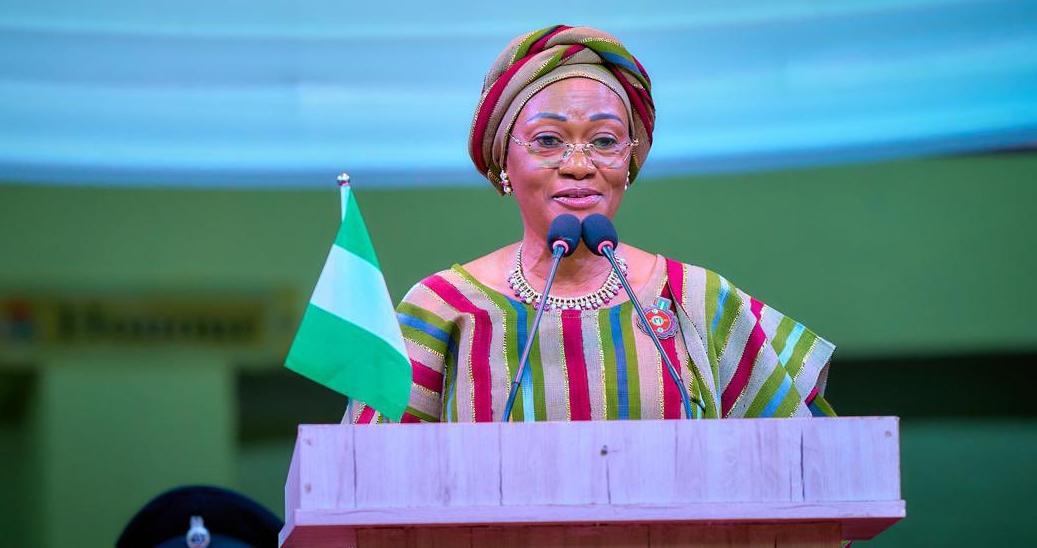
Nigeria stands at a crossroads. The drumbeat of insecurity grows louder—bandit raids in the northwest, kidnappings in the southeast, and armed clashes in the Niger Delta have left communities shattered and confidence in the state frayed. Yet, in the face of this turmoil, a voice of resolve has cut through the chaos: Nigeria’s First Lady, Senator Oluremi Tinubu, has delivered a message as uncompromising as it is necessary. The era of unchecked criminal networks, she declares, is over.
The timing could not be more critical. Just weeks after a spate of audacious attacks on police stations and military outposts, the Federal Government’s commitment to dismantling these syndicates has been reaffirmed with a clarity that demands attention. But this is not merely a rhetorical stand; it is a declaration of intent backed by a security apparatus under unprecedented pressure to deliver results.

The Weight of a Nation’s Anxiety
For millions of Nigerians, the fear is no longer abstract. It is etched into daily routines: the dread of traveling between cities, the hesitation to send children to school, the silent prayers before nightfall. Criminal gangs, once dismissed as fringe elements, now operate with near-impunity in swathes of the country, their tentacles stretching from rural hamlets to urban centers. The statistics are staggering—kidnappings surged by 43% in the first quarter of 2026 alone, while armed robbery incidents have doubled in key economic zones. The economic toll is equally devastating, with businesses shuttering and foreign investors retreating.
Yet, amid this despair, Senator Tinubu’s words carry the weight of a national reset. Her address to a gathering of security stakeholders in Abuja was not a rehearsed speech; it was a direct challenge to the status quo. “We will not cede our streets to criminals,” she stated, her tone leaving no room for ambiguity. “The Federal Government will deploy every resource at its disposal to dismantle these networks, restore order, and reclaim our communities.”
The Anatomy of Nigeria’s Security Crisis
The roots of this crisis are as complex as they are deep. Decades of underfunded security institutions, porous borders, and a thriving black-market economy for small arms have created a perfect storm. Criminal syndicates have evolved from loosely organized gangs into sophisticated networks, often collaborating with transnational crime groups. Their operations span kidnapping-for-ransom schemes, illegal mining, and even human trafficking, with victims often spirited across borders before authorities can react.
In the northwest, bandit gangs—some numbering in the hundreds—have turned vast territories into no-go zones, extorting farmers and travelers with impunity. In the southeast, separatist agitators and criminal factions have merged into hybrid threats, complicating military responses. Meanwhile, the Niger Delta remains a hotbed of oil bunkering and militant factions, their activities fueled by decades of environmental neglect and economic marginalization.
What makes this crisis uniquely perilous is its adaptability. When security forces crack down on one faction, another emerges, often more ruthless than its predecessor. The recent wave of attacks on police stations—including a brazen daylight assault in Zamfara—has exposed vulnerabilities in the state’s response mechanisms. It is a cycle that demands more than just brute force; it requires a holistic strategy that addresses the socio-economic conditions breeding these networks.

The First Lady’s Role: Beyond Symbolism
In Nigeria’s political landscape, the First Lady’s office has often been a space for advocacy rather than action. Yet Senator Tinubu’s latest intervention suggests a shift. Her background as a senator and her long-standing work in women’s empowerment initiatives lend her words a gravitas that transcends mere symbolism. Security analysts note that her involvement signals a broader recognition within the administration that tackling insecurity requires more than military might—it demands social cohesion, community engagement, and economic revitalization.
Her call for a “multi-agency approach”—one that integrates intelligence gathering, community policing, and economic incentives for at-risk youth—reflects an understanding of the crisis’s layered nature. “We cannot arrest our way out of this problem,” she emphasized during a recent briefing. “We must also address the conditions that push young men and women toward crime—poverty, unemployment, and a lack of opportunity.”
This holistic vision aligns with growing global best practices in countering organized crime. Countries like Colombia and Mexico have demonstrated that sustained security gains require more than just military operations; they demand investment in education, job creation, and the restoration of trust between citizens and the state. Nigeria’s challenge, however, is compounded by its sheer scale and diversity, making a one-size-fits-all approach impossible.
The Road Ahead: Can Nigeria Turn the Tide?
The path to reversing Nigeria’s insecurity spiral is fraught with obstacles. The first hurdle is operational: the Nigerian military and police forces, despite recent reforms, still grapple with logistical constraints, corruption, and a lack of modern equipment. The second is political. In a country as diverse as Nigeria, security strategies must navigate ethnic sensitivities, regional rivalries, and the ever-present specter of electoral politics. Any misstep risks exacerbating tensions rather than easing them.
Yet, there are glimmers of hope. The government’s recent deployment of surveillance drones and the establishment of a dedicated counter-kidnapping unit have shown early promise. Community vigilante groups, once viewed with suspicion, are now being integrated into formal security frameworks in states like Kaduna and Plateau. Even the private sector is stepping up, with tech entrepreneurs developing AI-driven platforms to track criminal movements and coordinate rapid responses.
But the most critical factor may be public sentiment. Nigerians, weary of decades of unfulfilled promises, are demanding accountability. Social media platforms buzz with calls for action, while grassroots movements like #EndInsecurityNow have mobilized thousands. The government’s response must be swift, transparent, and measurable—otherwise, the cycle of violence and despair will only deepen.
The Human Cost: Stories from the Frontlines
Behind the statistics and policy debates are the faces of those most affected. In the village of Dutse, Jigawa State, a mother of four recounts how her husband was abducted by bandits while returning from a market. “They demanded a ransom we could never pay,” she says, her voice trembling. “We haven’t seen him in three months.” In Port Harcourt, a young entrepreneur describes how his business collapsed after repeated extortion by local gangs. “They took everything—my savings, my equipment, my hope,” he laments.
These are not isolated incidents. They are the lived realities of millions whose stories rarely make national headlines. Yet their plight underscores the urgency of Senator Tinubu’s pledge. Security, after all, is not just about protecting institutions; it is about safeguarding lives, livelihoods, and the very fabric of society.
What’s Next for Nigeria’s Security Strategy?
As Nigeria charts its course forward, several key priorities have emerged:
- Intelligence-Led Operations: Expanding the use of technology—drones, satellite imagery, and AI-driven analytics—to preempt criminal activities before they escalate.
- Community Policing: Strengthening trust between security forces and local populations through transparency, training, and equitable resource distribution.
- Economic Empowerment: Launching targeted programs to provide alternatives for at-risk youth, including vocational training, microfinance, and job placements in high-demand sectors.
- Regional Cooperation: Enhancing collaboration with neighboring countries like Niger and Chad to disrupt transnational criminal networks operating across porous borders.
- Transparency and Accountability: Implementing robust oversight mechanisms to ensure security funds are used effectively and security personnel are held to the highest standards.
None of these measures will yield instant results. But together, they represent a blueprint for turning the tide against Nigeria’s criminal syndicates. The question is whether the political will—and the necessary resources—will match the ambition.
Africa’s Larger Battle Against Organized Crime
Nigeria’s struggle is not an isolated one. Across Africa, criminal networks are exploiting weak governance, porous borders, and economic disparities to expand their reach. From the Sahel’s jihadist insurgencies to South Africa’s cash-in-transit heists, the continent faces a multifaceted security crisis that demands coordinated action. The African Union’s recent adoption of a continental strategy to combat organized crime is a step in the right direction, but its success hinges on individual nations’ ability to implement robust national frameworks.
For Nigeria, the stakes could not be higher. As Africa’s largest economy and most populous nation, its stability has ripple effects far beyond its borders. A Nigeria in turmoil risks destabilizing its neighbors, disrupting regional trade, and undermining global confidence in the continent’s growth potential. Conversely, a Nigeria that successfully curtails its security crisis could serve as a model for other African nations grappling with similar challenges.
Conclusion: The Fight for Nigeria’s Future
Senator Oluremi Tinubu’s declaration is more than a political statement; it is a call to action. Nigeria stands at a precipice, its future hanging in the balance between the dark forces of criminality and the promise of renewal. The path forward will be arduous, requiring not just military resolve but a commitment to justice, equity, and transparency.
Yet, if history is any guide, Nigeria has always risen to its challenges. From the struggle for independence to the fight against corruption, the nation’s resilience has been its defining trait. Today, that resilience is being tested once again. The question is whether the government, the security forces, and the people of Nigeria will meet this moment with the urgency and determination it demands.
One thing is certain: the era of unchecked criminal networks cannot continue. The time for action is now—and the stakes could not be higher.
Copyright notice: Images and source material are credited to their respective owners/source (original source where available). If you are the copyright owner and want an image or content removed, please contact us at topix.news/contact-us; we will review and remove it promptly.

Topix News Desk is a digital editorial team focused on delivering clear, timely, and useful news coverage for readers worldwide. Our reporting highlights African news with global context, including politics, business, economy, technology, health, sports, entertainment, travel, and culture. We aim to publish accessible, well-structured, and informative articles that help readers understand the stories shaping Africa and the world.