

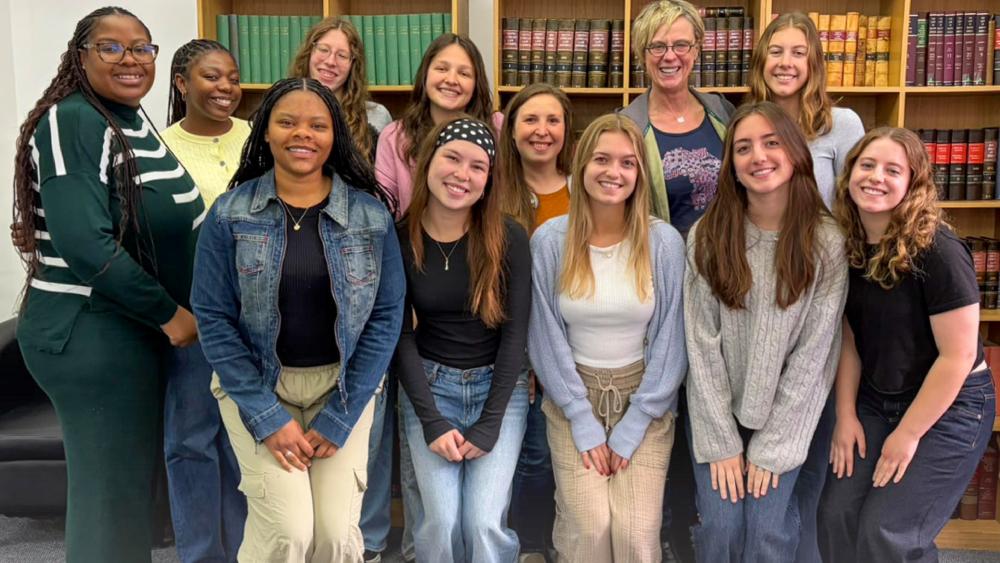
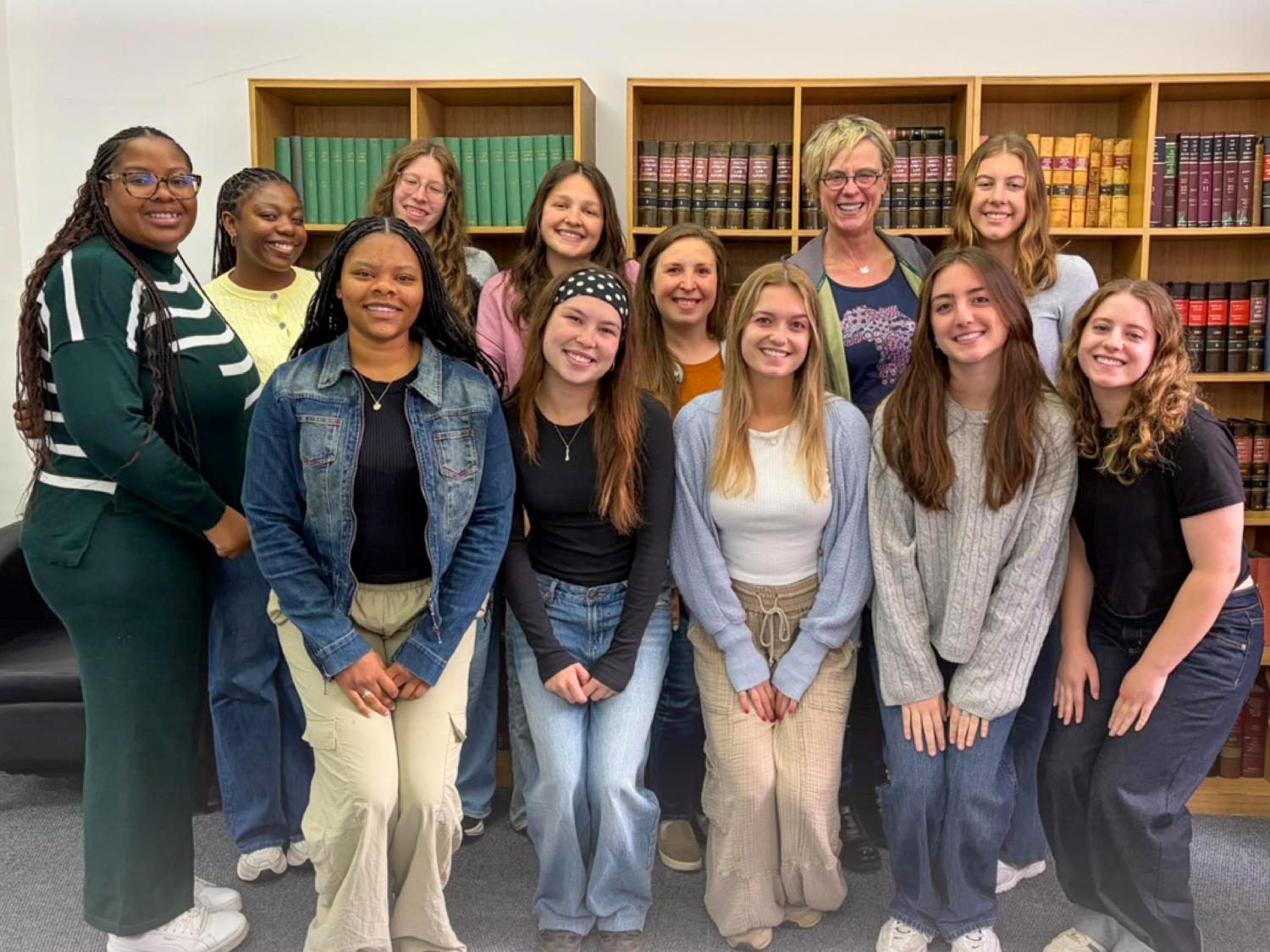
Penn State students and faculty member Susanne M. Klausen (back row, second from right) engage with representatives from the South African Women’s Legal Centre during an immersive education abroad program in Cape Town. The experience combined academic rigor with hands-on activism, offering students an unparalleled perspective on reproductive justice in South Africa. Credit: Provided. All Rights Reserved.
A Three-Week Journey Through History, Activism, and Cultural Exchange
This summer, eight undergraduate students from The Pennsylvania State University (Penn State) embarked on a life-altering educational journey to Cape Town, South Africa, as part of the faculty-led program WMNST 399: The Quest for Reproductive Justice in South Africa. As one of 14 education abroad initiatives offered this year through Penn State’s College of the Liberal Arts, the course was meticulously designed to bridge academic theory with real-world activism, providing students with an unfiltered, firsthand look at the challenges and triumphs of reproductive justice in one of Africa’s most politically and culturally vibrant regions.
Led by Dr. Susanne M. Klausen, the Brill Professor of Women’s, Gender, and Sexuality Studies (WGSS) and African Studies, alongside Camille Sluzis, the Sexual Assault and Relationship Violence Coordinator at Penn State’s Counseling and Psychological Services (CAPS), the program blended seminar-style lectures, fieldwork, and collaborative research to dissect the historical, legal, and social dimensions of reproductive rights in South Africa. For Klausen, who has spent decades researching birth control and abortion policies in the country, the opportunity to share this expertise with students—many of whom had never set foot on the continent—was both a professional fulfillment and a personal passion.
“I wanted to offer this program again because it’s incredibly rewarding to introduce students to the incredible activists and the rich history of South Africa—especially those who have never experienced it firsthand,” Klausen explained. “The course exceeded my expectations by igniting a deeper curiosity about Africa and reproductive justice among the participants.”
From Classroom to Community: A Curriculum Rooted in Real-World Impact
The program’s structure was deliberately designed to transcend traditional lecture-based learning, ensuring students engaged with local activists, healthcare providers, and legal advocates whose work directly shaped reproductive justice in South Africa. Each day began with in-depth seminars at the University of Cape Town, where students analyzed the legacy of apartheid, colonialism, and post-colonial governance—how these forces continue to influence access to healthcare, legal protections, and social equity today.
“We spent hours discussing how systemic oppression still manifests in healthcare delivery,” recalled Mackenna Grace Rentch, a third-year criminology major with minors in philosophy and WGSS. “But theory alone doesn’t change anything. What made this trip transformative was seeing those discussions play out in real time.”
To bridge the gap between academic theory and lived experience, the curriculum included mandatory field visits to organizations at the forefront of reproductive justice advocacy. Among the most impactful were:
-
SWEAT (Sex Workers’ Education and Advocacy Taskforce) – A grassroots organization advocating for the decriminalization of sex work and the rights of sex workers in South Africa. Students met with activists who shared firsthand accounts of stigma, police harassment, and the critical need for safe, non-judgmental healthcare access.
-
Gender Dynamix – A transgender-led organization fighting for gender-affirming healthcare, legal recognition, and social inclusion. The students participated in a workshop on intersectional feminism, where they learned how racial, economic, and gender identities compound barriers to reproductive autonomy.
-
A Public-Sector Abortion Clinic in Khayelitsha – One of the few state-funded facilities providing legal abortions under South Africa’s Choice on Termination of Pregnancy Act (1996). The clinic’s midwife and manager—a passionate advocate—led a discussion on the practical challenges women face, from bureaucratic red tape to limited medical supplies, despite the law’s protections.
“She told us about women who travel for hours, sometimes days, just to reach a clinic that might not even have the necessary medications,” said Eloise Bracey Emel, a WGSS and psychology major with a minor in politics and public policy. “Seeing the underfunding and overcrowding firsthand made me realize how fragile these rights truly are.”
Research That Matters: Collaborating with the South African Women’s Legal Centre
To deepen their understanding, students were assigned real-world research projects in partnership with the South African Women’s Legal Centre (SAWLC), a feminist litigation organization that challenges gender-based violence and reproductive rights violations. Divided into small teams, the students conducted independent investigations into two critical issues:
- Mackenna Rentch’s group examined abortion access in the Western Cape, uncovering how geographic disparities, clinic closures, and religious opposition create legal but inaccessible services.
- Eloise Emel’s group explored the privatization of abortion care, revealing how corporate healthcare providers often exclude low-income women, forcing them to rely on overburdened public systems.
“We weren’t just reading about these problems—we were part of the solution,” Emel said. “The SAWLC team reviewed our findings, and some of our recommendations could potentially influence policy discussions.”
Cultural Immersion: Beyond the Classroom and Clinic Walls
While the academic and activist components were undeniably powerful, the students also experienced Cape Town’s vibrant culture, forging connections that extended beyond the classroom. One of the most memorable experiences was participating in a Sunday township lunch—a tradition where entire communities gather in open-air homes for shared meals, music, and conversation.
“Every Sunday, families from different backgrounds come together, sharing food, stories, and laughter,” Rentch described. “It was a reminder that community is the foundation of resilience—something we don’t always see in our own country.”
The trip also strengthened Penn State’s global alumni network when Stefanie Coyle, a 2005 Penn State political science graduate, hosted the class for dinner at her home in Cape Town. Coyle, now a human rights attorney, and her husband, Stephen, an advocate for anti-malaria initiatives across Africa, shared their career journeys—how their time at Penn State shaped their commitment to social justice.
“Hearing Stefanie talk about how her experiences in South Africa influenced her work with the New York Civil Liberties Union (NYCLU) was incredibly inspiring,” Rentch said. “It showed me that education and activism are interconnected—no matter where you are.”
A Lasting Impact: Students Return with New Perspectives and Callings
For many participants, the trip was life-changing, reinforcing their dedication to social justice while challenging them to think critically about systemic barriers. Rentch, who has long been passionate about reproductive rights, now sees her future in policy advocacy, determined to bridge the gap between law and accessibility.
“I’ve never left a trip feeling so changed,” she admitted. “Before, I thought about these issues in the abstract. Now, I know exactly what it looks like when laws fail people.”
Emel, too, left Cape Town with a deeper empathy for marginalized communities. “When you hear someone’s story directly, it’s not just data—it’s humanity,” she reflected. “That’s the kind of understanding that drives real change.”
Dr. Klausen echoed the students’ sentiments, emphasizing that global education is not just about travel—it’s about transformation.
“This program wasn’t just about exposing students to a new place,” she said. “It was about equipping them with the tools to challenge injustice—whether in South Africa or their own communities back home.”
Looking Ahead: The Future of Reproductive Justice Education
As the program concludes for this year, its legacy extends beyond Cape Town. Penn State’s College of the Liberal Arts plans to expand similar study abroad opportunities, ensuring that more students can engage with global movements firsthand. For now, the eight students who participated in WMNST 399 carry with them not just memories, but a commitment—to listen, to advocate, and to build a more just world*.
“I used to think activism was something I’d do someday,” Rentch said. “Now, I know it’s something I have to do.”
SEO Keywords Integrated:
– Reproductive justice in South Africa
– Study abroad Cape Town
– Penn State education abroad programs
– Abortion access challenges
– Gender rights activism Africa
– South African Women’s Legal Centre
– Feminist litigation and advocacy
– Global social justice education
– Apartheid’s impact on healthcare
– Transgender rights South Africa
– Sex workers’ rights movements
– Public policy and reproductive rights
– Human rights advocacy Cape Town
– Intersectional feminism in Africa
– Legal barriers to healthcare access
– Alumni global impact Penn State
– Community-based reproductive health
– Feminist scholarship and activism
