
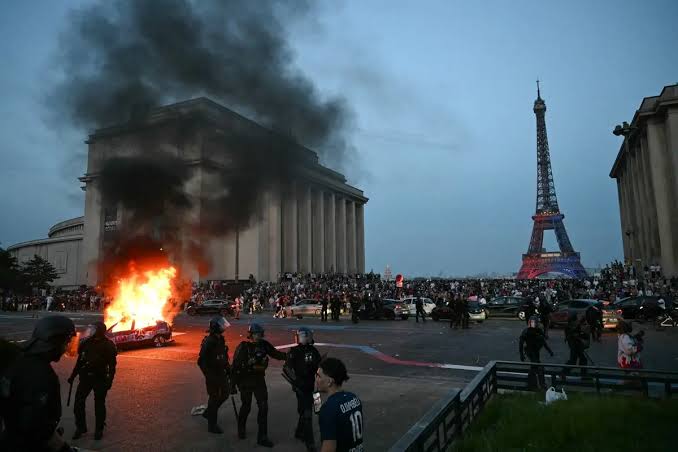
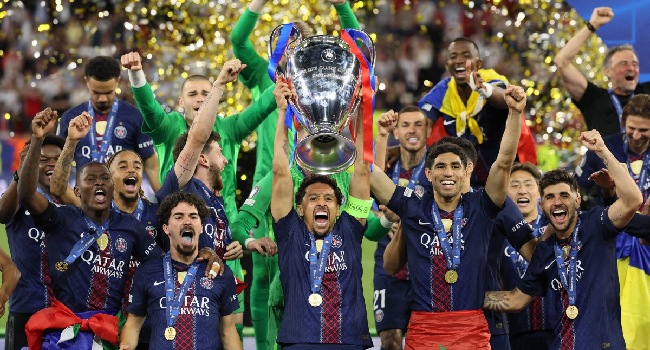
The Eiffel Tower, usually bathed in golden light, flickered with the orange glow of burning cars and barricades this weekend as Paris Saint-Germain’s long-awaited Champions League victory sparked scenes of unprecedented chaos. What should have been a night of jubilation for the French capital’s football faithful instead descended into a surreal tableau of arson, looting, and pitched battles with riot police—all within hours of PSG’s 2-1 triumph over Bayern Munich in the final.
French authorities confirmed that nearly 900 people were taken into custody as unrest spread from the Champs-Élysées to the working-class districts of Saint-Denis and beyond. The scale of the disturbances has left football officials, politicians, and even some PSG players stunned, raising urgent questions about the policing of fan celebrations in an era of hyper-commercialized football.
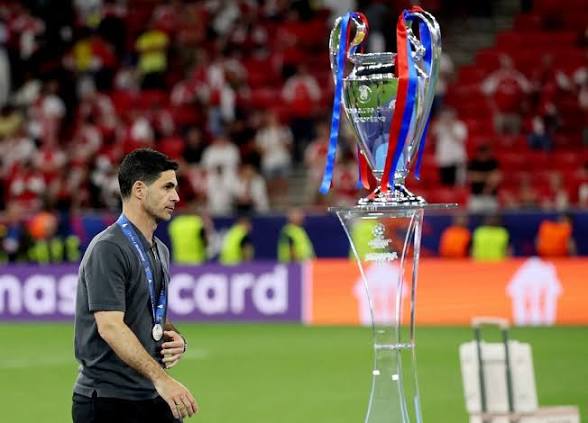
In the immediate aftermath, videos circulating on social media showed masked protesters hurling projectiles at police lines, while others set fire to vehicles and storefronts. The scenes were reminiscent of the 2018 World Cup riots in Russia or the 2011 London disturbances—but this time, the epicenter was the heart of European football’s glamour hub. Analysts noted that the unrest was not confined to a single hotspot; instead, it erupted across multiple neighborhoods, suggesting a coordinated, if spontaneous, response to PSG’s victory.
“This wasn’t just a few bad apples,” said a senior French police officer who requested anonymity. “We saw organized groups moving between locations, using social media to coordinate. It was like a football-related flash mob, but with Molotov cocktails.” The officer’s assessment aligns with reports from local journalists who described how rioters appeared to target symbols of wealth and authority—luxury boutiques, police stations, and even public transport infrastructure.

From Glory to Grit: The Aftermath in Paris
The morning after the final, Paris awoke to a city transformed. The usually bustling streets of the Marais district, home to PSG’s most vocal supporters, were littered with shattered glass and overturned bins. Cafés that had stayed open late to serve celebrating fans now boarded up their windows, while public transport services were suspended in key areas due to “safety concerns.”
Football clubs across Europe have long grappled with the challenge of managing fan expectations after major victories. PSG’s case, however, is unique. The club’s meteoric rise from French also-ran to global superpower has been accompanied by a growing divide between its ultra-wealthy ownership and the working-class communities that once saw the team as their own. The unrest, some locals argued, was as much about economic frustration as it was about football.
“PSG used to be our team,” said Amina, a 32-year-old market vendor in Saint-Denis. “Now it feels like a foreign brand, and the celebrations feel like a slap in the face to people who can’t even afford to watch a match in the stadium.” Her words echoed sentiments shared by many in the banlieues, where PSG’s success has done little to alleviate poverty and unemployment.
Europe’s Football Authorities Face Scrutiny
The chaos in Paris has reignited debates about how European football authorities—and clubs themselves—handle post-match celebrations. UEFA, which oversees the Champions League, has faced criticism for its perceived leniency toward clubs whose fans are involved in violent incidents. Critics point to past incidents involving English, Italian, and Spanish clubs, where trophy celebrations have spiraled into chaos with minimal consequences for the teams involved.
“UEFA’s approach is reactive, not preventive,” said Dr. Laurent Dubois, a sports sociologist at the University of Paris. “They fine clubs after the fact, but there’s no real incentive for clubs to invest in fan education or community engagement. PSG’s owners are billionaires; they could easily fund programs to channel the energy of young supporters into something positive. Instead, we see this.”
In response to the unrest, French Interior Minister Gérald Darmanin announced an immediate review of policing strategies for major sporting events. “We cannot allow football to become a vehicle for destruction,” Darmanin stated in a press conference. His comments came as reports emerged of PSG players being heckled by locals during a training session in the days following the final—a stark contrast to the adoration they received just days earlier.
The Human Cost: Injuries and Trauma
Beyond the property damage and arrests, the unrest left a trail of human suffering. Over 150 police officers were injured, including several with serious burns from Molotov cocktails. Local hospitals reported a surge in patients with fractures, lacerations, and respiratory issues from tear gas exposure. Among the civilians treated was a 19-year-old student who suffered a fractured skull after being struck by a projectile near the Arc de Triomphe.
Psychologists warn that the psychological impact of the riots may linger for years, particularly among young people who witnessed or participated in the violence. “This wasn’t just a one-night event,” said trauma specialist Dr. Fatima Sow. “For many, it was a rite of passage into a cycle of protest and confrontation that could resurface at the next major event.”
The psychological toll extended to PSG’s players, some of whom expressed shock at the scale of the backlash. Midfielder Vitinha, who scored the winning goal in the final, told reporters: “We dreamed of this moment for years. To see it overshadowed by this… it’s hard to process.” His teammate, Achraf Hakimi, added: “Football should bring people together. Today, it feels like it did the opposite.”
Lessons from the Pitch to the Streets
The fallout from PSG’s Champions League triumph serves as a case study in the unintended consequences of modern football’s commercialization. Clubs like PSG, backed by oil-rich owners and global sponsors, operate in a different stratosphere from their predecessors. While this has brought success on the pitch, it has also widened the gap between the haves and have-nots—both within the club’s fanbase and in the communities that surround it.
Some analysts argue that the unrest highlights the need for a radical rethink of how football clubs engage with their local communities. Proposals include mandatory fan education programs, partnerships with local charities, and even financial contributions from clubs to fund youth sports facilities in underserved areas. “Football clubs are no longer just sporting entities,” said Dubois. “They are economic powerhouses with a social responsibility. PSG’s owners could have prevented much of this if they had invested in their community instead of just in their squad.”
The French government’s review of policing strategies may also lead to changes in how security is handled at major events. Speculation is rife that UEFA could impose stricter penalties on clubs whose fans are involved in violent incidents, including potential bans from European competitions—a move that would have been unthinkable just a decade ago.
What’s Next for PSG—and Paris?
As PSG prepares to defend its Champions League title next season, the club finds itself at a crossroads. Will it double down on its global branding, further alienating its local fanbase? Or will it take steps to reconnect with the communities that once saw it as their own? The answer may determine whether the club’s success on the pitch is matched by stability off it.
For Paris, the immediate priority is restoring order and rebuilding trust. The city’s mayor, Anne Hidalgo, has pledged to increase community policing in the affected areas and launch a dialogue with local leaders. “We cannot let a single night of violence define our city,” she said. “Paris is a city of light, of culture, of diversity. That’s what we must celebrate.”
Yet the scars of the weekend’s events will take time to heal. In the cafés of Saint-Denis and the boulevards of central Paris, conversations continue about what went wrong—and how football, a sport meant to unite, became a flashpoint for division. One thing is clear: the legacy of PSG’s Champions League triumph will be measured not just in trophies, but in the lessons learned from the chaos that followed.
Key Takeaways: The Ripple Effects of PSG’s Victory
- Unprecedented Scale of Unrest: Nearly 900 arrests mark the largest post-match football-related disturbances in French history, surpassing even the chaos following France’s 2018 World Cup win.
- Economic and Social Divide: PSG’s rise as a global brand has widened the gap between the club’s ultra-wealthy ownership and the working-class communities that once saw it as their own.
- Football Authorities Under Fire: UEFA and French authorities face criticism for their reactive approach to fan violence, with calls for stricter penalties and preventive measures.
- Human Cost: Over 150 police officers injured and civilians treated for severe injuries, highlighting the physical and psychological toll of the riots.
- Community Reckoning: The unrest has forced PSG and Paris to confront difficult questions about identity, belonging, and the role of football in society.
The story of PSG’s Champions League triumph is far from over. As the dust settles in Paris, the real test begins—not on the pitch, but in the streets, the boardrooms, and the hearts of a city divided. One thing is certain: football’s ability to inspire joy is matched only by its power to expose the fractures in society. How PSG and Paris choose to address those fractures may well define the club’s legacy for generations to come.
Copyright notice: Images and source material are credited to their respective owners/source (original source where available). If you are the copyright owner and want an image or content removed, please contact us at topix.news/contact-us; we will review and remove it promptly.

Topix News Desk is a digital editorial team focused on delivering clear, timely, and useful news coverage for readers worldwide. Our reporting highlights African news with global context, including politics, business, economy, technology, health, sports, entertainment, travel, and culture. We aim to publish accessible, well-structured, and informative articles that help readers understand the stories shaping Africa and the world.