
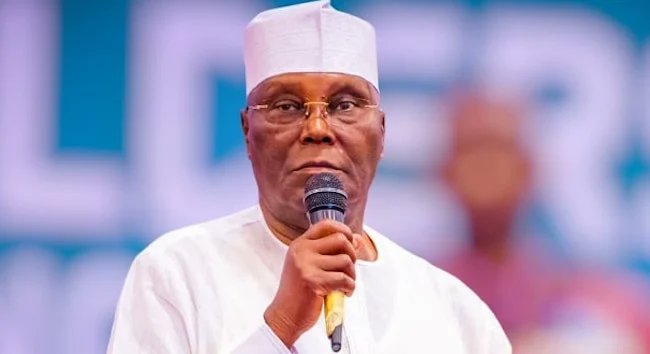
The dust has barely settled on Nigeria’s 2024 general elections, yet the political chessboard is already being reset. In a move that has sent ripples through the nation’s opposition landscape, the Sokoto State chapter of the African Democratic Congress (ADC) has formally adopted former Vice President Atiku Abubakar as its sole presidential candidate for the 2027 election cycle. The announcement, made late Saturday evening, marks a significant escalation in the race to unseat the ruling party, with implications that extend far beyond the borders of Sokoto State.
The decision was not merely symbolic; it was a calculated declaration of intent. Speaking to reporters after the party’s extraordinary convention, Sokoto ADC Chairman Alhaji Umar Faruk described the endorsement as a “strategic alliance” designed to consolidate opposition forces ahead of what promises to be a fiercely contested electoral battle. “We are not just choosing a candidate,” Faruk stated. “We are choosing a path forward for Nigeria—one that prioritizes unity, economic revival, and the restoration of trust in our democratic institutions.”

The Weight of Sokoto’s Endorsement in Nigeria’s Fractured Opposition
Sokoto, one of Nigeria’s most politically influential northern states, has long been a bellwether for national trends. The ADC’s decision to throw its weight behind Atiku—despite the party’s relatively modest presence in the region—suggests a deliberate effort to bridge divides between Nigeria’s fragmented opposition. Atiku, a two-time presidential candidate and former vice president under Olusegun Obasanjo, remains one of the most recognizable figures in Nigerian politics, even as his age and past electoral performances have drawn criticism.
Yet, his endorsement by the Sokoto ADC is less about his personal popularity and more about the party’s calculation that his name carries enough residual goodwill to galvanize a broader coalition. Political analysts suggest that the move could pressure other opposition parties, such as the Labour Party and the Peoples Democratic Party (PDP), to reconsider their own strategies—potentially leading to a realignment that could reshape the entire electoral landscape.
The timing of the endorsement is equally noteworthy. With Nigeria’s economy still grappling with the aftershocks of naira devaluation, fuel subsidy removals, and soaring inflation, the opposition is under immense pressure to present a viable alternative to the ruling All Progressives Congress (APC). Atiku’s candidacy, analysts argue, offers the ADC a rare opportunity to position itself as the unifying force that other opposition parties have failed to become.
The ADC’s Calculus: Why Atiku?
The African Democratic Congress is not a dominant force in Nigerian politics. With limited representation in the National Assembly and few governorships under its belt, the party’s decision to back Atiku may seem counterintuitive at first glance. However, a closer look reveals a pattern of strategic pragmatism. In 2019 and 2023, the ADC’s presidential candidates—Oby Ezekwesili and Dumebi Kachikwu, respectively—failed to make a significant dent in the electoral map. This time, the party appears to be hedging its bets on a candidate with a proven track record of national appeal, even if that candidate is not officially representing the ADC on the ballot.
“The ADC is playing the long game,” said Lagos-based political scientist Dr. Amina Yusuf. “By aligning with Atiku, they are signaling to voters that they are serious contenders—not just another fringe party. It’s a gamble, but one that could pay off if other opposition groups fall in line.”
The endorsement also comes at a moment when Nigeria’s political elite are increasingly focused on the 2027 elections as a potential turning point. The APC, despite its grip on power, faces growing discontent over economic hardship and security challenges. The opposition, meanwhile, is desperate to avoid repeating the mistakes of 2023, when infighting and lack of cohesion handed victory to Bola Tinubu’s APC.

The Sokoto Factor: A Northern Power Play?
Sokoto’s political significance cannot be overstated. As the seat of the former Sokoto Caliphate and a state with deep historical ties to Islamic scholarship and northern identity, its endorsement carries symbolic weight. The ADC’s decision to adopt Atiku in Sokoto—rather than in a southern stronghold—sends a clear message: this is not just a southern-led opposition movement. It is a pan-Nigerian effort to reclaim the presidency.

Yet, the move is not without risks. Northern Nigeria, particularly the northwest region where Sokoto is located, has been a hotbed of insecurity, with banditry, kidnappings, and insurgent violence plaguing communities for years. Critics argue that Atiku’s candidacy—while symbolically unifying—does little to address the immediate security concerns that dominate voter priorities in the region. “People are tired of empty promises,” said a Sokoto-based community leader who requested anonymity. “They want to see a plan for peace, not just another politician making speeches.”

The ADC’s leadership has acknowledged these concerns, promising that Atiku’s campaign will prioritize security alongside economic revival. Whether this resonates with voters remains to be seen, but the party’s endorsement in Sokoto suggests it believes the gamble is worth taking.
What’s Next for Nigeria’s Opposition?
The Sokoto ADC’s endorsement is just the latest development in what is shaping up to be one of Nigeria’s most unpredictable electoral cycles. With the APC’s internal factions already jockeying for position ahead of 2027, and the opposition scrambling to find common ground, the next 18 months promise to be a rollercoaster of alliances, defections, and high-stakes political maneuvering.
For Atiku, the road ahead is fraught with challenges. His age, his past association with the PDP (a party he left in 2017 amid bitter acrimony), and his reputation as a perennial candidate all pose potential liabilities. Yet, his supporters argue that his experience—both in government and in opposition—makes him uniquely qualified to navigate Nigeria’s turbulent political waters.
The ADC’s decision to back him could be the first domino in a much larger realignment. If other opposition parties follow suit, Nigeria could see the emergence of a formidable coalition capable of challenging the APC’s dominance. If not, the opposition risks repeating the fragmentation of 2023, handing the ruling party another term by default.
One thing is certain: Nigeria’s political landscape is in flux, and the Sokoto ADC’s endorsement of Atiku Abubakar is a clear signal that the 2027 race is already underway. For voters, the coming months will be a test of whether opposition parties can move beyond rhetoric and present a cohesive, credible alternative to the status quo.

Beyond Sokoto: The Bigger Picture for African News Today
While Nigeria’s political drama unfolds, the rest of Africa watches closely. The continent’s most populous nation is a bellwether for democratic trends across the region, and the outcome of its 2027 elections could have ripple effects far beyond its borders. From the Sahel’s security crises to West Africa’s economic struggles, Nigeria’s political trajectory will influence everything from regional trade to international diplomacy.
In Sokoto, the ADC’s endorsement is more than a local political story—it’s a microcosm of the broader challenges facing African democracies. Can opposition parties unite? Can they offer real solutions to economic despair and insecurity? And, most importantly, can voters believe in a political process that has often failed them? These are the questions that will define not just Nigeria’s future, but the future of African news today.
The Sokoto ADC’s decision to back Atiku Abubakar is a bold gambit in a high-stakes game. Whether it pays off remains to be seen, but one thing is clear: Nigeria’s 2027 elections are shaping up to be a defining moment for the country—and for the continent as a whole.


Topix News Desk is a digital editorial team focused on delivering clear, timely, and useful news coverage for readers worldwide. Our reporting highlights African news with global context, including politics, business, economy, technology, health, sports, entertainment, travel, and culture. We aim to publish accessible, well-structured, and informative articles that help readers understand the stories shaping Africa and the world.