

A Nation of Exiles: The Human Cost of Organized Xenophobia
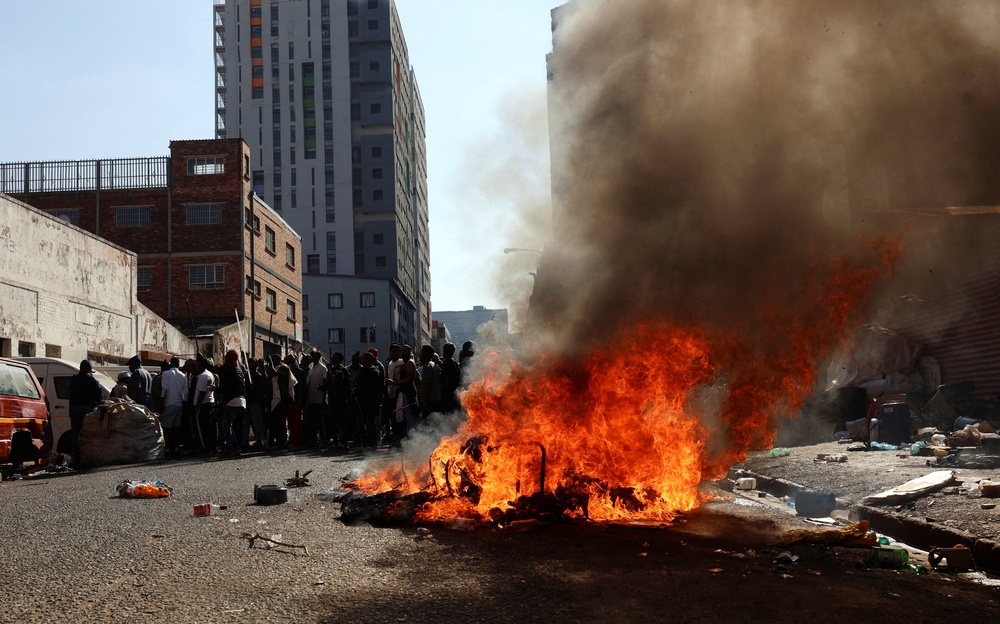
In early July 2026, South Africa witnessed one of the most coordinated and violent waves of anti-immigrant mobilization in its history. Within weeks, tens of thousands of migrants—many with legal status, refugee protections, or decades-long residency—packed their belongings and fled, abandoning homes, businesses, and communities overnight. The exodus was not spontaneous but the result of a deliberate campaign: a network of vigilante groups, including the controversial Operation Dudula, issued a 30-day ultimatum to all undocumented foreigners, threatening unspecified consequences if they did not leave by June 30. When the deadline passed, the movement escalated into 120 nationwide protests, followed by weekly demonstrations vowing to continue until all “illegal” migrants had departed.
The immediate fallout was catastrophic. Schools in Johannesburg’s townships reported massive dropouts as parents withdrew children from classes, fearing violence. Small businesses owned by migrants—restaurants, laundromats, and grocery stores—shuttered permanently as owners fled or were forced out. Employers, including factories and construction firms, instructed foreign workers to stay away, accelerating layoffs. Meanwhile, police and municipal officials in some areas reportedly collaborated with vigilantes, conducting door-to-door raids and handing over suspected undocumented migrants to authorities. By mid-July, estimates suggested between 13,000 and 25,000 people had been displaced, while over 900 arrests were linked to the protests, many under charges of public violence or immigration violations.
South Africa’s government, including President Cyril Ramaphosa, condemned the ultimatums as unlawful and unconstitutional, reaffirming that immigration enforcement remains the exclusive purview of the state. Yet the timing of Ramaphosa’s announcement—a “Comprehensive Approach for Migration Management”—raised eyebrows. The plan included:
– Enhanced border security with a newly empowered Department of Home Affairs.
– Fast-track deportation courts to expedite removals.
– 10,000 additional labor inspectors to crack down on unauthorized employment.
– Expanded surveillance of informal settlements, where many migrants reside.
Critics argued that the government’s response legitimized the vigilantes’ demands, creating a dangerous precedent where citizen-led enforcement blurred into state policy. Embassies from Zimbabwe, Mozambique, Malawi, and the Democratic Republic of Congo scrambled to evacuate nationals, even those with valid visas or refugee permits, as fear of mob violence spread. The United Nations and human rights organizations condemned the crackdowns, warning that legal protections for refugees and asylum seekers were being systematically ignored.
Beyond Spontaneous Riots: The Calculated Nature of a New Xenophobia
While South Africa has a long history of anti-immigrant violence—notably the 2008, 2015, and 2019 attacks that left dozens dead and thousands displaced—this latest wave differed in scale, organization, and intent. Previous outbreaks were often spontaneous, fueled by rumors, economic desperation, and police inaction. This time, however, the mobilization was highly coordinated:
– Social media campaigns (primarily on WhatsApp and Telegram) disseminated fake addresses, alleged criminal profiles, and “hit lists” of foreign-owned businesses.
– Local councils in Gauteng and KwaZulu-Natal issued public statements endorsing the ultimatums, despite legal warnings.
– Activists conducted door-to-door searches, identifying and reporting suspected undocumented migrants to police—effectively deputizing civilians as immigration officers.
This shift from spontaneous outrage to structured enforcement marked a qualitative escalation. No longer was xenophobia an emotional reaction to economic hardship; it had become a deliberate strategy to redraw the boundaries of belonging in a country that had once been a global symbol of inclusive citizenship.
The Paradox of a Post-Apartheid Democracy
South Africa’s democratic transition in 1994 remains one of the 20th century’s most extraordinary political achievements. Under Nelson Mandela and the African National Congress (ANC), the country abandoned apartheid’s institutionalized racism in favor of a non-racial, democratic constitution—one of the most progressive in the world, guaranteeing equality, free speech, and an independent judiciary. The 1996 Constitution explicitly prohibited discrimination based on nationality, ethnicity, or immigration status, reinforcing South Africa’s international reputation as a beacon of reconciliation.
Yet, three decades later, the gap between constitutional ideals and lived reality has widened into a chasm of disillusionment. The post-apartheid settlement succeeded in redistributing political rights—South Africa holds free and competitive elections, maintains a vibrant civil society, and ranks 27th globally in press freedom (2025 World Press Freedom Index). However, economic transformation has lagged disastrously.
The Failure of Economic Liberation
Critics like South African-Australian writer Sisonke Msimang argue that the ANC’s political victory in 1994 was not matched by an economic one. Key failures include:
– Stagnant GDP per capita: A Harvard University Growth Lab study (2025) found that real income growth has been flat or negative for over 15 years, with per capita GDP declining since 2015.
– Chronic unemployment: By the first quarter of 2025, 4.8 million young South Africans (aged 15-34) were unemployed, with 58.7% having never held a job—a generation raised under democracy but economically excluded.
– Service delivery collapse: Johannesburg, once a symbol of African progress, now faces recurring blackouts, water shortages, and crumbling infrastructure. Municipalities like Ekurhuleni and Tshwane have defaulted on debt, leaving residents without basic services.
– Corruption and state capture: The Zondo Commission (2018-2022) exposed systemic corruption, including state-owned enterprise (SOE) looting and police and judicial capture by criminal syndicates. Yet, few high-profile convictions have followed, fueling public cynicism.
The ANC’s liberation narrative, once an unassailable electoral asset, has eroded. A 2025 Ipsos poll revealed that 80% of South Africans believe the country is moving in the wrong direction—an extraordinarily high level of pessimism for a democracy less than three decades old. The younger generation, who have no memory of apartheid, now view the ANC’s governance failures as separate from its anti-apartheid legacy. In the 2024 general election, the ANC lost its parliamentary majority for the first time since 1994, forcing it into a coalition government. More telling: over 11 million registered voters abstained—a record reflecting broad political disengagement.
Migrants as Scapegoats: The Politics of Convenient Blame
South Africa’s economic and governance crises are not the result of immigration alone. The country’s structural problems—unemployment, corruption, weak investment, and failing infrastructure—stem from decades of policy failures, not the arrival of neighboring nationals. Yet migrants provide an easy target for several reasons:
1. Visibility in Informal Economies: Many migrants work in street vending, domestic labor, and construction, sectors where competition for jobs is fierce. When local unemployment hovers at 60%, even legally employed migrants become blamed for “taking opportunities.”
2. Perceived Burden on Services: In overcrowded townships and informal settlements, migrants are often stigmatized as “draining resources”—despite evidence that South Africans themselves use informal services like township clinics and public transport.
3. Criminalization Narratives: While crime is a complex issue, xenophobic rhetoric often exaggerates migrant involvement, ignoring local organized crime networks that dominate drug trafficking and armed robbery.
4. Lack of Political Representation: Migrants cannot vote in South African elections, making them politically powerless—unlike indigenous South Africans, who can demand accountability from their representatives.
The June-July 2026 mobilization exposed how quickly economic frustration can spiral into violence. What began as fear-driven departures became a state of emergency for thousands. Zimbabwean and Mozambican communities, once sanctuaries for ANC exiles during apartheid, now face intimidation in their own former liberators’ homeland. The irony is bitter: countries that hosted South African freedom fighters in the 1980s now see their own citizens fleeing persecution in a country that once symbolized hope.
The Moral Hypocrisy of a Region Reversed
South Africa’s post-apartheid identity was built on solidarity with African struggles. During the 1980s and 1990s, nations like Zambia, Mozambique, Zimbabwe, and Angola provided sanctuary to ANC activists, trained liberation fighters, and diplomatically isolated apartheid South Africa. These countries endured economic costs, diplomatic isolation, and internal security risks to support the anti-apartheid movement.
Yet three decades later, the dynamic has reversed:
– Zimbabweans, fleeing economic collapse and political repression, now face violence in Johannesburg.
– Mozambicans, displaced by insurgency and drought, are accused of “stealing jobs.”
– Malawians and Congolese seek refuge in South Africa, only to be targeted in mob attacks.
This regional betrayal would have horrified figures like Steve Biko, whose Black Consciousness movement emphasized Pan-African solidarity. Biko’s philosophy rejected tribalism and xenophobia, arguing that African liberation was indivisible. Today, South Africa’s new politics of belonging—where fellow Africans are expelled—represents a cruel inversion of its own revolutionary ideals.
The Unfinished Business of Post-Apartheid Democracy
The tragedy of 2026 is not merely that migrants were driven out but that South Africa, a nation that once led the world in rejecting exclusion, has repeated the same logic in a new form. The ANC’s constitutional settlement dismantled institutionalized racism, but it failed to address the structural inequalities that economic exclusion creates.
Breyten Breytenbach, the Afrikaner poet and anti-apartheid dissident, warned against political complacency. In his prison memoirs, he argued that freedom was never permanent—it required constant vigilance against new forms of exclusion. South Africa’s current crisis demonstrates that when governance weakens, when economic despair deepens, and when political legitimacy erodes, the temptation to scapegoat the “Other” becomes irresistible.
The real challenge for South Africa is not how to enforce immigration laws but how to restore faith in its democratic institutions. Until unemployment is addressed, corruption is prosecuted, and basic services are restored, the anger of the young and the desperate will continue to seek outlets in violence—this time, not against a racial regime, but against the most vulnerable among them.
South Africa’s greatest moral authority once came from its struggle against apartheid. Now, the world watches to see whether it can live up to that legacy—or if the politics of exclusion will outlast the system that defeated it.
