
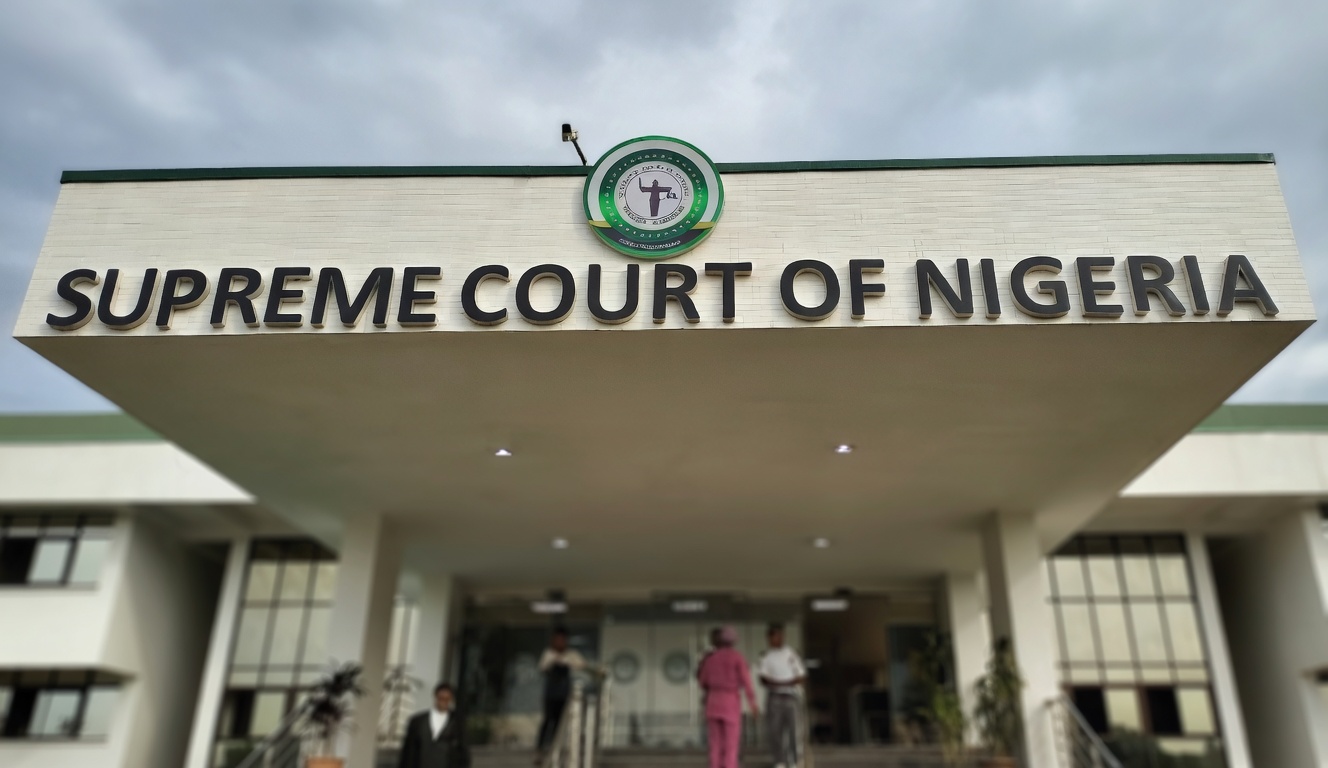
The Nigerian Supreme Court has just rewritten the rules of engagement for the country’s fractious federalism debate, delivering a verdict that could echo through courtrooms from Lagos to Abuja—and beyond. In a unanimous decision that stunned legal observers, the apex court overturned a Court of Appeal ruling that had sought to strip a Lagos State High Court of its jurisdiction in a high-stakes dispute involving the Nigerian Maritime Administration and Safety Agency (NIMASA).
The case, which pits Nigeria’s federal maritime regulator against state-level legal authorities, has become a lightning rod for broader questions about where power truly resides in Africa’s most populous nation. With a bench of seven justices delivering a rare unanimous opinion, the Supreme Court’s ruling sends a clear message: when federal institutions clash with state courts, the federal government’s authority will not be easily sidelined.

The Legal Chessboard: How a Maritime Dispute Became a Federalism Showdown
At the heart of the controversy is a lawsuit that began in Lagos, where a private entity filed a claim against NIMASA, alleging mismanagement of maritime resources. The Lagos State High Court initially accepted the case, but the Court of Appeal intervened, arguing that maritime disputes fall under the exclusive purview of the Federal High Court. This jurisdictional tug-of-war set the stage for a legal battle that would test the boundaries of Nigeria’s federal structure.
Justice Moore Adumein, who led the Supreme Court’s panel, dismantled the Court of Appeal’s reasoning with surgical precision. The apex court found that the appellate judges had overreached, misapplying legal precedents to justify their intervention. “The Court of Appeal erred in its interpretation of the Constitution,” Justice Adumein declared, adding that the ruling “undermines the autonomy of state courts in matters not expressly reserved for federal jurisdiction.”
The decision is more than a victory for NIMASA; it is a statement about the delicate balance between federal and state powers in Nigeria. For legal scholars, it raises critical questions: Does this ruling expand the reach of federal agencies, or does it merely affirm the principle that state courts retain authority unless explicitly overridden? The answer, analysts suggest, may depend on how future courts interpret the Supreme Court’s logic.
Africa’s Largest Economy Faces a Legal Identity Crisis
Nigeria’s federalism has long been a source of tension, with state governments frequently clashing with Abuja over everything from resource control to policing. The NIMASA case, however, is different. It is not just about oil or gas—it is about the very institutions that govern Nigeria’s economic lifeblood: its ports, shipping lanes, and maritime trade.
The Supreme Court’s ruling comes at a time when Nigeria is grappling with economic instability, a weakening naira, and growing skepticism about the federal government’s ability to manage national resources effectively. In this context, the decision takes on added significance. By affirming NIMASA’s authority, the court has signaled that federal institutions will not be sidelined in disputes that touch on national economic interests.
Yet, the ruling also carries risks. Critics argue that it could embolden federal agencies to overstep their bounds, further centralizing power in Abuja at the expense of state governments. “This is a dangerous precedent,” warned a Lagos-based constitutional lawyer who requested anonymity. “If federal agencies can dictate which courts hear cases based on their own interpretations of jurisdiction, what’s next? Will state governments lose control over land disputes, contract enforcement, or even criminal cases?”
For now, NIMASA has emerged as the clear winner. The agency, which oversees Nigeria’s maritime sector—a critical component of the country’s economy—can now proceed with its case without the threat of jurisdictional interference. But the broader implications of the ruling are still unfolding, and legal experts warn that the fallout could reshape Nigeria’s federal landscape for years to come.
Beyond Nigeria: What This Ruling Means for Africa
The Supreme Court’s decision is not just a Nigerian affair. Across Africa, where federalism remains a contentious issue in countries like Ethiopia, South Africa, and Kenya, the ruling is being watched closely. Many African nations grapple with similar tensions between central governments and regional authorities, often leading to legal and political gridlock.
In Nigeria, the case has already sparked comparisons to landmark federalism rulings in the United States, where the Supreme Court has repeatedly weighed in on disputes between states and the federal government. “This is Nigeria’s Marbury v. Madison moment,” said a political science professor at the University of Lagos. “Just as the U.S. Supreme Court established judicial review in 1803, Nigeria’s apex court has just clarified the limits of its own authority—and, by extension, the limits of federal power.”
The professor’s reference to the 1803 U.S. case is telling. In that landmark decision, the U.S. Supreme Court asserted its power to strike down laws it deemed unconstitutional, a move that cemented its role as the ultimate arbiter of American law. Nigeria’s Supreme Court, in its recent ruling, may have taken a similar step toward defining its own role as the final word on constitutional interpretation.
For other African nations, the implications are clear: if Nigeria, with its complex federal structure, can navigate these legal waters, others can too. But the path forward is fraught with challenges. In countries where federalism is still evolving, such as Somalia or South Sudan, the question of who holds ultimate authority remains a flashpoint for conflict.
The Human Cost: How Legal Battles Shape Everyday Lives
Behind the legal jargon and constitutional debates, there are real people whose lives hang in the balance. The NIMASA case, for instance, involves a private entity that alleges financial losses due to mismanagement by the maritime agency. While the legal battle rages on, the company’s employees, investors, and partners are left in limbo, unable to resolve their grievances or secure compensation.
“This is not just about jurisdiction,” said a Lagos-based business owner whose company has been affected by the dispute. “It’s about justice. If the courts can’t even agree on who should hear our case, how are we supposed to get a fair hearing?”
The frustration is palpable. For small businesses and entrepreneurs, legal uncertainty is a major deterrent to investment. Nigeria’s economy, already struggling with inflation and unemployment, cannot afford prolonged legal battles that stifle growth. The Supreme Court’s ruling, while a victory for NIMASA, does little to address the immediate concerns of those caught in the crossfire of Nigeria’s legal wars.
Legal experts suggest that the only way forward is for Nigeria’s federal and state governments to engage in meaningful dialogue about jurisdiction and resource control. “The courts can only do so much,” said a senior advocate of Nigeria. “At some point, the political branches must step in and clarify the rules of engagement. Otherwise, we’ll keep seeing these kinds of battles.”
What’s Next? The Road Ahead for Nigeria’s Federalism
So, where does Nigeria go from here? The Supreme Court’s ruling may have settled the immediate dispute, but it has also opened a Pandora’s box of questions about federalism, jurisdiction, and the balance of power in Africa’s largest economy.
One thing is certain: the case will not be the last of its kind. As Nigeria’s economy grows and its legal system evolves, new disputes will arise, testing the limits of the Supreme Court’s recent decision. Will federal agencies become more assertive? Will state governments push back harder? Or will Nigeria find a way to strike a balance that satisfies both sides?
For now, NIMASA can breathe a sigh of relief. The agency’s authority has been affirmed, and its legal team can turn its attention to the substantive issues at hand. But the broader implications of the ruling are a reminder that Nigeria’s federalism is far from settled. The Supreme Court may have delivered its verdict, but the debate is far from over.
Key Takeaways: What You Need to Know About the NIMASA Ruling
- Supreme Court’s Unanimous Verdict: The apex court overturned the Court of Appeal’s decision, affirming that state courts retain jurisdiction in cases not expressly reserved for federal courts.
- NIMASA’s Victory: The maritime agency can now proceed with its case against the private entity without jurisdictional interference.
- Broader Implications: The ruling could reshape Nigeria’s federalism debate, with potential ripple effects across Africa.
- Legal Uncertainty Persists: While the Supreme Court has spoken, the broader questions about federalism remain unresolved, leaving room for future disputes.
- Real-World Impact: The case highlights the human cost of legal battles, with businesses and individuals caught in the crossfire of Nigeria’s legal wars.
As Nigeria’s legal and political landscape continues to evolve, one thing is clear: the Supreme Court’s ruling in the NIMASA case is not just a victory for the maritime agency—it is a landmark moment in the country’s ongoing struggle to define its federal identity. For Africa’s largest economy, the stakes could not be higher.
Copyright notice: Images and source material are credited to their respective owners/source (original source where available). If you are the copyright owner and want an image or content removed, please contact us at topix.news/contact-us; we will review and remove it promptly.

Topix News Desk is a digital editorial team focused on delivering clear, timely, and useful news coverage for readers worldwide. Our reporting highlights African news with global context, including politics, business, economy, technology, health, sports, entertainment, travel, and culture. We aim to publish accessible, well-structured, and informative articles that help readers understand the stories shaping Africa and the world.