

South Africa Faces Diplomatic and Health Crisis as U.S. PEPFAR Funding Cuts Threaten HIV/AIDS Progress

South African Health Minister Joe Phaahla addresses concerns over global health funding at a recent press conference.
In a move that could destabilize one of the world’s most critical HIV/AIDS treatment programs, South Africa is set to raise urgent concerns about the drastic reduction in global health funding at the UN High-Level Meeting on HIV/AIDS, beginning today in New York. The country’s fragile coalition government is now navigating a fiscal and diplomatic crisis following the U.S. decision to permanently slash its $8 billion President’s Emergency Plan for AIDS Relief (PEPFAR), a program that has been the backbone of HIV treatment in South Africa for nearly two decades.
The sudden and severe funding cut—now reduced by 75% to $115 million—has sent shockwaves through South Africa’s healthcare system, where 8 million people live with HIV, the highest number globally. Experts warn that the withdrawal could reverse decades of progress, leading to massive treatment interruptions, job losses, and a surge in drug-resistant strains of the virus.
A Funding Gap with Devastating Consequences
PEPFAR, launched under President George W. Bush in 2003, has been a cornerstone of South Africa’s HIV response, funding not just antiretroviral therapies but also community health workers, data tracking systems, and tracing teams that ensure patients remain in care. However, the U.S. government’s decision to phase out PEPFAR—first reported by Semafor—has left a critical funding void that South Africa’s already strained budget cannot easily fill.
Foster Mohale, spokesperson for South Africa’s Department of Health, acknowledged the inevitability of the U.S. withdrawal after an initial funding freeze last year but stressed that the government has been preparing for a self-reliance strategy to mitigate the impact.
“The department has long been working on a self-reliance plan to minimize the impact of PEPFAR withdrawal,” Mohale stated. “However, the scale of the reduction poses significant challenges, particularly in maintaining the operational infrastructure that keeps patients engaged in treatment.”

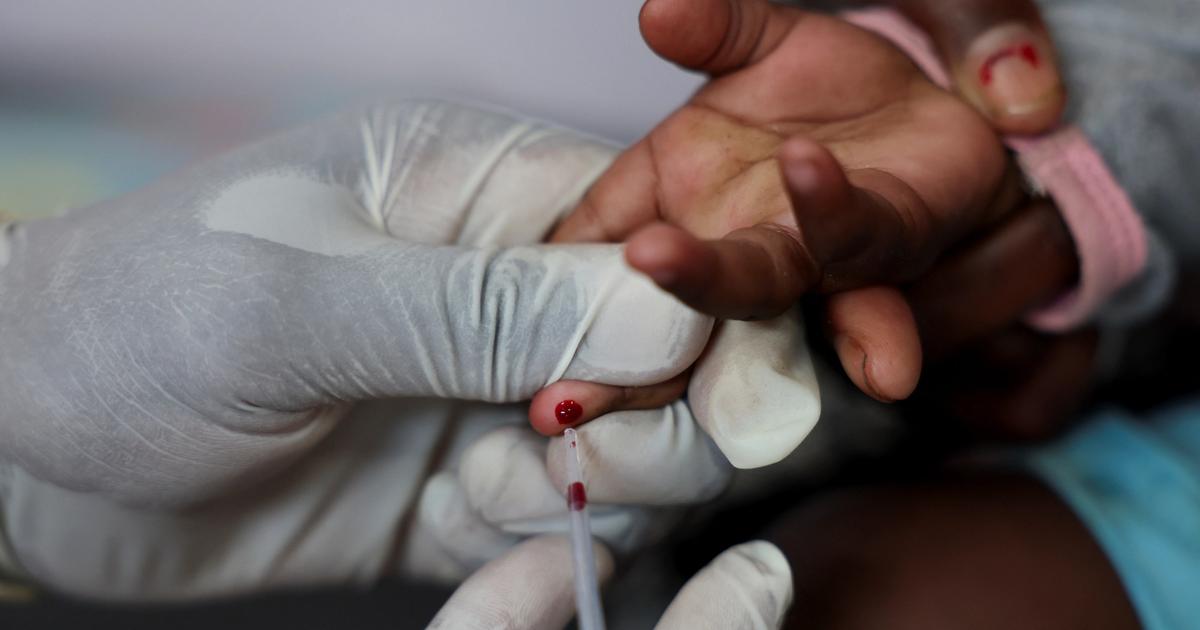
A community health worker in KwaZulu-Natal conducts a routine HIV check-up, a role now at risk due to PEPFAR funding cuts.
The first phase of the U.S. drawdown has already resulted in over 8,000 job losses, disrupting services in 40% of public clinics in KwaZulu-Natal, one of the hardest-hit provinces. The Aurum Institute, a leading nonprofit partner in South Africa’s HIV response, has slashed its workforce in Limpopo from 400 to just 17 employees in the past 18 months due to collapsing U.S. grants. Abram Mashabela, an operational site manager for the Aurum Institute, expressed grave concern over the implications:
“My biggest worry is that people will miss treatments—this will lead to drug-resistant HIV strains. All the hard work we’ve done will go down the drain.”
The collapse of community tracing networks—funded by PEPFAR—has further complicated the rollout of Lenacapavir, a new twice-yearly preventive injection that requires meticulous distribution coordination. Without the administrative and outreach personnel previously provided by PEPFAR, clinics risk failing to administer the breakthrough therapy on schedule, potentially leaving thousands vulnerable to reinfection.
Economic and Diplomatic Fallout: A Strain on U.S.-South Africa Relations
The U.S. decision to tie HIV funding to domestic policy demands—including controversial claims of “genocide” against Afrikaners and demands to dismantle Black Economic Empowerment (BEE) policies—has deepened diplomatic tensions between Washington and Pretoria.
A senior South African government official, speaking anonymously, described the U.S. demands as “invented issues” that undermine post-apartheid reconciliation efforts. The official highlighted that South Africans who fought against apartheid had been promised economic justice, and reversing BEE policies would be seen as a betrayal of those commitments.
“It’s baffling that the U.S. would link critical health funding to political demands that directly contradict the constitutional settlement we fought for,” the official stated.
Despite recent economic cooperation, including a preliminary gas supply agreement between ExxonMobil and South Africa’s planned Zululand LNG terminal, the politicization of PEPFAR funding has undermined trust in bilateral relations. Kamil Ali, spokesperson for South Africa’s Trade, Industry, and Competition Department, noted that trade negotiations remain constructive, but the health funding dispute threatens broader cooperation.

South African President Cyril Ramaphosa addresses concerns over economic and health policy at a recent press briefing.
The Human Cost: Modeling a Crisis of Unprecedented Proportions
Researchers warn that an unmanaged U.S. withdrawal could lead to catastrophic health outcomes, including:
– Up to 296,000 additional HIV infections by 2028
– As many as 65,000 extra deaths from AIDS-related complications
– A $2 billion increase in domestic healthcare spending over the next decade
The interruption of treatment will not only increase mortality rates but also strain public healthcare systems, which are already overwhelmed by tuberculosis, malaria, and non-communicable diseases.

A public health clinic in Johannesburg, where PEPFAR funding cuts have already led to service disruptions.
Dr. Thandiwe Mkhize, a leading HIV epidemiologist at the University of KwaZulu-Natal, emphasized that PEPFAR was never just about pills—it was about systems:
“PEPFAR funded the entire ecosystem: data collectors, tracing teams, and community health workers who ensure patients stay on treatment. Without them, we lose the entire infrastructure that keeps people healthy.”
The introduction of Lenacapavir—while a medical breakthrough—relies on the same outreach networks that PEPFAR has sustained for years. Without them, missed doses, lost patients, and treatment failures will become far more likely.
A Transition Plan or a Political Gambit?
While some argue that South Africa should embrace greater self-reliance in global health funding, critics warn that an abrupt withdrawal will be disastrous. The U.S. approach—linking aid to political demands—risks undermining global health security, as infectious diseases do not respect borders.
Dr. Seth Foldy, a former PEPFAR director under President Obama, cautioned that politicizing health aid sets a dangerous precedent:
“When a donor turns a health program into leverage, clinics and community workers bear the cost. This is not just about money—it’s about lives. The U.S. has a strategic interest in preventing HIV outbreaks, not just in South Africa but globally.”

Global health leaders discuss funding gaps at the UN High-Level Meeting on HIV/AIDS in New York.
South Africa’s two-day UN meeting—attended by ministries, development banks, and major donors—will be a critical platform to rally additional funding from UNAIDS, the Global Fund, and the World Bank. However, experts warn that no single donor can replace the scale of PEPFAR funding, and reallocating existing budgets will require painful trade-offs.
Domestic Divisions: Right-Wing Groups Back U.S. Stance
While the South African government condemns the politicization of PEPFAR, right-leaning organizations—such as Lex Libertas and Solidarity—have publicly supported the U.S. withdrawal, framing it as a response to what they describe as “ideological defiance” from the government.
Ernst Roets, executive director of Lex Libertas, argued that the U.S. decision was justified by “reasonable concerns” over South Africa’s policies:
“The government was given reasonable concerns but chose ideological defiance instead. The American response is therefore reasonable, even if its consequences may be tragic.”

Protesters in Cape Town rally against perceived U.S. interference in South Africa’s economic policies.
The stance has been amplified by figures like Elon Musk, who has publicly criticized South Africa’s BEE laws, calling them “racist” and endorsing the U.S. demands as “reasonable.”
The Way Forward: Balancing Sovereignty and Survival
As South Africa prepares to advocate for additional funding at the UN, the real challenge lies in transitioning from emergency aid to sustainable financing—without abruptly dismantling the systems that have kept millions alive.
A phased withdrawal, coordinated with new funding mechanisms and strengthened local health infrastructure, could minimize disruption. However, politicizing aid risks deepening global health inequalities and undermining decades of progress.

UN Secretary-General António Guterres addresses global health funding challenges at a recent summit.
The UN High-Level Meeting on HIV/AIDS will be a test of international solidarity—but if political demands override medical necessity, the human cost could be catastrophic.
For now, South Africa stands at a crossroads: Will it prioritize sovereignty over survival, or will it fight for the funding needed to save lives?

Health workers in Johannesburg prepare for a mass HIV testing campaign, now at risk due to funding cuts.

A community health worker in Limpopo conducts a routine check-up, a role now threatened by PEPFAR’s withdrawal.

South African President Cyril Ramaphosa addresses the UN General Assembly on global health funding priorities.

Global health leaders discuss strategies to fill the funding gap left by PEPFAR’s reduction.

An antiretroviral drug distribution center in Durban, a facility that relies heavily on PEPFAR funding.

Protesters in Johannesburg demand increased government investment in HIV/AIDS treatment.

A patient receives an HIV test at a rural clinic, where service disruptions are already being felt.

Lenacapavir, a new preventive injection, requires robust distribution networks—now at risk due to PEPFAR cuts.
