

The Kaiser Family Foundation (KFF), widely recognized today as a preeminent independent source for health policy research, polling, and journalism, has a legacy that extends far beyond its current domestic focus. Among its most profound and formative contributions lies its decades-long partnership with South Africa, a commitment that began during the tumultuous era of apartheid and persisted through the nation’s democratic transition. As KFF prepares for a leadership transition under the stewardship of Larry Levitt and Molly Brodie, CEO Drew Altman reflects on the organization’s lesser-known but deeply impactful work abroad—starting with South Africa—a journey marked by resilience, innovation, and an unyielding belief in the power of collective action.
A Bold Bet on South Africa During Apartheid
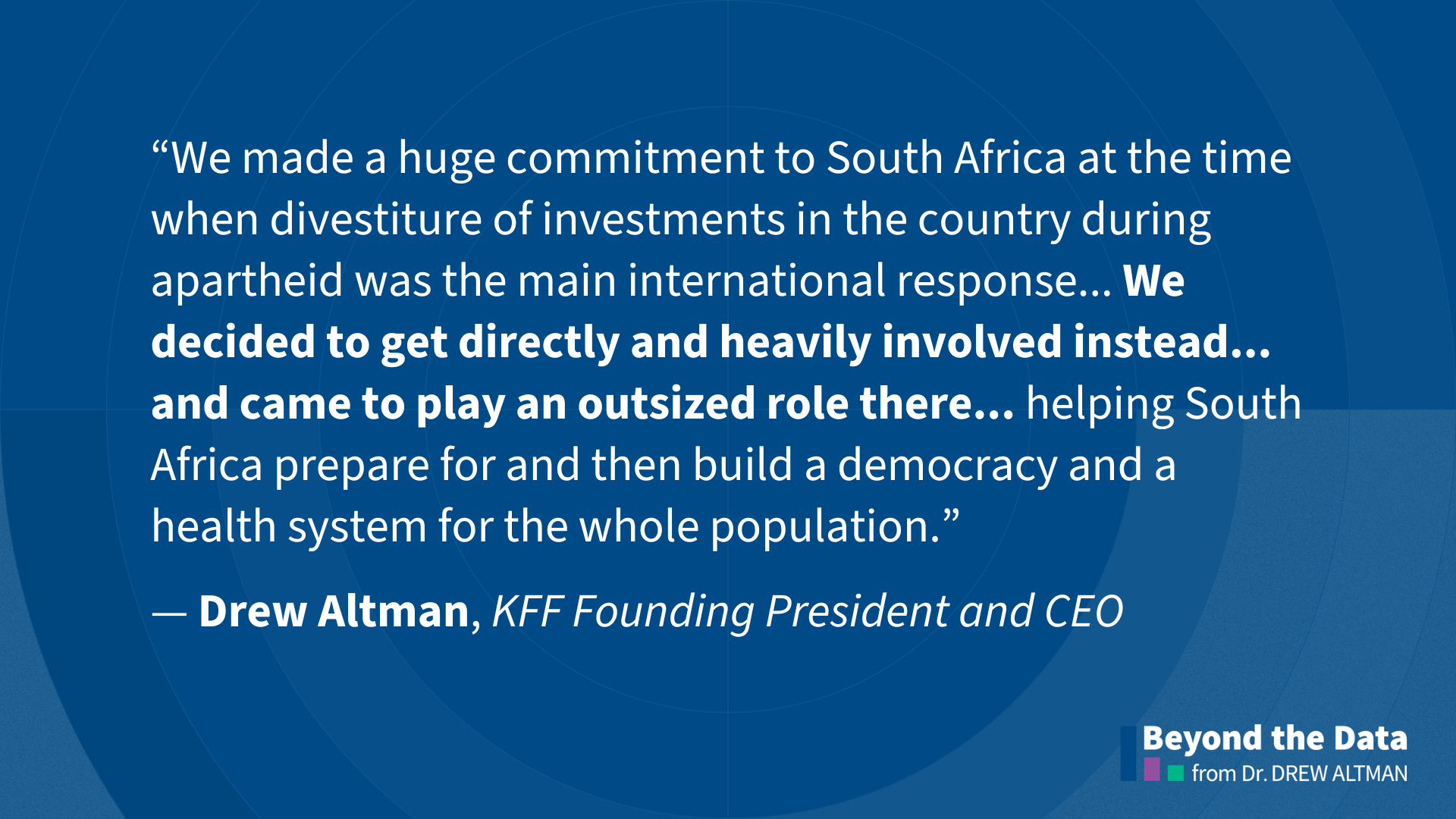
When international responses to apartheid were dominated by economic divestment, KFF chose a different path. Instead of withdrawing, the foundation doubled down, investing heavily in South Africa’s future by helping to build a democracy and a universal health system from the ground up. This was no small endeavor. The foundation’s early interventions were designed to train leaders, strengthen institutions, and foster a free press—critical pillars for a nation emerging from decades of oppression.
One of the most striking aspects of this commitment was its scale and immediacy. While other organizations hesitated, KFF established the Program for Health and Development in South Africa (PHDSA), a comprehensive initiative that transcended traditional health care to address systemic inequities, institutional capacity, and social justice. The program’s reach was vast, spanning rural primary care systems in the former “independent homelands” where Black South Africans were forcibly relocated, the creation of advocacy and research organizations (such as the Health Systems Trust), and even diplomatic mediation between warring factions.
The Man Behind the Mission: Dr. Michael Sinclair
At the helm of KFF’s South Africa operations stood Dr. Michael Sinclair, a South African activist and former MI6 operative whose strategic acumen and moral compass were unparalleled. Sinclair’s influence was quiet but profound—his ability to orchestrate high-stakes negotiations behind the scenes ensured that KFF’s interventions were not just funded but credible and sustainable.
Sinclair’s approach was methodical and politically astute. He would often stand in the back of rooms, allowing others to speak while he crafted the narrative, managed alliances, and ensured alignment between KFF, the African National Congress (ANC), and even rival factions like the Inkhata Freedom Party. His relationships with leaders, including Nelson Mandela, were built on trust and mutual respect, earning KFF a unique position in South Africa’s political landscape.
From Apartheid to Democracy: Building Institutions for a New Nation
The foundation’s work in the pre-democracy era was multifaceted and high-risk. KFF played a role in:
– Strengthening primary care in rural areas, where health infrastructure was nearly nonexistent.
– Facilitating dialogue between political factions, including tense meetings with figures like Frederik de Klerk and Mangosuthu Buthelezi, the latter of whom famously brought a food taster to negotiations—a testament to the era’s volatility.
– Supporting the emergence of independent media, including the establishment of Health-E News, a nonprofit health journalism outlet that still operates today.
One of the most memorable and telling moments of this period occurred during a meeting with a South African general who openly expressed his opposition to KFF’s work. The general, who had developed and later dismantled South Africa’s nuclear weapons program, made it clear that he saw KFF’s interventions as a threat to national stability. Former Congresswoman Barbara Jordan, a member of KFF’s board, responded with her signature eloquence: “Well, sir, we may just need to take you up on that offer.” Her departure from the room ended the discussion abruptly, leaving an indelible mark on KFF’s legacy in South Africa.
The HIV Crisis and the Birth of loveLife
By the late 1990s, South Africa faced an unprecedented HIV epidemic, with teens and young adults bearing the brunt of new infections. The post-Mandela government, led by Thabo Mbeki, was slow to act, dismissing global calls for aggressive intervention. Mbeki’s Minister of Health, Mantu Tshabala-Msmang, further complicated matters by promoting pseudoscientific treatments like beetroot and garlic, earning international ridicule.
KFF saw an urgent opportunity—and a moral imperative. In 1999, the foundation launched loveLife, the largest youth-focused HIV prevention program in the world. Unlike traditional HIV campaigns, loveLife was radically inclusive, designed to empower young people rather than merely inform them. The program’s strategy was three-pronged:
1. A national media campaign leveraging South Africa’s major broadcasters, including the South African Broadcasting Corporation (SABC).
2. Adolescent-friendly health clinics integrated into government facilities.
3. Community-based outreach networks led by young people themselves.
loveLife was not just about condoms and awareness—it addressed the root causes of the epidemic, including gender inequality, economic despair, and the exploitation of young women by older men. The program’s youth-led approach was both innovative and controversial, as traditional HIV organizations criticized it for being “too bold” and “not by the book.”
Legacy and Impact: Beyond HIV Prevention
While loveLife’s immediate success was undeniable—distributing millions of condoms and reaching millions of young people—its long-term impact may have been even greater. The program demonstrated how a nation could mobilize when government failed, proving that community-driven solutions could complement (or even outpace) state-led efforts.
Nelson Mandela, in a private conversation with KFF leaders, acknowledged his own struggles in addressing HIV, admitting that the issue required conversations about sexuality that he found uncomfortable. This admission underscores the complexity of the challenge—one that required more than political will; it demanded cultural and social transformation.
The Cost of Commitment and the Decision to Transition
By 2008, the global financial crisis forced KFF to reassess its international operations. The foundation had invested heavily in South Africa—loveLife alone cost over $100 million, matched by three times that amount in external funding. While the financial strain was real, the opportunity cost was even greater: fewer resources for domestic health policy work, KFF’s core mission.
Yet, as Michael Sovern, former president of Columbia University, remarked, “How could we not do everything we can?” The decision to phase out global operations was not made lightly, but it reflected a strategic realignment—a shift toward “narrower but deeper” engagement in the United States.
A Lasting Influence on Global Health
KFF’s South Africa initiatives inspired broader global health movements. The loveLife model influenced the Global Media AIDS Initiative, while KFF’s Social Impact Media Program in the U.S. won seven Emmys and two Peabody Awards for its cutting-edge HIV campaigns. These programs, though now discontinued, remain testaments to KFF’s ability to innovate when conventional approaches failed.
Reflections on a Legacy
Looking back, KFF’s work in South Africa was not just about funding programs—it was about building trust, fostering leadership, and proving that change is possible when institutions, communities, and individuals come together. The foundation’s unwavering commitment during apartheid, its bold response to HIV, and its long-term investment in institutional capacity left an indelible mark on South Africa’s democratic and health landscapes.
As KFF moves forward, its South Africa story serves as a reminder of what can be achieved when an organization prioritizes principle over pragmatism. It is a legacy of courage, collaboration, and an unshakable belief in the power of people—a legacy that continues to resonate in the health and democratic movements of today.
