

Uganda’s most prominent independent media conglomerate, the Nation Media Group, has found itself under a military siege following a sweeping crackdown ordered by General Muhoozi Kainerugaba, the son of President Yoweri Museveni and the country’s army chief. The government’s actions have sparked widespread condemnation from opposition figures, human rights advocates, and international observers, who warn of a dangerous escalation in press freedom violations under Museveni’s four-decade-long rule.
A Coordinated Shutdown of Independent Media
On the evening of Sunday, June 23, armed soldiers sealed off the headquarters of the Daily Monitor, Uganda’s leading independent newspaper, in the capital Kampala. The military presence extended to NTV Uganda and Spark TV, both of which were forced off air, leaving viewers with blank screens displaying the message “video unavailable.”
The Nation Media Group, which owns these outlets, has long been a pillar of investigative journalism in East Africa, known for its unflinching criticism of government corruption and human rights abuses. However, its influence has made it a target of repeated government crackdowns over the years.
In a series of posts on X (formerly Twitter), General Kainerugaba—who has been widely accused of orchestrating a repressive regime alongside his father—explicitly threatened the media’s survival. He declared:
“I DO NOT believe in a free press! The press should be guided by cadres of the revolution.”
The general further asserted that President Museveni had granted him unchecked authority to shut down any media outlet at will, stating:
“My great father has given me the power to shut down any media house I want to. NTV and Daily Monitor will NOT re-open without my permission. From now on, ALL media in Uganda will follow the rules!”
The Daily Monitor confirmed the shutdown in a post on its website, describing the operation as a pre-dawn raid conducted by armed soldiers and police. Staff members reported being barred from entering or exiting the premises, while NTV’s broadcast was permanently interrupted without explanation.
A Pattern of State Repression Against Critical Journalism
This latest crackdown is far from isolated. The Nation Media Group has faced multiple government assaults in the past:
- In 2013, the Daily Monitor was raided by police after publishing a leaked letter allegedly implicating senior officials in a succession plot known as the “Muhoozi Project.” The letter suggested that General Kainerugaba was being groomed to succeed his father, a claim the government vehemently denied.
- NTV Uganda was forced off air in 2007 following accusations from the government that its coverage was “negative” and “biased.” The station was banned from broadcasting for nearly a decade before being allowed back under heavy restrictions.
- President Museveni has publicly vilified the Daily Monitor in the past, once calling it an “enemy and evil newspaper” for its critical reporting on government misconduct.
These incidents underscore a long-standing pattern in Uganda, where dissenting voices—particularly those challenging the Museveni dynasty—are systematically silenced.
The Role of General Muhoozi Kainerugaba in Uganda’s Authoritarian Turn
General Kainerugaba, a former military officer and son of the president, has emerged as a key enforcer of Uganda’s increasingly authoritarian policies. His public threats against opposition figures—including his infamous 2021 tweet where he promised to remove the testicles of Bobi Wine, Uganda’s jailed opposition leader—have fueled fears of a violent crackdown on political rivals.
During the highly contested January 2024 elections, which Museveni won in a disputed seventh term, Kainerugaba’s military and social media campaigns were used to intimidate voters and suppress opposition. Opposition rallies were violently dispersed, with security forces opening fire on protesters. The United Nations later condemned the election as “marked by widespread repression and intimidation” against the political opposition.
Despite these allegations, government supporters argue that Museveni’s rule has brought stability and economic growth to Uganda. However, critics counter that the suppression of free speech, arbitrary arrests, and military repression have eroded democratic institutions, leaving the country in a state of controlled authoritarianism.
International and Domestic Reactions to the Media Crackdown
The shutdown of Uganda’s independent media has sparked outrage from both domestic and international observers:
-
Bobi Wine, the defeated opposition presidential candidate, now in exile, condemned the move as a “military takeover” in a post on X, writing:
“This is the harsh reality we now face—a country under open military rule, where fear replaces law and force replaces accountability.”
-
Uganda’s National Broadcasters Association demanded an explanation from the government, stating that the shutdown violated the country’s constitution, which guarantees freedom of expression.
-
Human rights organizations, including Amnesty International and Human Rights Watch, have urged the international community to intervene, warning that Uganda is sliding toward a full-blown dictatorship.
-
The African Union and Commonwealth of Nations have expressed concern, though their responses have been largely muted, reflecting broader diplomatic reluctance to challenge Museveni’s regime.
The Broader Context: Museveni’s Legacy and Succession Plans
At 81 years old, President Museveni—who rose to power as a rebel leader in the 1980s—has ruled Uganda with iron-fisted control for nearly 40 years. His refusal to step down has led to multiple election controversies, with international observers frequently citing irregularities.
The grooming of his son, Muhoozi Kainerugaba, as a potential successor has deepened political divisions, with many Ugandans fearing a dynastic takeover. The recent media crackdown appears to be part of a strategic effort to eliminate dissent before any formal succession process begins.
Conclusion: A Dark Chapter for Uganda’s Press Freedom
The military siege on the Nation Media Group marks a new low in Uganda’s press freedom, signaling that critical journalism is no longer tolerated under Museveni’s rule. As General Kainerugaba consolidates power, the future of independent media in Uganda hangs in the balance, with few mechanisms left to protect dissenting voices.
Unless international pressure mounts and domestic resistance persists, Uganda risks becoming a full-fledged one-party state, where freedom of speech is a relic of the past.

Armed soldiers stationed outside the Daily Monitor headquarters in Kampala, Uganda, following the government-ordered shutdown.

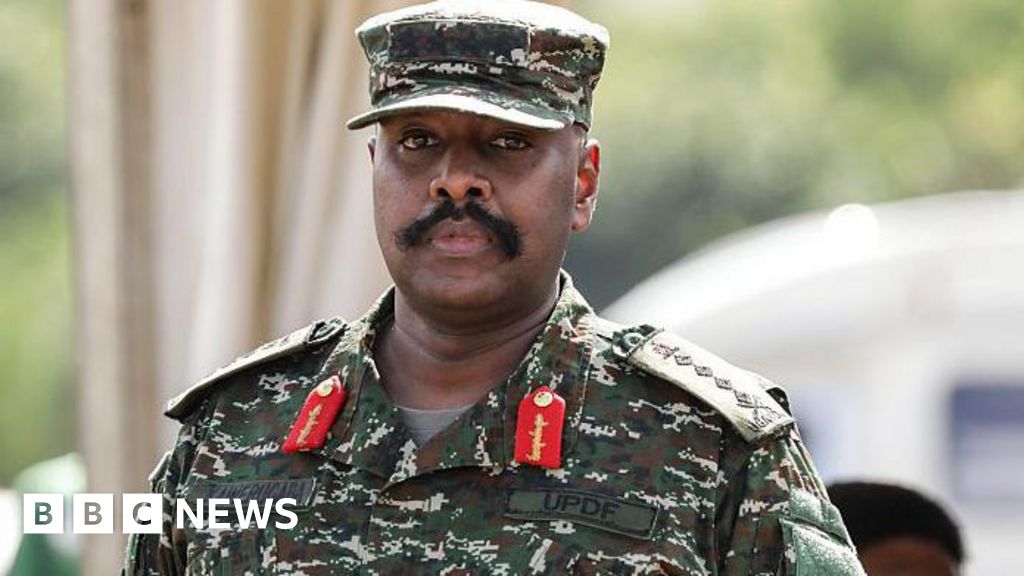
General Muhoozi Kainerugaba, Uganda’s army chief and son of President Yoweri Museveni, has been a central figure in the crackdown on independent media.
