

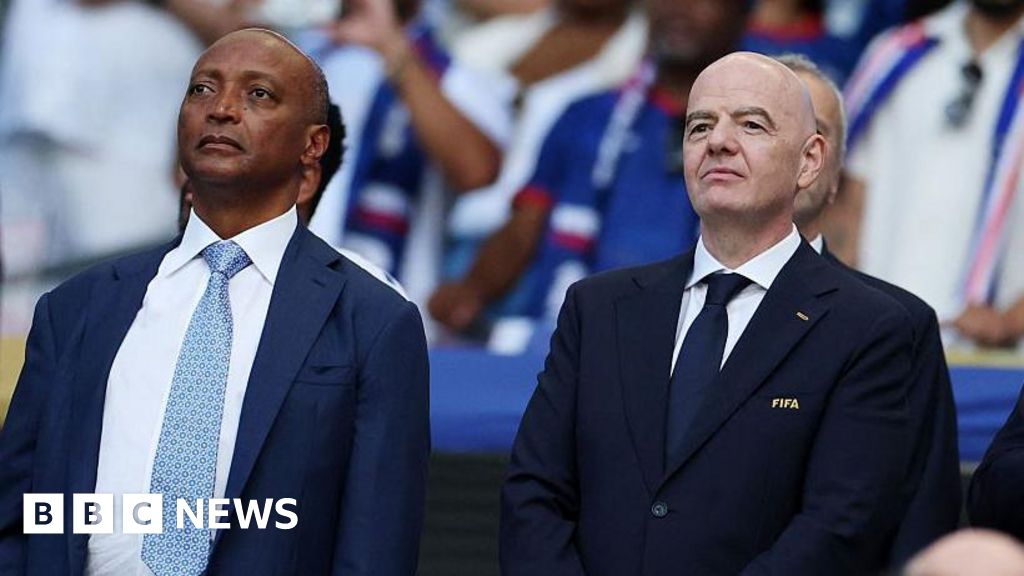
A Divided World, United Front: The African Perspective on Infantino’s Leadership
The political storm surrounding Gianni Infantino, FIFA’s president, has intensified following the abrupt withdrawal of his controversial FIFA Forward Enterprise (FFE) proposal, which aimed to sell stakes in global competitions to private investors. While global criticism has mounted—accusing the plan of over-commercializing football and undermining the autonomy of national federations—African football associations remain largely united in their support for Infantino. This loyalty is not merely passive; it is rooted in decade-long financial and developmental partnerships that have reshaped football across the continent.
For many African nations, where government funding is scarce and commercial opportunities limited, Infantino’s leadership has been a lifeline. His FIFA Forward program, launched in 2016, has become the cornerstone of football development in regions where traditional funding streams fail. Yet, as support persists, so too do growing demands for greater governance transparency, sustainable development, and greater African agency in shaping the future of the sport.

The Financial Lifeline: How FIFA Forward Has Transformed African Football
The FIFA Forward program has injected billions into African football infrastructure, youth development, and women’s football—sectors often neglected by national governments. For federations like those in Niger, Mauritania, and Comoros, which have publicly backed Infantino, the program represents not just financial aid but a strategic partnership that has accelerated progress where local resources are insufficient.
A unanimous vote of confidence from the Confederation of African Football (CAF) executive committee on Thursday solidified Infantino’s standing, following a series of public endorsements from key African nations. Five of the seven African representatives on the FIFA Council—Egypt, Morocco, Niger, Mauritania, and Comoros—have already voiced explicit support, framing their backing as a pragmatic choice rather than blind allegiance.
This alignment is not accidental. Since 2016, FIFA’s financial commitments to Africa have surged, with $1.5 billion allocated under the Forward program—a figure that dwarfs traditional funding models. For nations like Nigeria, which has received up to $8 million annually, the program has been transformative, funding critical projects such as the redevelopment of the NFF Technical Centre in Abuja—a $4.88 million initiative that includes modern training facilities and accommodation for national teams.
Yet, beyond mere infrastructure, FIFA Forward has enabled grassroots development, women’s football expansion, and coach education programs—areas where African federations struggle to secure funding domestically.

Morocco: The Model of African-FIFA Collaboration
Morocco’s rise as Africa’s football powerhouse under Infantino’s tenure is no coincidence. The North African nation has leveraged FIFA’s support to position itself as a regional and global football hub, hosting major tournaments while benefiting from direct financial and institutional backing.
- FIFA’s Africa Regional Office is based in Rabat, Morocco’s capital.
- The country has hosted the FIFA Club World Cup (2022), the FIFA Women’s U-17 World Cup (2022), and is set to co-host the 2030 FIFA World Cup alongside Spain and Portugal.
- Fouzi Lekjaa, president of the Moroccan Football Federation (FRMF), has reiterated his support for Infantino, praising his decision to scrap the FFE proposal as “wise”—a move that, in Lekjaa’s view, prioritized FIFA’s unity over risky commercial experiments.
At a key meeting in Morocco on Wednesday, senior football executives from across Africa reaffirmed their backing, signaling that despite global criticism, African federations remain committed to Infantino’s vision—at least for now.

Egypt: The Power Broker Behind the Scenes
As the headquarters of CAF, Egypt holds institutional leverage over African football, and its relationship with Infantino is deeply strategic. Hany Abo Rida, a FIFA Council member and one of Africa’s most influential football administrators, has maintained close ties with Infantino since 2016, ensuring that Egypt’s interests align with FIFA’s broader agenda.
Under Infantino’s leadership, Egypt has benefited massively from FIFA Forward, with funding directed toward:
– Infrastructure upgrades (stadiums, training centers)
– Youth development programs
– Women’s football expansion
– Coach education initiatives
Yet, Egypt’s support is not unconditional. While the Egyptian Football Association (EFA) has received increased funding, there is growing frustration that FIFA’s engagement remains transactional rather than transformative. Critics argue that African nations deserve more than just financial handouts—they need greater autonomy in governance, sustainable development models, and a stronger voice in shaping FIFA’s policies.
A senior EFA official, speaking anonymously, told Topix GlobalWire that while FIFA’s money is welcome, there is an urgent need for structural reforms—including reducing FIFA’s overreach in African football governance and ensuring that development funds are not tied to political loyalty.

The Democratic Republic of Congo: Stability Amidst Chaos
The Congolese Football Federation (Fecofa) has explicitly endorsed Infantino, framing his decision to abandon the FFE proposal as a step toward stability rather than a retreat. In a statement released earlier this month, Fecofa praised Infantino’s decade-long commitment to African football, arguing that the FFE controversy should not overshadow his broader achievements.
Véron Mosengo-Omba, the newly elected president of Fecofa (who took office in May 2026), emphasized that the federation’s support is unwavering, even beyond Infantino’s 2027 re-election bid. His election followed a period of instability—including the resignation of Constant Omari Selemani in 2021 and the appointment of a FIFA-led normalization committee in 2023—which underscored the fragility of African football governance.
Mosengo-Omba’s statement highlighted that Fecofa’s alignment with Infantino is not just political but pragmatic:
“We have greatly benefited from FIFA’s programs, particularly in development and infrastructure. The FFE proposal, while controversial, was born of good intentions. Our focus must remain on the progress we have made—and the progress yet to come.”
The Democratic Republic of Congo’s stance reflects a broader African trend: loyalty to Infantino is conditional on perceived benefits, not blind obedience.

Nigeria: Balancing Pragmatism and Aspiration
Nigeria, Africa’s most populous nation and a footballing giant, has publicly aligned with Infantino, despite global backlash. For a federation struggling with chronic funding shortages and infrastructure deficits, the FIFA Forward program has been a critical lifeline**.
Amaju Pinnick, former NFF president and deputy chairman of FIFA’s Men’s National Teams Competitions Committee, argued that Infantino’s financial model—even if flawed—offers a necessary lifeline for cash-strapped federations. “Without FIFA’s support, many of these projects would not be possible,” Pinnick stated. “The alternative is to rely solely on governments, which are often unreliable.”
Nigeria’s most high-profile FIFA Forward project is the redevelopment of the NFF Technical Centre in Abuja, a $4.88 million initiative that includes:
– Reconstruction of training pitches
– Construction of a modern accommodation complex for national teams
– Facilities for youth and women’s football
Yet, Nigeria’s support is not without caveats. The nation’s failure to qualify for the last two World Cups has intensified calls for FIFA to do more than just fund projects—there is a demand for strategic development that leads to on-field success.

South Africa and the Gambia: Voices of Unwavering Support
South Africa’s Minister of Sports, Arts, and Culture, Gayton McKenzie, publicly defended Infantino on social media, arguing that Africa should not “join the public lynching” of the FIFA president.
“Africa should be cautious in joining the public lynching of Infantino. He has been very good to African football. We can debate his ideas, but let’s not forget who has been a friend to us.”
McKenzie’s remarks reflect a broader sentiment among African leaders who acknowledge FIFA’s financial generosity but reject the idea that Infantino is beyond criticism.
Similarly, Lamin Kaba Bajo, president of the Gambia Football Federation, has explicitly called for Infantino’s re-election in 2027, stating:
“As far as I’m concerned, most of my colleagues agree—we’ll do everything to ensure he stays. He is here to stay.”
Bajo’s stance is not isolated. Many African federations view Infantino’s leadership as preferable to the “old status quo”—a system they perceive as more corrupt, less transparent, and less responsive to African needs.

Dissenting Voices: The Critics Who Warn of Over-Commercialization
While most African federations remain loyal, a small but vocal minority has publicly opposed Infantino’s vision, warning that private investment in football could lead to exploitation.
Isha Johansen, former Sierra Leone FA president and ex-FIFA Council member, criticized the FFE proposal, arguing that it risks turning football into a “commodity” rather than a people’s sport.
“What price does one have to pay in order to get to this elevated development for football in Africa? We must think carefully about the future we are building.”
Johansen’s concerns mirror broader global debates about sportswashing, corporate influence, and the erosion of football’s democratic principles. However, her lone dissent underscores that African federations, despite their differences, remain overwhelmingly united in their support for Infantino.

Patrice Motsepe’s Praise: “A Good Friend to Africa”
The divide between African support and global criticism was most starkly highlighted by CAF president Patrice Motsepe, who publicly praised Infantino following the 2024 FIFA World Cup.
Speaking on July 22, 2024, Motsepe declared:
“He is loyal to Africa. When people have been loyal to you, you never stab them in the back.”
Motsepe’s words summarize the African perspective: Infantino’s flaws are outweighed by his commitment to the continent. Whether through financial aid, infrastructure development, or diplomatic support, African federations see him as a necessary ally**—even if an imperfect one.

The Future: Loyalty or Strategic Partnership?
As FIFA’s 2027 presidential election looms, the question remains: Will African support for Infantino endure, or will growing demands for reform force a shift in allegiance?
For now, the answer is clear: African football federations are not abandoning Infantino. But their backing is not unconditional. The next phase of their relationship will depend on three critical factors:
- Financial Commitments – Will FIFA continue to invest heavily in African development, or will funding levels decline?
- Governance Reforms – Will Infantino address transparency concerns and reduce FIFA’s overreach in African football?
- Strategic Autonomy – Will CAF and national federations gain more control over their own priorities, or will they remain dependent on FIFA’s goodwill?
One thing is certain: African football’s loyalty to Infantino is not blind—it is strategic. And as long as FIFA delivers on its promises, that loyalty will likely persist.
Reporting by Topix GlobalWire
(Compiled from interviews with African football officials, FIFA insiders, and regional analysts)
