

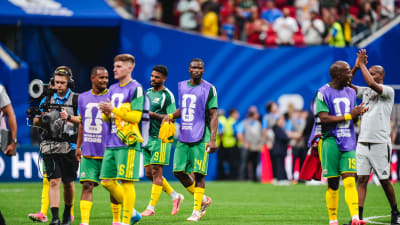
South Africa’s historic 2026 FIFA World Cup campaign reached its emotional climax on Sunday as the Bafana Bafana (the name affectionately given to the South African national team) suffered a hard-fought defeat to Canada in the Round of 16. The match, played in Los Angeles, marked the end of a journey that had already etched itself into the annals of African football history—this was the nation’s first-ever appearance in the World Cup knockout stage.
At the heart of this campaign was Olwethu Makhanya, a 22-year-old defender who, though he did not take the field in this decisive match, had already played a pivotal role in South Africa’s historic progression. Makhanya’s inclusion in the squad symbolized the youthful energy and ambition that defined Bafana Bafana’s World Cup run, a team that had defied expectations from the outset.
A Campaign of Resilience and Determination
South Africa’s World Cup journey had begun with a setback—a 2-0 defeat to Mexico in the opening group match at the Estadio Azteca in Mexico City. The loss was a blow, but it did not deter the team. Under the guidance of head coach Graham Arnold, the squad demonstrated remarkable resilience, securing a 1-1 draw with the Czech Republic and a 1-0 victory over South Korea in their subsequent matches. These results propelled them into the Round of 16, where they faced Canada in a match that would determine their fate in the tournament.
The knockout stage encounter was a tense, high-stakes affair that kept fans on the edge of their seats until the final whistle. South Africa, known for their physicality and tactical discipline, battled fiercely against Canada, a team that had also shown flashes of brilliance throughout the tournament. The match was a testament to the competitive spirit of both nations, with both sides creating numerous scoring opportunities.
The Final Moments: A Heartbreaking End
As the clock ticked down to the end of extra time, the tension in the stadium was palpable. The match remained goalless, sending the contest into a penalty shootout—a nerve-wracking conclusion to what had already been a grueling tournament. In the shootout, Canada emerged victorious, securing a 4-3 win on penalties. The defeat was a bitter pill to swallow for South Africa’s players and fans alike, but it did not diminish the significance of their achievement.
This was not just a loss; it was the culmination of a first-ever World Cup knockout stage appearance for an African nation. South Africa had proven that they belonged among the world’s elite, even if they fell short of advancing further. Their journey—marked by three matches, a draw, a win, and a loss—had captivated global audiences and inspired a new generation of African footballers.
Legacy of a Historic Campaign
While the defeat to Canada marked the end of South Africa’s World Cup adventure, the legacy of their campaign will endure. The team’s performance demonstrated that African football is no longer a story of underdogs but of competitive, well-organized, and determined nations capable of challenging the traditional powerhouses of the sport.
For Olwethu Makhanya and his teammates, this experience was a once-in-a-lifetime opportunity to represent their country on the world’s biggest stage. Though they did not advance beyond the Round of 16, their journey will be remembered as a landmark moment in South African football history.
As the dust settled in Los Angeles, one thing was clear: South Africa had made their mark on the 2026 FIFA World Cup, and their story was far from over. The lessons learned, the resilience displayed, and the dreams ignited will undoubtedly shape the future of Bafana Bafana and African football as a whole.
South Africa’s players celebrate their historic Round of 16 qualification, a first for African football.
The dramatic final moments of the match as Canada secured victory in a penalty shootout, ending South Africa’s World Cup campaign.
