

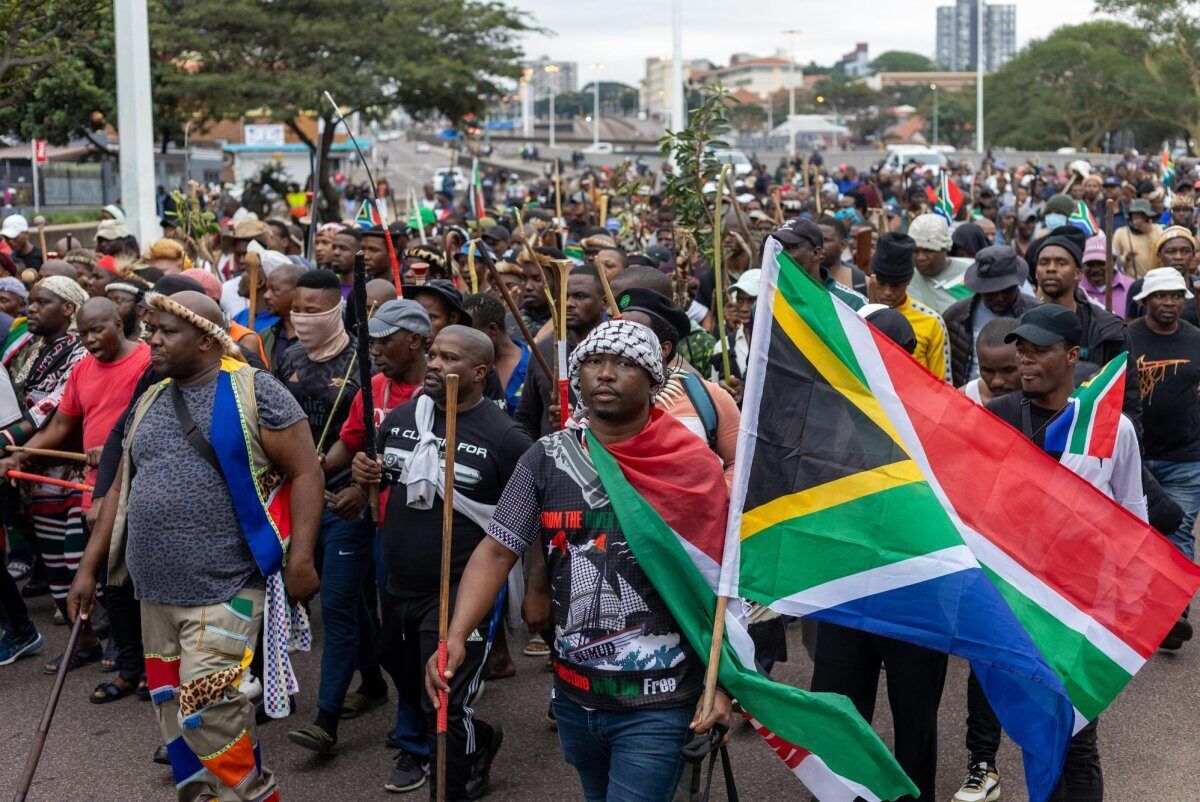
Unprecedented Anti-Migrant Protests Shake South Africa as Deadline Looms
Johannesburg, June 30 — South Africa’s security forces were placed on high alert on Tuesday as coordinated anti-migrant protests unfolded across the country, coinciding with a self-imposed deadline set by vigilante groups for undocumented migrants to leave. The demonstrations, fueled by months of escalating xenophobic rhetoric, have already resulted in violent clashes, mass arrests, and a surge in forced deportations, leaving thousands of foreign nationals in a state of fear and displacement.
The protests, organized by groups such as March and March, have intensified calls for the immediate expulsion of all undocumented migrants, with organizers threatening severe consequences if their demands were not met by June 30. While President Cyril Ramaphosa issued repeated appeals for restraint, urging demonstrators to avoid intimidation, vandalism, and violence, the situation on the ground has proven far more volatile than expected.
Violence Erupts as Protests Spread Nationwide
Despite the president’s warnings, reports of looting, arson, and targeted attacks against migrant communities have emerged in multiple provinces. In Johannesburg, police confirmed that five individuals were arrested after allegedly ransacking a foreign-owned store in Soweto, while windows of residential apartments in Yeoville—a neighborhood with a significant migrant population—were shattered by protesters hurling bricks. Similar incidents occurred in Hammarsdale, KwaZulu-Natal, where five suspects were detained for breaking into a local shop.
Ramaphosa, who met with protest leaders on Monday, reiterated his stance against violence while acknowledging systemic failures in South Africa’s immigration system. In his latest blog post, the president emphasized that legal migrants—who contribute to the economy, education, and social fabric of the country—deserve protection under South Africa’s laws and constitution. He warned that while the right to protest is fundamental, it must not descend into harassment, intimidation, or criminal acts.
However, for many foreign nationals, the president’s words came too late. Over the past month, at least three migrants have been killed in violent attacks, including two Mozambicans who were murdered when a mob destroyed a shanty settlement in the Western Cape, and a Malawian man who was fatally assaulted during a protest near Durban. These incidents have forced hundreds of migrants to seek refuge in churches and mosques, fearing further retaliation.
Mass Repatriations and Humanitarian Crisis
The escalating violence has triggered a mass exodus of foreign nationals, with governments across Africa rushing to evacuate their citizens. Nigeria alone has repatriated 600 citizens since June, with additional flights scheduled to transport more nationals home. Meanwhile, Malawi has already sent back 7,000 of its citizens, while neighboring countries like Ghana, Mozambique, and Zimbabwe have organized air and road transport for their stranded populations.
Since January, South African authorities have detained approximately 50,000 undocumented migrants, many of whom now reside in temporary camps pending repatriation. Official estimates suggest that over three million documented foreign nationals reside in South Africa, though the true number of undocumented migrants remains unclear.
A Community Under Siege
For those who remain, the fear of violence is palpable. Gardener Kauga Nyirenda, a Malawian national living in Johannesburg, recounted a harrowing encounter with vigilantes who threatened his life. “They asked me, ‘When are you going to leave the country? We want to fix our country. If you don’t leave now, you’re going to leave in a coffin because we don’t need anyone after June 30,’” Nyirenda told international media outlets. His story is not unique—dozens of migrants have reported similar threats, forcing them to abandon their homes and livelihoods in the face of mounting pressure.
Government Response and International Concerns
While Ramaphosa has condemned the violence, critics argue that the government’s response has been too slow and insufficient. Human rights organizations have warned that the protests risk normalizing xenophobia, with some extremist groups openly advocating for the expulsion of all foreign nationals—regardless of their legal status.
The United Nations and regional bodies have expressed deep concern over the situation, urging South Africa to protect vulnerable populations and ensure that protests remain peaceful. However, with tensions still high and no immediate resolution in sight, the country faces an uncertain future as the anti-migrant movement continues to gain momentum.
As the June 30 deadline passes, the human cost of these protests becomes increasingly clear—lives shattered, communities displaced, and a nation divided. The question now is whether South Africa can reclaim its reputation as a land of opportunity for all, or if the recent wave of violence will leave lasting scars on its social fabric.

Note: This article is based on verified reports and does not include promotional or external links.
