

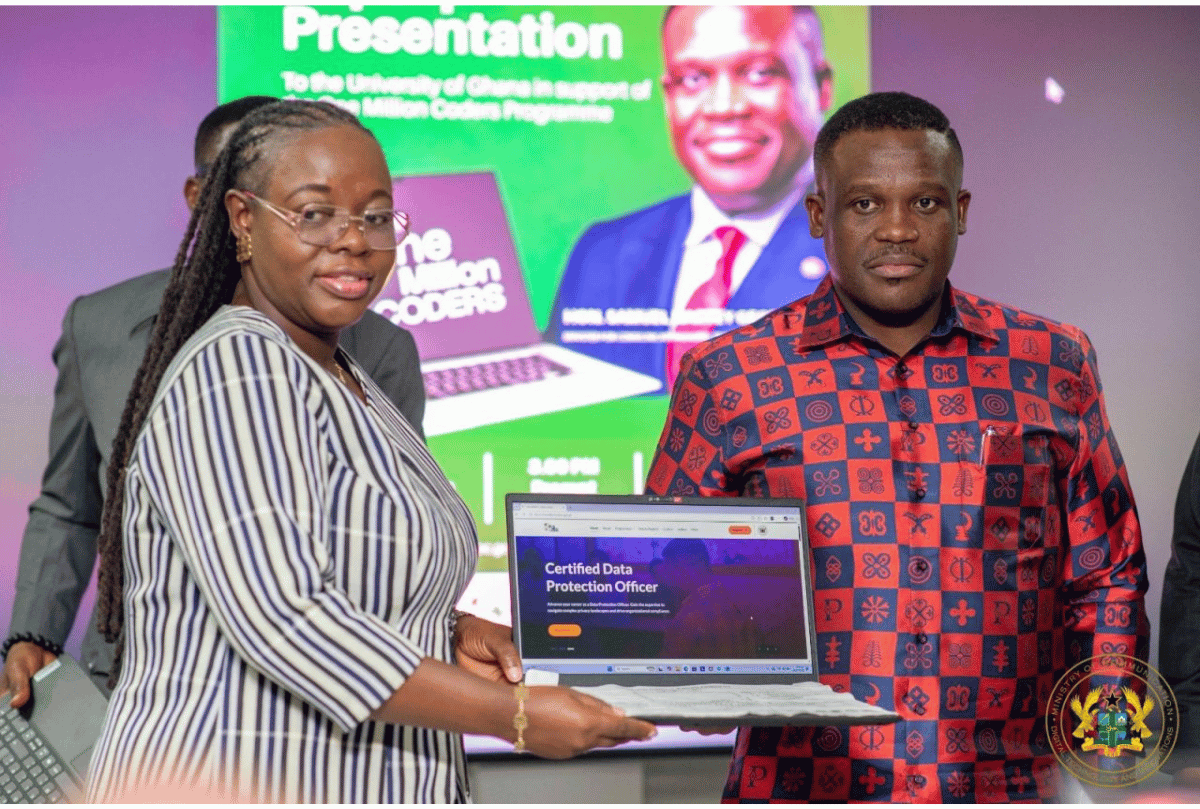
The Government of Ghana has taken a significant stride in bolstering its digital workforce by delivering an additional 2,000 laptops to the University of Ghana, marking a major expansion of the One Million Coders Programme (OMCP). This strategic initiative now totals 2,500 laptops distributed to the institution, reinforcing Ghana’s commitment to fostering a tech-savvy population capable of driving innovation and economic growth.
The laptop handover ceremony, held at the West African Centre for Cell Biology of Infectious Pathogens (WACCBIP), was led by Minister for Communication, Digital Technology, and Innovations, Samuel Nartey George. The event underscored the government’s dedication to equipping students with the necessary tools to excel in high-demand digital fields, including coding, artificial intelligence (AI), cybersecurity, data analytics, and software development.
A Strategic Investment in Ghana’s Digital Future
The One Million Coders Programme (OMCP) is a cornerstone initiative designed to train one million Ghanaians in industry-relevant digital skills, thereby enhancing employability, fostering entrepreneurship, and accelerating Ghana’s digital transformation. The newly distributed laptops are not merely devices—they are gateways to practical, hands-on learning, enabling students to develop real-world applications in emerging technologies.
Minister Nartey George emphasized that the laptops represent a substantial investment in Ghana’s technological future, urging beneficiaries to leverage these resources not just for passive consumption but for active innovation. He encouraged students to create digital solutions, launch tech startups, and contribute meaningfully to Ghana’s rapidly evolving technology ecosystem.
Expanding Digital Skills and Economic Growth
The 2,000 additional laptops align with Ghana’s broader digital skills development agenda, reinforcing efforts to cultivate a competitive, future-ready workforce. By providing direct access to cutting-edge technology, the government aims to:
– Bridge the skills gap in critical tech sectors.
– Boost entrepreneurship through digital innovation.
– Strengthen Ghana’s position as a regional leader in digital and technological advancement.
The initiative also reflects a proactive approach to addressing youth unemployment by equipping graduates with marketable skills that align with global industry demands. With AI, cybersecurity, and data analytics becoming increasingly vital in modern economies, Ghana’s focus on practical, job-ready training positions its workforce for long-term success.
A Blueprint for Africa’s Digital Transformation
Ghana’s One Million Coders Programme serves as a model for other African nations seeking to leverage technology for sustainable development. By investing in digital infrastructure, education, and workforce training, the government is laying the foundation for a knowledge-based economy that can compete on the global stage.
The 2,500 laptops now available at the University of Ghana are just the beginning. As the programme scales, it will expand access to digital learning, encourage cross-disciplinary collaboration, and nurture the next generation of African tech leaders.
Looking Ahead: A Tech-Driven Ghana
With the laptop distribution, Ghana is not only equipping students with tools but also empowering them to shape the country’s digital future. The One Million Coders Programme is more than an educational initiative—it is a strategic move to ensure that Ghana remains at the forefront of African innovation in the 21st century.
As the programme continues to grow, its impact will be felt across education, entrepreneurship, and economic policy, solidifying Ghana’s reputation as a hub for digital excellence on the continent. The 2,000 new laptops are a testament to the government’s unwavering commitment to building a tech-savvy, innovative, and prosperous Ghana.
