

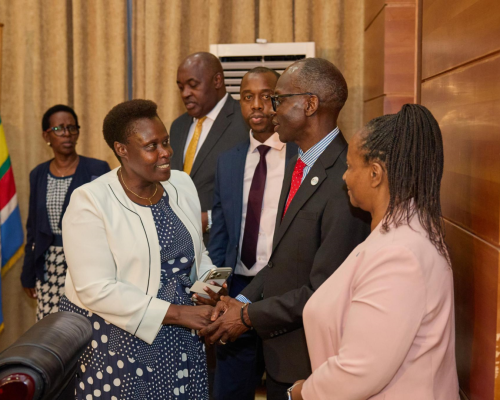
In a landmark move to fortify Africa’s resilience against emerging health threats, Uganda has announced a strengthened collaboration with the World Health Organization (WHO) and the Africa Centres for Disease Control and Prevention (Africa CDC). The partnership, formalized through a series of high-level engagements, aims to enhance regional health security, improve disease surveillance, and accelerate response mechanisms across the continent. This initiative underscores the critical role of multilateral cooperation in addressing public health challenges, particularly in the wake of recent global pandemics and escalating health emergencies.
A Unified Approach to Health Security
The collaboration between Uganda, WHO, and Africa CDC is rooted in a shared commitment to prevent, detect, and respond to health threats with greater efficiency. Uganda, as a key regional leader, has positioned itself at the forefront of this effort by aligning its national health strategies with global best practices and African Union (AU) health policies. The partnership builds on existing frameworks, including the African Union’s Continental Health Security Strategy (CHSS) and the International Health Regulations (IHR) (2005), which emphasize the importance of cross-border health coordination.
One of the primary focuses of this collaboration is the strengthening of early warning systems. Uganda’s National Disease Surveillance and Response System (NDSRS) will integrate more closely with the Africa CDC’s Early Warning System, ensuring real-time data sharing and rapid response to outbreaks. This alignment is critical given the continent’s vulnerability to infectious diseases such as Ebola, Lassa fever, and now, the persistent threat of COVID-19 variants. By leveraging digital health tools, including mobile health (mHealth) platforms and laboratory networks, the partnership seeks to improve disease detection rates and reduce response times.
Enhancing Laboratory Capacity and Research
A cornerstone of the collaboration is the expansion of laboratory infrastructure across Uganda and the broader African region. The WHO’s Global Laboratory Initiative (GLI) will support Uganda in upgrading its public health laboratories, ensuring they meet WHO’s International Standards for Laboratory Quality (ISLQ). This includes investments in diagnostic testing, pathogen sequencing, and data analytics, which are essential for rapid identification of emerging pathogens.
Additionally, the partnership will facilitate joint research initiatives between Ugandan institutions and global health experts. For instance, the Uganda Virus Research Institute (UVRI)—a leading center for infectious disease research—will collaborate with WHO and Africa CDC on studies related to viral evolution, antimicrobial resistance, and vaccine development. Such collaborations are vital for developing context-specific solutions that address Africa’s unique health challenges.
Strengthening Health Workforce and Training
Human capital remains a critical bottleneck in Africa’s health security efforts. The new partnership will prioritize health workforce development, focusing on training programs for frontline health workers, epidemiologists, and laboratory technicians. Uganda’s Ministry of Health, in conjunction with WHO and Africa CDC, will design standardized training modules that adhere to international health standards while incorporating African-centric approaches.
Key initiatives include:
– Epidemiological field training to improve outbreak investigation skills.
– Laboratory technician certification programs to ensure high-quality diagnostic services.
– Mental health and psychosocial support training for health workers, given the emotional toll of managing health crises.
By investing in skilled personnel, the partnership aims to create a resilient health workforce capable of sustaining long-term health security efforts.
Supply Chain Resilience and Medical Countermeasures
The COVID-19 pandemic exposed critical gaps in medical supply chains across Africa. To address this, the collaboration will focus on strengthening supply chain resilience, ensuring timely access to vaccines, medicines, and personal protective equipment (PPE). Uganda will work with WHO’s Supply Chain Management System and Africa CDC’s Medical Countermeasures (MCM) program to:
– Diversify procurement sources to reduce dependency on external suppliers.
– Improve cold chain logistics for vaccine storage and distribution.
– Establish regional stockpiles of essential medical supplies to mitigate future shortages.
This approach aligns with the African Union’s Medical Supplies Strategic Reserve (AU-MSSR), which aims to create a continent-wide buffer for critical health commodities.
Policy Harmonization and Regional Integration
For health security efforts to be effective, national policies must align with regional and global standards. Uganda’s collaboration with WHO and Africa CDC will facilitate policy harmonization, ensuring that national health laws and regulations comply with IHR (2005) and AU health directives. Key areas of focus include:
– Strengthening national IHR focal points to enhance coordination with international health authorities.
– Developing unified health emergency protocols for cross-border outbreaks.
– Promoting regional health cooperation through platforms like the East African Community (EAC) Health Sector and the Southern African Development Community (SADC) Health Programme.
By fostering policy coherence, the partnership aims to create a unified African response to health threats, reducing duplication of efforts and improving efficiency.
Financial and Technical Support Mechanisms
Sustaining these initiatives requires sustained financial and technical support. Uganda, WHO, and Africa CDC are exploring multi-donor funding mechanisms, including:
– WHO’s Health Emergencies Programme funding for outbreak preparedness.
– Africa CDC’s Health Emergency Fund (AHEF), which provides rapid-response financing for health crises.
– Partnerships with development banks such as the African Development Bank (AfDB) and World Bank for infrastructure and capacity-building projects.
Additionally, technical assistance from WHO and Africa CDC will include:
– Mission-based support for outbreak investigations.
– Capacity-building workshops on health security governance.
– Knowledge-sharing platforms to disseminate best practices across African nations.
Challenges and Future Outlook
While the collaboration presents a transformative opportunity, several challenges remain. These include:
– Funding gaps, as health security initiatives often compete with other national priorities.
– Infrastructure limitations, particularly in rural and underserved areas.
– Political and logistical hurdles in cross-border coordination.
Despite these obstacles, the partnership remains optimistic about long-term progress. By leveraging Uganda’s strategic location and its role as a regional health hub, the collaboration aims to serve as a model for other African nations. The ultimate goal is to reduce the time between outbreak detection and response, thereby minimizing the impact of future health emergencies on the continent.
Conclusion: A Blueprint for African Health Security
The deepened collaboration between Uganda, WHO, and Africa CDC represents a pivotal step in Africa’s journey toward self-reliant health security. By integrating surveillance, laboratory capacity, workforce development, supply chain resilience, and policy harmonization, this partnership addresses the multifaceted nature of health threats in the region. As Africa continues to navigate global health challenges, such strategic alliances will be instrumental in ensuring that the continent is better prepared, more responsive, and more resilient in the face of future pandemics and health crises.
This initiative not only strengthens Uganda’s health systems but also sets a precedent for pan-African cooperation, reinforcing the continent’s ability to protect its people and economies from preventable health risks. The success of this collaboration will depend on sustained commitment, innovation, and collective action—key pillars that will define Africa’s health security landscape in the decades to come.
