

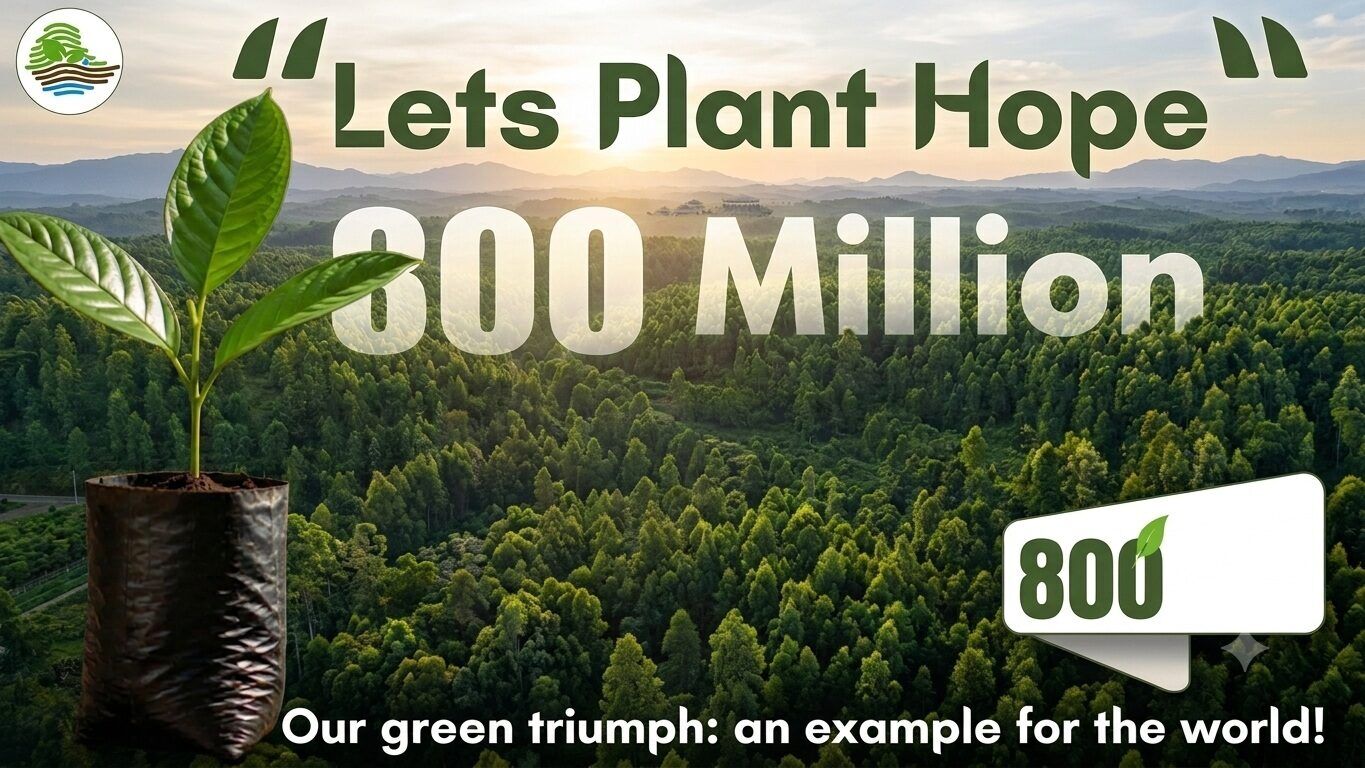
Addis Ababa, August 2, 2026 — As global temperatures rise, deforestation accelerates, and biodiversity collapses under the weight of human activity, Ethiopia is poised to deliver one of the most ambitious environmental feats in modern history. On August 3, 2026, millions of Ethiopians will converge across the nation’s vast and varied landscapes to plant 800 million seedlings in a single day—a monumental effort that transcends traditional tree-planting campaigns and redefines global climate action.
This historic endeavor, known as the Green Legacy Initiative (GLI), is more than a national tree-planting drive; it is a bold declaration of Ethiopia’s commitment to ecological restoration, climate resilience, and sustainable development. With less than 24 hours remaining before the event, the country stands on the brink of achieving what many once deemed impossible: a continent-wide movement that could serve as a blueprint for environmental recovery worldwide.
From Grassroots Mobilization to Global Climate Leadership
Initiated in 2019 under the visionary leadership of Prime Minister Abiy Ahmed, the Green Legacy Initiative has evolved into Africa’s most expansive environmental restoration program. What began as a grassroots campaign has now mobilized citizens, farmers, students, government officials, and private sector partners into a unified force dedicated to reversing ecological degradation.
The initiative’s success lies in its inclusive, community-driven approach, proving that environmental action is not the sole responsibility of governments or environmental agencies but a collective duty shared by every Ethiopian. By transforming tree planting into a national mission, Ethiopia has demonstrated how large-scale ecological restoration can coexist with economic growth, social cohesion, and climate justice.
Key achievements of the GLI include:
– Millions of hectares of degraded land restored through reforestation and agroforestry.
– Watershed protection initiatives that enhance water security for millions of households.
– Expanded green coverage, particularly in high-altitude regions where deforestation had once threatened fragile ecosystems.
– Increased agricultural productivity through sustainable land management practices.
– Enhanced biodiversity, with native tree species reintroduced to their natural habitats.
Each seedling planted is not merely a tree—it is a strategic investment in Ethiopia’s future. By stabilizing soil, sequestering carbon, and providing shade for livestock, these trees contribute to climate resilience, reducing the country’s vulnerability to droughts, floods, and erratic weather patterns exacerbated by climate change.
Green Diplomacy: Ethiopia’s Role in Africa’s Sustainable Future
Beyond its domestic impact, Ethiopia’s Green Legacy Initiative has positioned the country as a regional and continental leader in climate action. Through Green Diplomacy, Ethiopia is fostering pan-African collaboration by sharing seedling varieties, reforestation techniques, and policy frameworks with neighboring nations.
The initiative has already inspired similar large-scale tree-planting campaigns across Africa, from Kenya’s Million Beloved Trees to South Africa’s National Tree Planting Program. By demonstrating that ecological restoration can drive economic development, Ethiopia is proving that climate action is not an expense but an investment in prosperity.
Additionally, Ethiopia’s commitment to renewable energy reinforces its climate leadership. Projects such as the Grand Ethiopian Renaissance Dam (GERD), one of the world’s largest hydroelectric facilities, alongside solar and wind energy expansions, are reducing the country’s reliance on fossil fuels while boosting energy access for millions. This dual focus on green energy and reforestation underscores Ethiopia’s holistic approach to sustainability—one that balances immediate economic needs with long-term environmental stewardship.
A Call for Climate Justice at COP32
As Ethiopia prepares to host the 32nd United Nations Climate Change Conference (COP32) in 2026, the nation is using its environmental achievements to advocate for global climate justice. Unlike many developed nations that have contributed disproportionately to climate change, Ethiopia faces immediate and severe impacts—from crop failures due to erratic rainfall to water shortages in rural communities.
The country’s leadership at COP32 will emphasize:
– Equitable climate finance, ensuring developing nations receive adequate funding for adaptation and mitigation.
– Technology transfer, allowing African countries to access green technologies without financial barriers.
– Strengthened international partnerships, particularly with the Global South, to address climate challenges collectively.
The Green Legacy Initiative serves as a living testament to Ethiopia’s ability to lead by example. While other nations debate climate policies, Ethiopia is proving that meaningful action is possible—and that African solutions can drive global change.
800 Million Seedlings: A Symbol of Collective Hope
The upcoming single-day planting of 800 million seedlings is not merely a record-breaking feat; it is a powerful statement of unity, determination, and hope. Across Ethiopia’s highlands, lowlands, and urban centers, volunteers—ranging from schoolchildren to elderly farmers—will participate in an event that transcends political and social divides.
Why this number matters:
– 800 million seedlings could offset millions of tons of CO₂ annually, contributing significantly to global carbon reduction efforts.
– The initiative will create jobs in forestry, agroforestry, and environmental conservation, boosting rural economies.
– By restoring degraded lands, Ethiopia will enhance food security, particularly for smallholder farmers who rely on fertile soil.
– The event will inspire global climate action, proving that mass participation can achieve what individual efforts cannot.
Beyond the immediate environmental benefits, the Green Legacy Initiative is a cultural and generational movement. It teaches Ethiopians—especially youth—that they are not passive observers of climate change but active participants in its solution. The seedlings they plant today will grow into forests that future generations will inherit, fostering a legacy of sustainability.
A Greener Tomorrow: Ethiopia’s Vision for Africa and Beyond
As the world watches Ethiopia’s historic tree-planting event unfold, the message is clear: climate action is not a distant aspiration—it is a present reality being built by ordinary people. The 800 million seedlings represent more than a number; they symbolize a new era of environmental responsibility, innovation, and solidarity.
Ethiopia’s journey with the Green Legacy Initiative demonstrates that even the most daunting climate challenges can be overcome through determination, collaboration, and vision. As the country prepares to host COP32, its leadership in reforestation, renewable energy, and climate diplomacy sends a resounding message to the world: Africa is not just a victim of climate change—it is a leader in its solution.
