

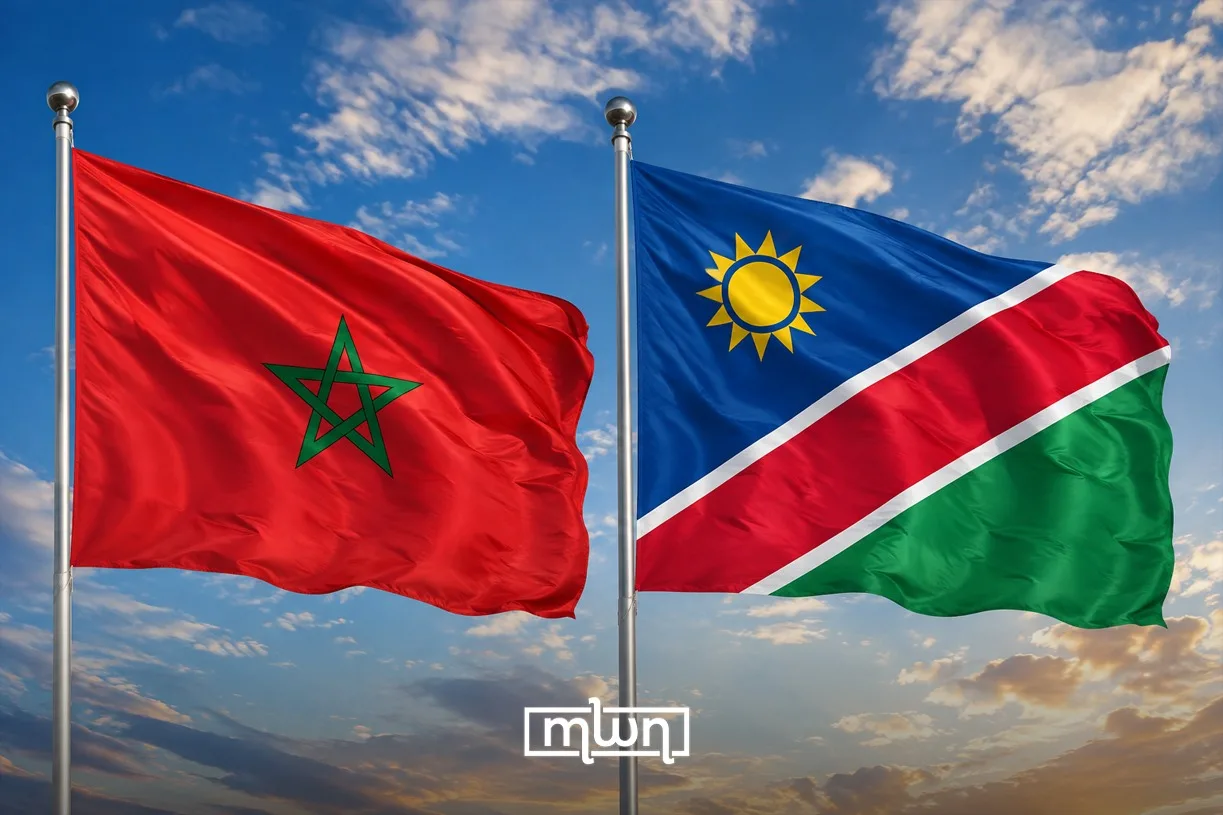
For over two decades, Morocco has been engaged in a meticulously calculated diplomatic campaign in Namibia—a nation where traditional political maneuvers have repeatedly fallen short. Unlike its aggressive reintegration into the African Union (AU) in 2017, where economic and institutional leverage reshaped continental dynamics, Namibia remains an outlier. Here, the challenge is not just ideological but deeply rooted in historical narratives and geopolitical alliances. This article explores how Morocco’s approach has evolved from confrontation to subtle influence, why Namibia’s stance persists, and how Rabat is recalibrating its strategy to win hearts where diplomacy alone cannot.
The Long Game Begins: From Exclusion to Reintegration
Morocco’s diplomatic isolation following the Organization of African Unity’s (OAU) 1984 acceptance of the self-proclaimed Sahrawi Arab Democratic Republic (SADR) as a full member was a turning point. By walking out of the OAU (precursor to the AU), Rabat ceded influence over Western Sahara’s future to Algeria and South Africa, which shaped the narrative unchecked. The cost was steep: Morocco was absent from the continent’s most critical security and development deliberations for over three decades.
The comeback, however, was not abrupt. Between 2014 and 2017, King Mohammed VI embarked on a 25-state visit tour, signing over 1,000 bilateral agreements spanning banking, energy, agriculture, and infrastructure. These initiatives positioned Morocco as a pragmatic partner rather than a disputant. Scholarships for African students, imam training programs, and renewable energy projects in Burkina Faso and Mali were not mere gestures—they were calculated moves to redefine Morocco’s image from a contested state to a reliable development ally.
The payoff came in January 2017, when the AU voted 39-11 in favor of Morocco’s readmission. Since then, over 20 African nations have withdrawn recognition of the SADR, and Morocco now counteracts pro-SADR resolutions from within the AU, rather than protesting from the sidelines. The shift was seismic: Morocco transitioned from a pariah state to a key investor, particularly in telecoms and finance, while the SADR’s argument—framed as an extension of Southern Africa’s anti-colonial struggle—lost traction as fewer states endorsed it.
Namibia: The Exception That Persists
While Morocco’s AU strategy yielded tangible results, Namibia remains an exception. The country’s alignment with the SADR is not merely political; it is deeply personal, tied to Namibia’s liberation history. The South West Africa People’s Organization (SWAPO), Namibia’s ruling party, has long viewed the Polisario Front’s struggle as unfinished business from the anti-apartheid era. This sentiment is so ingrained that Namibian solidarity with the Sahrawis is often seen as moral obligation rather than diplomacy.
South Africa’s influence exacerbates this dynamic. As Namibia’s primary trading partner (accounting for 70% of imports), Pretoria wields economic leverage to reinforce its political stance. The 2019 Windhoek Declaration, reaffirming Sahrawi self-determination, was the result of South African lobbying, including within the Southern African Development Community (SADC). Namibia’s government, while officially neutral, privately aligns with SADR positions at AU summits, a stance that defies Morocco’s diplomatic efforts.
Morocco’s Quiet Strategy: Beyond Politics to Practical Engagement
Recognizing that traditional diplomacy would not shift Namibia’s stance, Morocco adopted a new game plan: persistence through practical engagement. A conversation with a senior official from Morocco’s Ministry of Foreign Affairs revealed a realistic, long-term approach—one that prioritizes trust-building over ideological battles.
1. Economic and Technical Cooperation
Trade between Morocco and Namibia reached 204 million dirhams in 2022, a modest figure but one the diplomat described as a starting point. Morocco’s focus is on sectors where Namibia has expressed demand:
– Agriculture: Morocco, a global leader in agricultural innovation, offers expertise in drought-resistant crops and sustainable farming techniques.
– Renewable energy: With Namibia’s growing energy needs, Morocco’s experience in solar and wind projects (e.g., the Noor Ouarzazate complex) positions it as a natural partner.
– Water management: Namibia faces water scarcity challenges, and Morocco’s expertise in desalination and irrigation could be mutually beneficial.
The diplomat emphasized: “We are not coming with a flag and a speech. We come with ideas, tools, and respect for what Namibia actually wants.”
2. Soft Power and Cultural Exchange
Morocco’s traditional religious diplomacy (leveraging the Tijaniyya Sufi order in West Africa) holds less sway in Namibia, where Christianity dominates. Instead, Rabat is investing in:
– Sports diplomacy: Morocco’s national football team and athletes have growing popularity in Namibia, offering avenues for cultural exchange.
– Art and heritage programs: Collaborations on shared historical narratives (e.g., pre-colonial trade routes) could humanize Morocco’s presence.
– Youth and academic exchanges: Scholarships and university partnerships targeting Namibia’s next generation of leaders aim to reshape perceptions organically.
3. Neutral Third-Party Engagement
Morocco is also quietly reframing its image through neutral intermediaries. By positioning itself as a complement to Namibia’s existing partners (e.g., South Africa, China) rather than a rival, Rabat avoids provoking backlash. This strategy involves:
– Leveraging regional blocs: Engaging with ECOWAS and SADC to present Morocco as a stable, investment-friendly alternative.
– UN and multilateral forums: Highlighting Morocco’s autonomy plan for Western Sahara as the most practical solution, while downplaying confrontation.
The Role of Generational Shift and Economic Realities
Namibia’s future may lie in breaking free from historical constraints. Younger Namibians, who did not experience the independence struggle firsthand, are increasingly prioritizing economic diversification over ideological stances. If Namibia’s government pursues infrastructure and energy projects, Morocco’s technical and financial expertise could become irresistible.
The diplomat underscored this point: “This isn’t about changing anyone’s mind today. It’s about being there. Helping. Staying consistent. So that when people are ready to look at this again, we’re the ones who never tried to rush them.”
Global Shifts: How Morocco’s Diplomacy Is Reshaping Africa
Beyond Namibia, Morocco’s strategy has yielded broad regional success:
– U.S. recognition (2020): The Trump administration’s sovereignty over Western Sahara stance was a turning point, later maintained (with caution) by the Biden administration.
– Gulf allies’ consulates: The UAE, Bahrain, Gambia, and Senegal have opened diplomatic missions in Dakhla and Laayoune, signaling de facto recognition.
– UN Security Council momentum: The autonomy plan is increasingly viewed as the most viable solution, while the SADR’s demand for a referendum faces growing skepticism.
Algeria, however, remains a persistent counterforce, actively lobbying at the UN General Assembly and AU summits. The 2021 AU Summit saw South Africa and Algeria block Morocco’s committee appointments, ensuring Western Sahara remained a contentious agenda item. Yet, Morocco’s expanding bloc (Senegal, Côte d’Ivoire, Gabon) is softening AU language on the conflict, pushing toward institutional neutrality.
The Path Forward: Patience as a Diplomatic Weapon
Morocco’s Namibia strategy is a masterclass in long-term diplomacy. Unlike its high-profile AU reintegration, the approach here is subtle, patient, and results-driven. The key lies in:
1. Deepening technical partnerships in agriculture, energy, and water.
2. Engaging civil society and youth through cultural and academic exchanges.
3. Positioning Morocco as a neutral, reliable partner rather than a rival.
4. Leveraging generational shifts in Namibia’s political landscape.
If history is any indicator, diplomacy that outlasts ideology wins. Morocco’s bet is that time, consistency, and practical benefits will eventually erode the SADR’s hold—not through confrontation, but through quiet, sustained engagement.
As the global map of African diplomacy continues to shift, Namibia may yet become another chapter in Morocco’s success story—one where hearts, not just votes, decide the future.
Moroccan King Mohammed VI during a state visit to an African nation, symbolizing diplomatic engagement.
Agricultural cooperation between Morocco and Namibia, highlighting technical partnership in sustainable farming.
